GPCR drug discovery and development specialist Confo Therapeutics NV has closed a €60 million (US$65.2 million) series B round that will fund a significant expansion of the inhouse portfolio while it continues to turn the handle on its technology platform to generate more compounds for partnering.
Viking Therapeutics Inc. is diving more deeply into developing obesity treatments and investors like an accelerated timetable the company has proposed. On June 25, Viking shares (NASDAQ:VKTX) catapulted 28.3% upward to close at $64.68 each.
Gan & Lee Pharmaceuticals’ long-acting GLP-1 receptor agonist (GLP-1 RA), GZR-18, achieved as much as 17.29% weight loss in a phase IIb trial in obese and overweight Chinese patients. Developed independently by Shanghai-based Gan & Lee, GZR-18 is a once-weekly or potentially biweekly GLP-1 RA being developed to treat adults with type 2 diabetes and for weight management for obese or overweight patients.
Innovent Biologics Inc.’s glucagon-like peptide-1 receptor (GLP-1R) and glucagon receptor (GCGR) dual agonist, mazdutide, met the primary endpoint and all key secondary endpoints in a phase III type 2 diabetes trial in Chinese adults. “Mazdutide is the first and fastest-developed GLP-1R/GCGR dual agonist in the world, and we are actively promoting the development of mazdutide for weight loss, T2D and other indications,” Lei Qian, Innovent’s vice president of clinical development, said.
Innovent Biologics Inc.’s glucagon-like peptide-1 receptor (GLP-1R) and glucagon receptor (GCGR) dual agonist, mazdutide, met the primary endpoint and all key secondary endpoints in a phase III type 2 diabetes trial in Chinese adults. “Mazdutide is the first and fastest-developed GLP-1R/GCGR dual agonist in the world, and we are actively promoting the development of mazdutide for weight loss, T2D and other indications,” Lei Qian, Innovent’s vice president of clinical development, said.
The obesity market is hot with Novo Nordisk A/S generating $6.3 billion in sales from its semaglutide-containing drugs, Ozempic, Saxenda, Rybelsus and Wegovy, in the first quarter of 2024 and Eli Lilly and Co. bringing in $2.3 billion for its tirzepatide-containing drugs, Zepbound and Mounjaro, in the same quarter. It appears unlikely the market will be a two-horse race for much longer though.
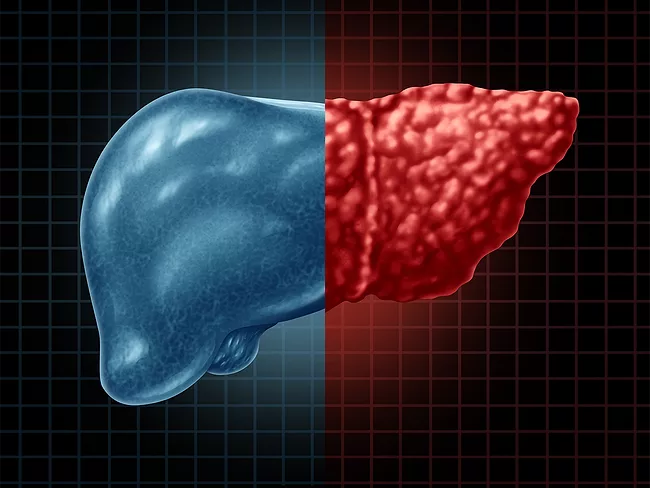
Innovent Biologics Inc.’s glucagon-like peptide-1 receptor and glucagon receptor dual agonist, mazdutide, saw 80% reduction in liver fat content in patients with more than 10% liver fat content in the phase III Glory-1 obesity trial.
Focused on oral therapies for obesity, diabetes and rare diseases, Boston-based Syntis Bio Inc., which raised $15.5 million through seed funding last year, emerged from stealth to advance its synthetic tissue-lining technology and a pipeline of candidates.
Focused on oral therapies for obesity, diabetes and rare diseases, Boston-based Syntis Bio Inc., which raised $15.5 million through seed funding last year, emerged from stealth to advance its synthetic tissue-lining technology and a pipeline of candidates.
After the phase IIa failure at lowering intraocular pressure to a statistically significant degree with SBI-100, Skye Bioscience Inc. is dropping work with the ophthalmic emulsion, meant to treat primary open-angle glaucoma or ocular hypertension. Resources are turning to the firm’s metabolic program, which includes nimacimab, targeting the cannabinoid 1 receptor, due to start a phase II trial in obesity during the third quarter of this year.
 RSS
RSS