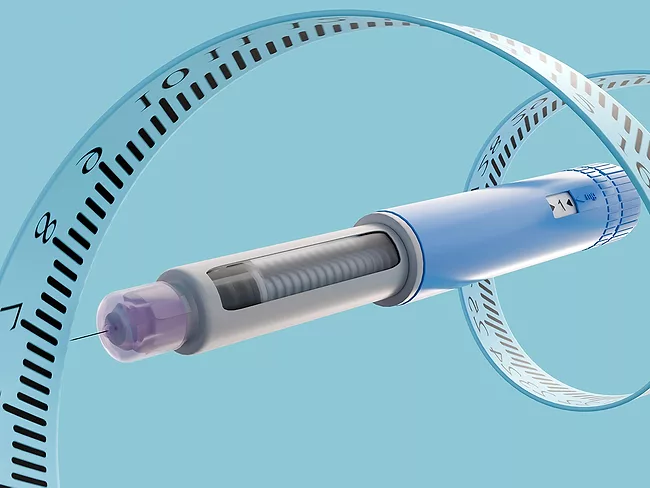
Posting another win for its triple G agonist, Eli Lilly and Co. rolled out top-line phase III data from Triumph-1 showing that all doses of retatrutide met primary and key secondary endpoints for obesity, with participants losing on average between 19% and 28.3% of body weight and significantly improving their cardiovascular risk factors.
Vincentage Pharma Co. Ltd.’s once-daily oral small-molecule GLP-1 receptor agonist, VCT-220, met the primary endpoints in a pivotal phase III trial in overweight or obese patients in China. Based on the top-line data, the Chengdu, China-based company plans to submit an NDA for chronic weight management to China’s National Medical Products Administration.
Eli Lilly and Co.’s buyout of Ventyx Biosciences Inc. for $1.2 billion at the start of the year brought to the forefront NLR family pyrin domain containing 3 (NLRP3) inhibitors on which a handful of developers have been working, and research in the space continues to roll out, as with the paper published March 26 in Nature that delved into mechanisms that rev up the NLRP3 inflammasome.
In a deal that could be worth up to $1 billion for Suzhou Siran Biotechnology Co. Ltd. (Siranbio), GSK plc licensed exclusive worldwide rights to the siRNA oligonucleotide SA-030, which has recently entered phase I trials for cardiometabolic disease.
Shares of MBX Biosciences Inc. hit a 52-week high on preliminary phase I data for its MBX-4291, a GLP-1/GIP co-agonist prodrug for obesity. Though early and still blinded, findings from the trial showed promising efficacy, along with good tolerability and the potential for once-monthly dosing, factors that will likely be critical for MBX to compete in the crowded obesity space.
In a deal that could be worth up to $1 billion for Suzhou Siran Biotechnology Co. Ltd. (Siranbio), GSK plc licensed exclusive worldwide rights to the siRNA oligonucleotide SA-030, which has recently entered phase I trials for cardiometabolic disease.
When the U.S. CMS didn’t get takers for its voluntary Better Approaches to Lifestyle and Nutrition for Comprehensive Health (BALANCE) model to cover obesity drugs under Medicare Part D, the agency punted. It announced late April 21 that it will indefinitely delay the BALANCE model in Medicare but extend its temporary Medicare GLP-1 Bridge demonstration model through the end of 2027. (The Medicaid BALANCE model will still kick in this year in states that choose to participate in it.)
Kailera Therapeutics Inc.’s “obesity-first” approach continues to resonate with investors, with the company pricing an upsized IPO, offering 39 million shares at $16 apiece for gross proceeds of $625 million. Full exercise of the underwriters’ option could add another $93.8 million, bringing the total to nearly $719 million, easily topping Sana Biotechnology Inc.’s $675.6 million 2021 IPO and setting a new record for U.S. biopharma IPOs, according to BioWorld data.
Wall Street met with satisfaction but not surprise Eli Lilly and Co.’s undeniably positive top-line results from the phase III Achieve-4 study testing the efficacy and safety of Foundayo (orforglipron) compared to insulin glargine in adults with type 2 diabetes and obesity or overweight at increased cardiovascular risk.
Eli Lilly and Co.’s buyout of Ventyx Biosciences Inc. for $1.2 billion at the start of the year brought to the forefront NLR family pyrin domain containing 3 (NLRP3) inhibitors, on which a handful of developers have been working – and research in the space continues to roll out, as with the paper published March 26 in Nature that delved into mechanisms that rev up the NLRP3 inflammasome.
 RSS
RSS