China’s National Medical Products Administration has accepted for review Jiuyuan Genetic Biopharmaceutical Co. Ltd.’s drug application for Jikeqin, a biosimilar product to Novo Nordisk A/S’s Wegovy (semaglutide) for obesity.
China’s National Medical Products Administration has accepted for review Jiuyuan Genetic Biopharmaceutical Co. Ltd.’s drug application for Jikeqin, a biosimilar product to Novo Nordisk A/S’s Wegovy (semaglutide) for obesity.
The U.S. FDA approved Allurion Technologies Inc.’s premarket application for its swallowable gastric balloon system, which features its Smart Capsule, for weight loss. The clearance is boon for the company as GLP-1 agonists gets increasingly adopted to treat obesity. The approval also brings to the market a new non-invasive option to patients looking for alternative ways to lose weight.
Coming off a U.S. FDA approval of the first GLP-1 in pill format, Novo Nordisk A/S leaned further into oral drug delivery efforts, partnering with Vivtex Corp. to develop next-generation oral formulations of peptide and protein therapeutics in a potential $2.1 billion deal that marks the highest-profile news for Vivtex since the firm spun out of MIT in 2018.
Ascletis Pharma Inc. raised HK$843.53 million (US107.93 million) in a placement on the Hong Kong Stock Exchange to advance its lead program, ASC-30, a small-molecule glucagon-like peptide-1 (GLP-1) receptor agonist that can be dosed once monthly subcutaneously and once daily orally for treating obesity.
Viking Therapeutics Inc. said after-market hours Feb. 11 that it plans to advance its oral dual GLP-1/GIP receptor, VK-2735, into a phase III trial for obesity in the third quarter of 2026. VK-2735 is a novel dual glucagon-like peptide-1 and glucose-dependent insulinotropic polypeptide (GLP-1/GIP) receptor agonist.
Ascletis Pharma Inc. raised HK$843.53 million (US107.93 million) in a placement on the Hong Kong Stock Exchange to advance its lead program, ASC-30, a small-molecule glucagon-like peptide-1 (GLP-1) receptor agonist that can be dosed once monthly subcutaneously and once daily orally for treating obesity.
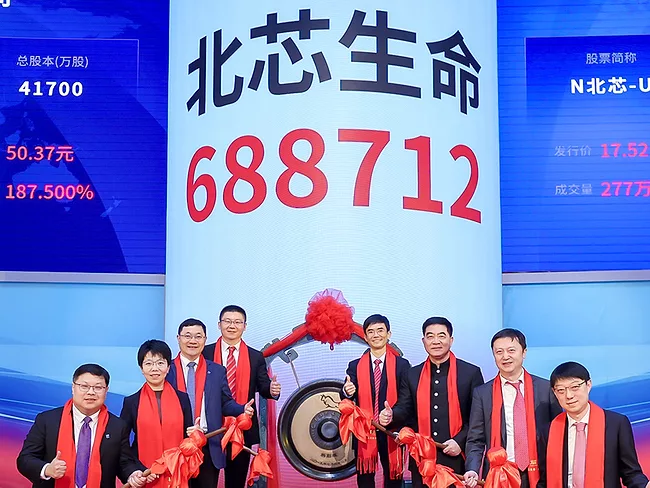
Insight Lifetech Co. Ltd. listed on the Shanghai Stock Exchange’s STAR market via an unprofitable biotech track reinstated last year, with the Feb. 5 IPO raising ¥998.64 million (US$143.93 million).
Insight Lifetech Co. Ltd. listed on the Shanghai Stock Exchange’s STAR market via an unprofitable biotech track reinstated last year, with the Feb. 5 IPO raising ¥998.64 million (US$143.93 million).
Sciwind Biosciences Co. Ltd. said Jan. 30 it won Chinese approval for self-developed glucagon-like peptide-1 (GLP-1) receptor agonist, ecnoglutide (Xianyida), to treat adults with type 2 diabetes.

 RSS
RSS