Implications for Amgen Inc.’s same-class Tepezza (teprotumumab) of positive phase III data from Viridian Therapeutics Inc. with veligrotug in thyroid eye disease became a topic of talk on Wall Street talk. “I’m not drawing any clinical trial comparisons, you’ll have to reach your own conclusions,” CEO Steve Mahoney said during a conference call on the results.
Aldeyra Therapeutics Inc. has bounced back from a complete response letter in November to produce positive phase III data for reproxalap in treating dry eye disease. The company is one of many developing treatments using diverse mechanisms of action.
As the hunt goes on for a better treatment in wet age-related macular degeneration (AMD), landmark analyses of two batches of phase II gene therapy data billed as positive were disclosed during the American Society of Retina Specialists annual meeting in Stockholm, where 4D Molecular Therapeutics Inc. and Adverum Biotechnologies Inc. offered findings.
Altos Biologics Inc., founded as an eye disease-focused subsidiary of Alteogen Inc. in 2020, raised ₩24.5 billion (US$17.7 million) in a series B financing round to advance its pipeline of therapeutics for eye-related conditions, including age-related macular degeneration (AMD). Daejeon, South Korea-based Alteogen said July 9 that the funds raised will be funneled to develop OP-01, Altos’ candidate therapy for AMD.
One year after arriving on the scene with a $120 million series A, ophthalmic gene therapy specialist Beacon Therapeutics Ltd. has raised $170 million in a series B.
The U.S. FDA approved three biosimilar products from Samsung Bioepis Co. Ltd., Tanvex Biopharma Inc. and Formycon AG as follow-on biologics to Stelara (ustekinumab), Neupogen (filgrastim) and Eylea (aflibercept), respectively, on June 28.
France’s Théa Open Innovation, a subsidiary of Laboratoires Théa SAS, terminated its licensing agreement with South Korea’s Olix Pharmaceuticals Inc., and returned global rights of Olix’s ocular small interfering RNA (siRNA) biologic agents, OLX-301D and OLX-301A.
Opthea Ltd. announced it plans to raise up to AU$227.3 million (US$150 million) to extend its cash runway through the data readout for its two phase III pivotal trials of sozinibercept (OPT-302) in wet age-related macular degeneration.
After the phase IIa failure at lowering intraocular pressure to a statistically significant degree with SBI-100, Skye Bioscience Inc. is dropping work with the ophthalmic emulsion, meant to treat primary open-angle glaucoma or ocular hypertension. Resources are turning to the firm’s metabolic program, which includes nimacimab, targeting the cannabinoid 1 receptor, due to start a phase II trial in obesity during the third quarter of this year.
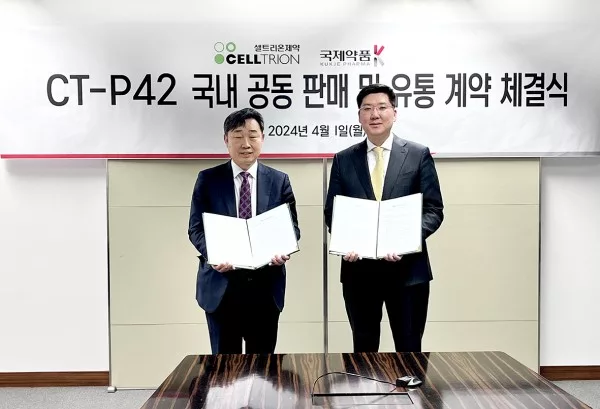
Celltrion Inc., of Incheon, South Korea, gained MFDS clearance of Eydenzelt (CT-P42) as a biosimilar referencing Regeneron Pharmaceuticals Inc./Bayer AG’s Eylea (aflibercept) on May 30. The news comes on the heels of the U.S. FDA approving the first Eylea interchangeable biosimilars on May 20.
 RSS
RSS