The U.S. FDA issued a complete response letter Nov. 15 for Izervay’s (avacincaptad pegol intravitreal solution, ACP) supplemental NDA, which sought to include positive two-year data for the Astellas Pharma Inc. therapy, previously approved for use in a treatment for geographic atrophy secondary to age-related macular degeneration.
Celltrion Inc. said it would acquire Iqone Healthcare Switzerland SA in the fourth quarter of 2024 for about ₩30 billion (US$21.34 million) to expand its European business. “This move represents a strategic shift in our growth strategy,” Taehun Ha, Celltrion vice president and Europe head, said in a statement Nov. 15.
Gene therapy faces complexities in delivering treatments due to persistent safety concerns and daunting immune responses, but Next Generation Gene Therapeutics Inc. has found a way around this issue using dual-functional vectors to simultaneously remove harmful, mutated genes and replace them with normal, healthy genes to restore cellular function.
Allovir Inc., which has struggled since late last December, will merge with privately held Kalaris Therapeutics Inc. to develop therapies for treating neovascular and exudative retinal diseases. Kalaris already has an anti-VEGF treatment in a phase I study with a data readout set for the third quarter of 2025. Once the deal closes, the combined company name will be Kalaris Therapeutics Inc. and shares will trade on Nasdaq as KLRS. The new company said it plans to drive development of TH-103 for treating neovascular age-related macular degeneration (nAMD), diabetic macular edema and retinal vein occlusion. The phase I study is for treatment of nAMD.
Ring Therapeutics Inc. has joined forces with Singapore’s Agency for Science, Technology, and Research and with the Singapore Eye Research Institute to advance the first new class of viral vectors in more than 50 years, Ring CEO Tuyen Ong told BioWorld.
The nearer-looming threat of a biosimilar from Amgen Inc. to heavyweight Regeneron Pharmaceuticals Inc.’s age-related macular degeneration (AMD) VEGF therapy, Eylea (aflibercept), along with other issues, pressured shares of the latter (NASDAQ:REGN) since reporting third-quarter earnings Oct 31. But Wall Street pundits are not altogether aligned on how serious the scenario might be. After the earnings update, Regeneron’s stock fell 12%, from $925 to $819.96, and closed Nov. 1 at $843.60, up $5.40.
Astellas Pharma Inc. has withdrawn its marketing authorization application from the EMA for its avacincaptad pegol intravitreal solution for the treatment of geographic atrophy secondary to age-related macular degeneration. “The company's decision to withdraw its application followed interactions” with the EMA’s Committee for Medicinal Products for Human Use, an Astellas spokesperson told BioWorld.
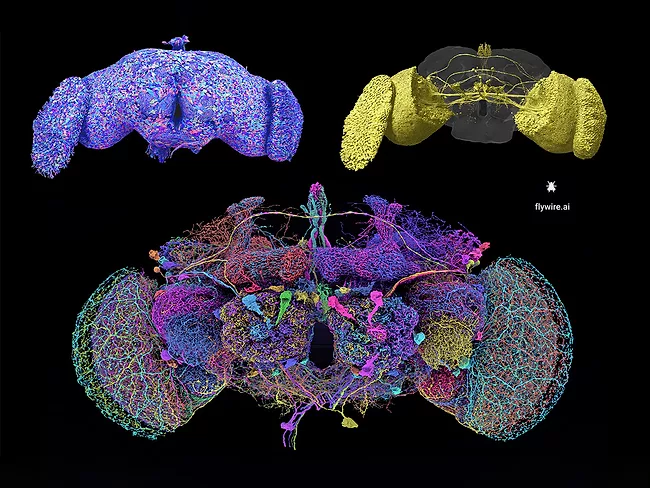
A collaboration led by the Flywire Consortium and comprising hundreds of scientists has completed a whole map of the adult fruit fly brain after several decades of collaborative work. By using electron microscopy and three-dimensional reconstruction supported by AI tools, the researchers have revealed the neural wiring of the Drosophila melanogaster brain, a connectome of 140,000 neurons with 50 million synaptic connections. In the future, researchers could possibly use this map as an artificial in silico model to study the brain as a simulator through its connections, though a lot of work remains to be done for this.
For once, the EMA appears to have pipped the U.S. FDA to the post, with Pfizer Inc.’s hemophilia A and B therapy Hympavzi (marstacimab) recommended for approval in Europe on Sept. 20, while the U.S. PDUFA date is set for the fourth quarter of the year.
A novel gene therapy that leads to cellular rejuvenation could restore vision after non-arteritic anterior ischemic optic neuropathy (NAION) and glaucoma. The technique is based on a reprogramming process that reverses the epigenetic DNA alterations caused by aging. Preclinical studies in glaucoma mice and nonhuman primates (NHP) models for this stroke-like disorder that affects the eye, showed an improvement of vision and restoration of the damaged axons of the optic nerve.

 RSS
RSS