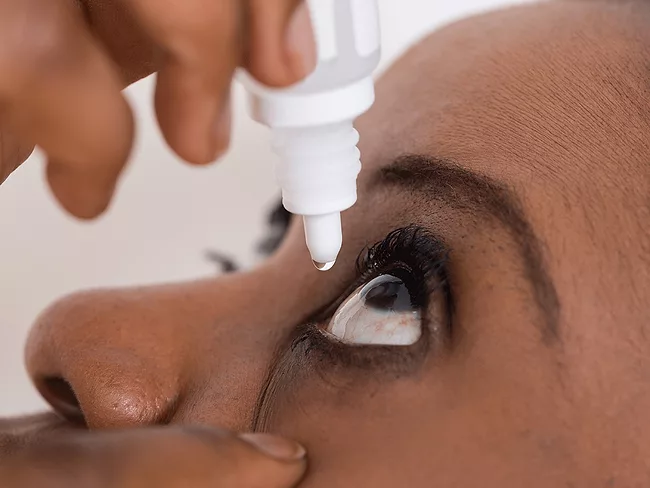
Aldeyra Therapeutics Inc. is making another run at U.S. FDA clearance for reproxalap in dry eye disease (DED) after nailing the primary endpoint in a phase III randomized, double-masked, vehicle-controlled dry eye chamber trial of 0.25% ophthalmic solution.
Another complete response letter from the U.S. FDA for Regeneron Pharmaceuticals Inc.’s age-related macular degeneration (AMD) therapy Eylea (aflibercept) – along with disappointing sales of the VEGF inhibitor – dented shares (NASDAQ:REGN) by $41.95. They closed April 29 at $568.91, having traded as low as $542.44 during the day.
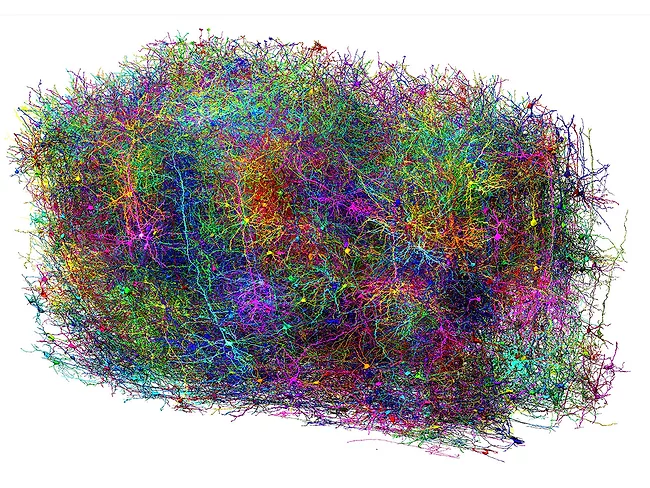
Scientists from the Machine Intelligence from Cortical Networks (MICRONS) consortium have published the microconnectome of a cubic millimeter of the mouse brain. This is the most complete map of this organ to date at nanometer resolution for a mammal. It not only contains the structure and connections of each and every cell in that volume of tissue, but is also linked to the neuronal activity of that portion of the CNS, linking anatomy and function in the same cells.
Aldeyra Therapeutics Inc. is hoping that research already underway will satisfy the U.S. FDA, which delivered to the company another complete response letter (CRL) related to the NDA for reproxalap in dry eye disease (DED).
After announcing that lead candidate sozinibercept (OPT-302) failed the phase III Coast trial in wet age-related macular degeneration (AMD), Opthea has now decided to close the Coast trial as well as the Shore trial. As reported by BioWorld, Opthea announced last week that it was considering its options after lead candidate sozinibercept (OPT-302) failed the phase III Coast trial in wet AMD.
The EMA has rejected the Alzheimer’s disease therapy Kisunla (donanemab) from Eli Lilly and Co., saying the benefits of the anti-amyloid antibody do not outweigh the risks of edema and hemorrhage in the brain, known as amyloid-related imaging abnormalities (ARIA).
Shares of Unity Biotechnology Inc. (NASDAQ:UBX) sank 28.8% to close at $1.30 March 24 as a top-line readout of its phase IIb Aspire study testing UBX-1325 head-to-head against aflibercept in diabetic macular edema (DME) fell short of statistical noninferiority on the primary analysis endpoint. But that’s not the full story, according to company executives, who have plans for moving the senolytic Bcl-xL inhibitor into late-stage studies.
Opthea Ltd. is considering its options after lead candidate sozinibercept (OPT-302) failed the phase III Coast trial in wet age-related macular degeneration (AMD). The global Coast phase III trial evaluated the efficacy and safety of intravitreally administered 2-mg sozinibercept every four or eight weeks in combination with 2-mg aflibercept every eight weeks after a loading phase for the treatment of wet AMD. The trial did not meet its primary endpoint of mean change in best corrected visual acuity from baseline to week 52.
China’s National Medical Products Administration (NMPA) approved the country’s first injectable teprotumumab biosimilar from Innovent Biologics Inc. under the brand name of Sycume (teprotumumab N-01) to treat thyroid eye disease on March 14. The NMPA on March 15 accepted Simcere Pharmaceutical Group Ltd.’s NDA of deunoxavir marboxil (ADC-189) tablets, a product originally developed by Jiaxing Andicon Biotech Co. Ltd. to treat influenza A and B.
Bristol Myers Squibb Co.’s decision this week to snag Bluebird Bio Inc. spinout 2seventy Bio Inc. for $102 million net – just weeks after investors bid $30 million for Bluebird itself – seemed to place a final blow on what was once a promising gene therapy company. The space in general has struggled to make business sense out of the one-time therapies that often involve complicated manufacturing and exorbitant prices, despite the life-changing value that gene therapies bring to patients. But despite some recent setbacks, biopharmas continue to plow forward with promising research in the field.
 RSS
RSS