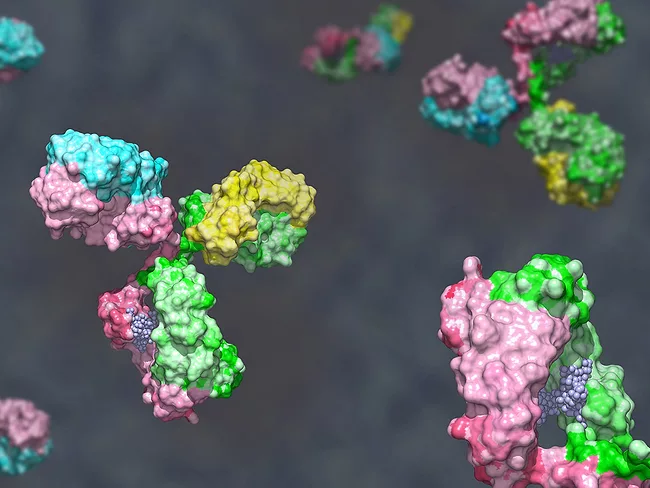
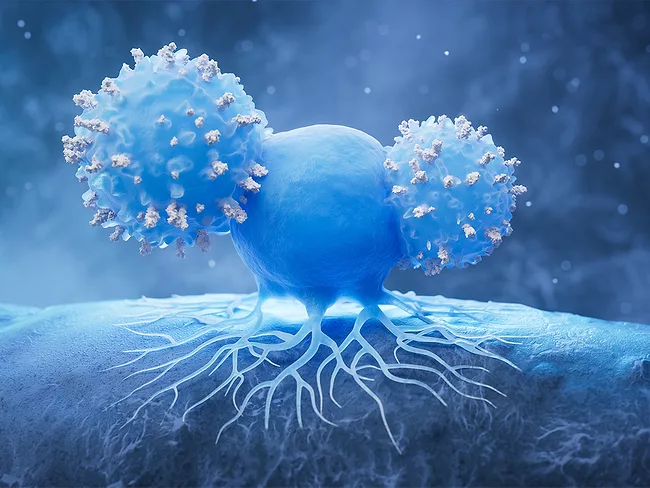
Researchers from Agni Bio Inc. reported the preclinical profile of AGB-201, a bispecific antibody designed to simultaneously target EDB and LTβR, while minimizing unwanted immune activation.
Zelluna ASA has received approvals from the U.K.’s Medicines and Healthcare products Regulatory Agency (MHRA) and research ethics committee for its clinical trial application (CTA) for ZI-MA4-1, Zelluna’s lead T-cell receptor-based natural killer (TCR-NK) product candidate.
Chugai Pharmaceutical has reported a new humanized antibody (Ab, SOF-10) that targets latent TGF-β1 and selectively blocks protease- and integrin αVβ8-mediated latent TGF-β1 activation.
At the ongoing AACR Immuno-Oncology Conference (AACR IO) in Los Angeles, Ampersand Biomedicines Inc. gave a presentation on promising results in the field regarding AMP-410, an anti-VEGF/4-1BB antibody construct that limits 4-1BB activation in VEGF-rich tumor types, thus achieving durable efficacy.
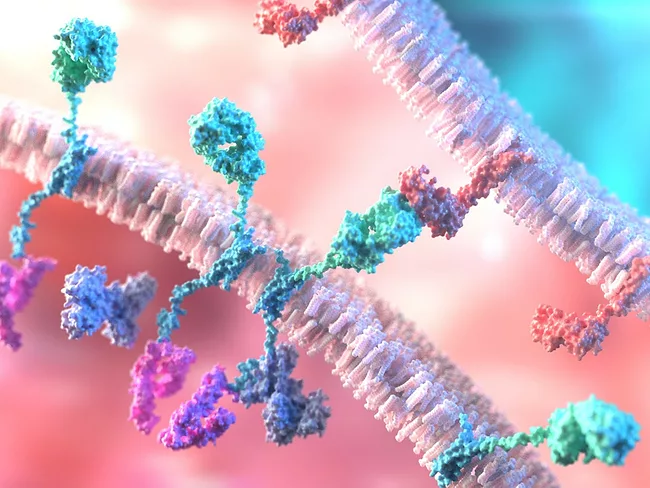
SLAMF6 is an immune cell receptor whose function was not clear. Does it activate or inhibit cells? The results so far have been contradictory. Now, scientists at the Institut de Recherches Cliniques de Montréal have unveiled evidence that SLAMF6, a protein of the SLAM family that binds to copies of itself, is regulated by interactions between molecules of the same receptor within the same cell.
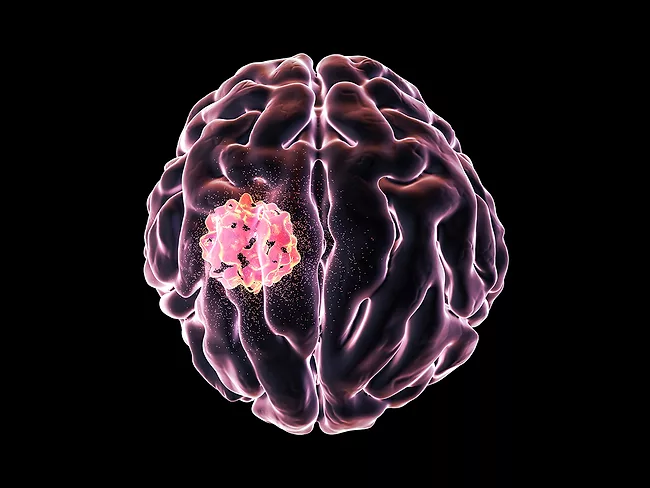
Beactica Therapeutics AB, together with researchers at KU Leuven, has been awarded a €2.5 million (US$3.0 million) grant by the European Innovation Council (EIC) to advance BEA-17, a precision immune therapy for glioblastoma.
Sichuan Kelun-Biotech Biopharmaceutical Co. Ltd. has described antibody-drug conjugates (ADCs) comprising antibodies targeting cadherin-3 (CDH3; CDHP; P-cadherin) covalently linked to cytotoxic drug through a linker. They are reported to be useful for the treatment of cancer.
SLAMF6 is an immune cell receptor whose function was not clear. Does it activate or inhibit cells? The results so far have been contradictory. Now, scientists at the Institut de Recherches Cliniques de Montréal (IRCM) have unveiled evidence that SLAMF6, a protein of the SLAM family that binds to copies of itself, is regulated by interactions between molecules of the same receptor within the same cell.
Tempest Therapeutics Inc. has outlined plans to advance its newly acquired CAR T assets. While prioritizing development of its clinical-stage dual-targeting CD19/BCMA CAR-T program, TPST-2003 (ERI-2003), the company will also expand its portfolio into next-generation modalities.
Nextpoint Therapeutics Inc. has obtained IND clearance from the FDA to initiate clinical development of NPX-372, a first-in-class B7-H7-targeted T-cell engager (TCE) for the treatment of patients with solid tumors.
 RSS
RSS