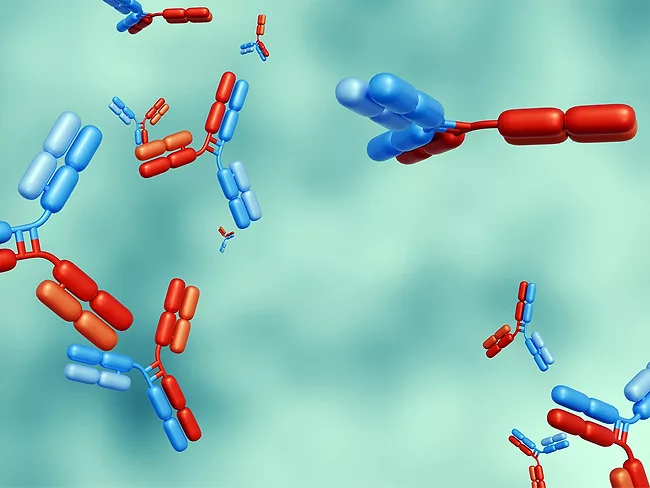
T-cell engagers (TCEs) drive synthetic antitumor immunity by bypassing endogenous T-cell priming and directly inducing tumor cell killing. In prostate cancer, targeting prostate-restricted antigens such as STEAP2, combined with CD8-guided TCE formats that favor cytotoxic T-cell engagement, offers a strategy to reduce cytokine release while maintaining antitumor activity.
Evolveimmune Therapeutics Inc. has announced the nomination of a development candidate against a solid tumor target as part of its ongoing partnership with Abbvie Inc., triggering an $18 million milestone payment to Evolveimmune.
Researchers from Hangzhou DAC Biotechnology Co. Ltd. reported preclinical efficacy data for DXC-016, a next-generation, subcutaneously administered, dual-payload c-Met-targeting antibody-drug conjugate (ADC) derived from the DXA-016 anti-c-Met nanobody.
Tumor-associated calcium signal transducer 2 (TROP2) is a transmembrane glycoprotein involved in different signaling pathways that promote proliferation, migration and invasion of tumoral cells, and its overexpression is associated with poor prognosis in multiple cancer types. Astellas Pharma Inc. has developed a TROP2-targeting antibody-drug conjugate (ADC), ASP-2998, and recently presented preclinical data on the candidate.
Taiho Oncology Inc., Taiho Pharmaceutical Co. Ltd. and Araris Biotech AG have announced completion by the FDA of the IND review period for ARC-02, enabling initiation of a phase I trial by Taiho Oncology.
Codeable Therapeutics Inc. has developed new antibody-drug conjugates comprising an antibody covalently linked to a cytotoxic drug for potential use in the treatment of cancer.
Although CAR T-cell therapy has been highly effective in hematological cancers, its activity in solid tumors is still constrained by inhibitory checkpoints such as PD-1, LAG-3 and TIM-3, together with the lack of locally available cytokines such as IL-2 needed to sustain T-cell function. Anwita Biosciences Inc. and collaborators aimed to overcome these challenges by developing a strategy integrating an immune checkpoint inhibitor (ICI) with a T-cell stimulatory cytokine.
Mabwell (Shanghai) Bioscience Co. Ltd. has synthesized antibody-drug conjugates comprising antibody or antigen-binding fragment targeting disintegrin and metalloproteinase domain-containing protein 9 (ADAM9) covalently linked to a cytotoxic drug. They are described as potentially useful for the diagnosis and/or treatment of cancer.
The major histocompatibility complex class I polypeptide-related sequences A and B (MICA/B) are frequently expressed by cancer cells. In a recently published study, researchers from Icahn School of Medicine at Mount Sinai hypothesized that the therapeutic efficacy of anti-MICA/B antibodies could be enhanced through Fc optimization with three point mutations in the Fc region: G236A, A330L and I332E (GAALIE).
Incyte Corp. has developed and presented data for their CD70xCD3 bispecific antibody INCA-036873, which was designed to activate T cells and kill tumoral cells expressing CD70.

 RSS
RSS