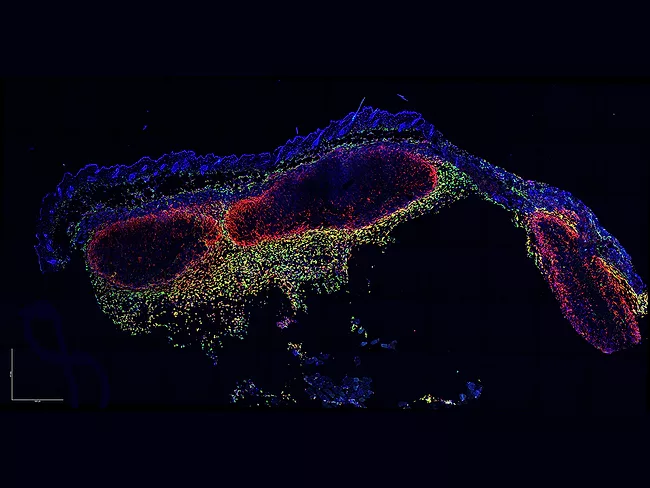
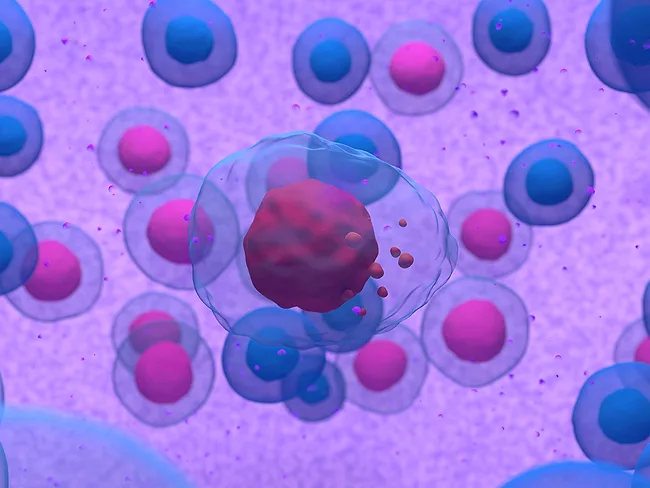
Australian researchers have identified a previously overlooked population of immune cells in the skin that physically restrain melanoma growth by engulfing live melanoma cells, and the discovery could reshape thinking around macrophage-targeted cancer therapies and innate immunity in oncology.
Defects in antigen presentation lead to resistance to cancer immunotherapy, where type I conventional dendritic cells (cDC1s) are crucial drivers of antitumor immunity and their presence is tied to favorable responses and better outcomes. Intratumoral delivery of adenoviral vector, Ad5-PIB, encoding PU.1, IRF8 and BATF3 reprograms tumor cells into cDC1-like antigen-presenting cells and has shown synergy with immune checkpoint blockade (ICB) therapy at exerting antitumor immunity. Asgard Therapeutics AB has developed AT-108, a lead candidate developed for durable efficacy.
Umoja Biopharma Inc. performed preclinical studies to evaluate the antitumor activity of UB-VV500, an off-the-shell lentiviral vector CAR T-cell product. It is based on its Vivovec technology and designed to engineer fully human anti-B-cell maturation antigen (BCMA)/G protein-coupled receptor class C group 5 member D (GPRC5D) dual-targeting chimeric antigen receptor (CAR) T cells, for the potential treatment of multiple myeloma (MM).
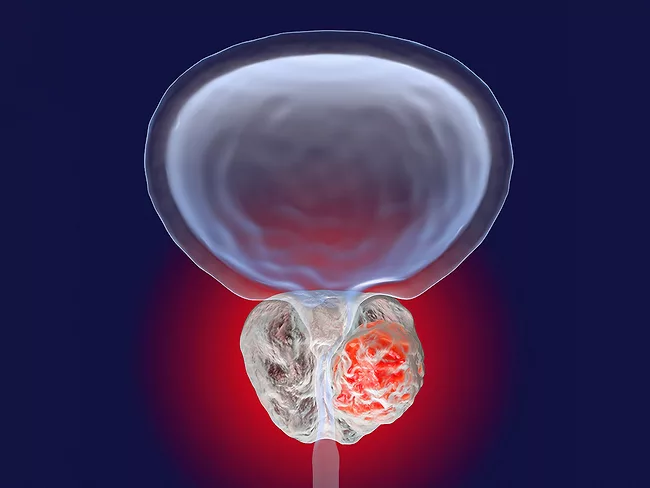
Shanghai Henlius Biotech Inc.’s HLX-3902, a trispecific antibody targeting STEAP1xCD3xCD28, has received approval from the Human Research Ethics Committee (HREC) in Australia and has been filed with the Therapeutic Goods Administration (TGA). The T-cell engager is intended for the treatment of metastatic castration-resistant prostate cancer and other advanced solid tumors.
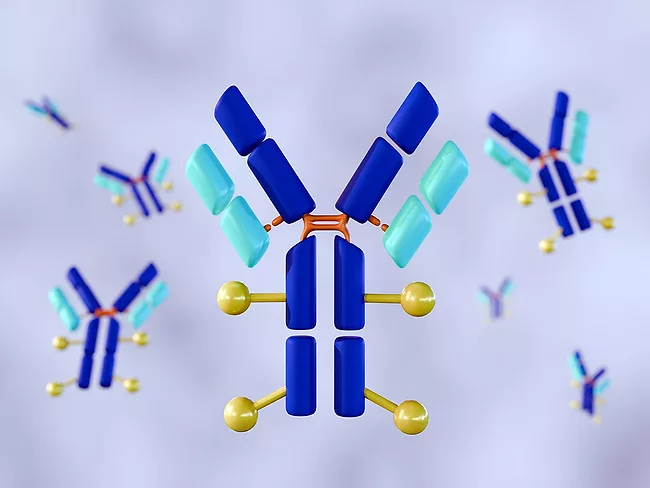
Ichnos Glenmark Innovation Inc. has announced a new development candidate, ISB-2301, a potentially first-in-class, multispecific immune cell activator for the potential treatment of multiple solid tumor indications. ISB-2301 is a multispecific antibody that targets three tumor-associated antigens to trigger tumor cell death and engages both T and NK cells to activate the immune system. Leveraging the company’s BEAT technology, ISB-2301 is designed to induce potent antibody-dependent cellular cytotoxicity, checkpoint inhibition and a sustained type 1 immune response.
Matter Bio has submitted its first IND application to the FDA for Lm-LLO-TT, the company’s lead therapeutic candidate, seeking to initiate a first-in-human phase I/IIa trial in patients with pancreatic ductal adenocarcinoma (PDAC).
Iksuda Therapeutics Ltd. and UCL Business Ltd. have prepared new antibody-drug conjugates comprising antibodies targeting B7 homolog 3 (B7-H3, CD276) covalently linked to cytotoxic drug, designed for potential use in the treatment of cancer.
Antibody-drug conjugates (ADCs) with a dual payload, which deliver two distinct cytotoxic agents via a single antibody, are emerging therapeutics developed to address the limitations of classic ADCs. Primelink Biotherapeutics (Shenzhen) Co. Ltd. recently presented data for their dual-payload ADCs, highlighting PLB-015, which carries a TOP1 inhibitor and an ATR inhibitor with an anti-HER2 antibody and is designed to inhibit the DNA damage response activated by cancer cells when harmed.
The University of Texas MD Anderson Cancer Center has received IND clearance from the FDA to initiate a phase I trial of a novel CAR T-cell therapy, JV-394, for patients with relapsed or refractory CD94-positive T/natural killer (NK) cell lymphomas.
A recent Antelope Therapeutics SAS patent describes new antibody-drug conjugates (ADCs) comprising monoclonal antibodies targeting canAg (CA242) mucin glycoepitope covalently linked to exatecan designed for use in the treatment of cancer.
 RSS
RSS