Researchers from Memorial Sloan Kettering Cancer Center and affiliated organizations revealed findings from the preclinical evaluation of 1H5, a novel monoclonal antibody (mAb) candidate that inhibits the NOTCH signaling pathway and is being developed for the treatment of high-grade gliomas (HGGs).
There is increasing interest in developing precision immunotherapies that target tumors but with minimal impact on healthy tissues. IL-12 is a potent immunostimulatory cytokine that has shown effective antitumoral activity in the preclinical setting, but its systemic delivery may be accompanied by off-target effects.
Nectin-4 antibody-drug conjugate (ADC) and checkpoint inhibitor combinations have represented a great advancement in the treatment of bladder cancer, but relapse and treatment-related toxicities underscore the need for new therapeutic strategies.
Researchers from Anaveon AG and affiliated organizations presented the discovery and preclinical characterization of ANV-700, a novel proximity-activated cytokine (PAC) compound designed to selectively deliver IL-21 to PD-1-expressing cells for the treatment of cancer.
AGEN-1721 was designed as an Fc-enhanced bifunctional antibody to selectively target FAP and neutralize TGF-β via an optimized TGF-βR2 TRAP moiety fused to an engineered Fc region, with the aim of maximizing effector functions.
Researchers from SL Bigen Inc. and collaborators presented the preclinical characterization of BM-205, a novel entity of engineered MSCs designed to exert antitumor functions.
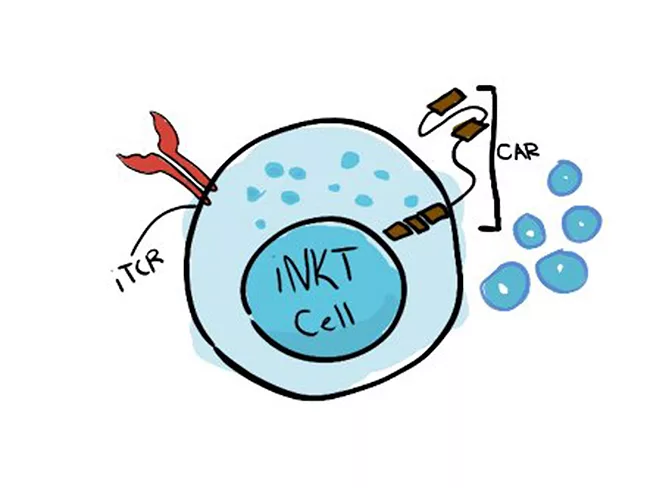
Arovella Therapeutics Ltd. is heading toward the clinic with its lead product, ALA-101, which consists of a chimeric antigen receptor (CAR) targeting CD19 and invariant natural killer T (iNKT) cells.
Compared to normal tissues, where the expression of ULBP2/5/6 protein is restricted, in non-small-cell lung cancer (NSCLC), head and neck cancer and squamous urothelial carcinoma, the levels of ULBP2/5/6 remain high even following relapse from standard-of-care therapies and is retained in metastatic lesions. Besides, these squamous cell cancers showed a high proportion of CD2+ tumor-infiltrating lymphocytes compared to other co-stimulatory receptors.
Researchers from Astrazeneca plc presented the discovery and preclinical characterization of AZD-9793, a novel CD8-guided T-cell engager (TCE) being developed for the treatment of hepatocellular carcinoma (HCC).
Hemogenyx Pharmaceuticals plc has obtained approval by the institutional review board (IRB) of the company’s first clinical site to initiate a phase I trial of the company’s lead asset, HEMO-CAR-T, for the treatment of relapsed or refractory acute myeloid leukemia (AML) in adults.

 RSS
RSS