Shanghai Microport Medbot (Group) Co. Ltd. started trading its shares on the Hong Kong Stock Exchange on Nov. 2, with shares increasing over 6% in the middle of the day. It raised HK$1.56 billion ($201 million) with shares going at HK$43.2 apiece in an initial public offering. The firm plans to use 35% of the proceeds for the development and commercialization of its core product, the laparoscopic surgical robot Toumai.
Tilak Healthcare SAS has received €7 million (US$8.08 million) from investors to push commercialization of its mobile game and vision monitoring platform, Odysight. The CE marked class I device is prescribed by ophthalmologists to remotely monitor age-related visual impairment and includes daily visual tests to stimulate cognitive and visual abilities. A rollout of the mobile game has already commenced in France.
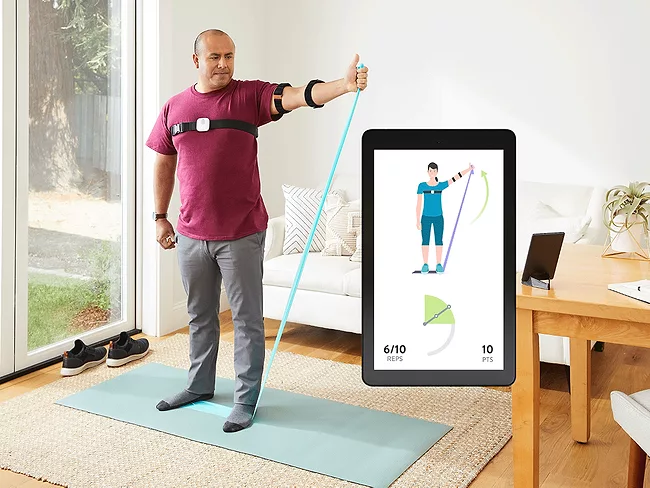
Digital musculoskeletal health company Hinge Health Inc. kicked its fundraising into high gear this year, reporting $400 million in a series E round and $200 million in a secondary investment today. It closed a $300 million series D just last January. The San Francisco-based company has now raised more than $1 billion and achieved a valuation in excess of $6.2 billion. Returning investors Tiger Global and Coatue Management led the series E, while new investors Alkeon and Whale Rock took a stake in the company with their $200 million. Investors in the series D and previous rounds included Atomico, Insight Partners, Quadrille, 11.2 Capital, Lead Edge Capital, Bessemer Venture Partners and Heuristic Capital.
DUBLIN – Novadip SA raised €19 million (US$22.1 million) in a first close of a series B round to progress its autologous bone regeneration therapy, NVD-003, on either side of the Atlantic. The company is also working on an allogeneic regenerative approach, which is still preclinical.
PERTH, Australia – Singular Health Group Ltd. was awarded AU$50,000 (US$37,000) in funding from Australia’s Commonwealth Scientific and Industrial Research Organization’s (CSIRO) Kick-Start program to undertake a research project to develop artificial intelligence (AI)-based tools to automatically design patient-specific cranial implants. The AI will be integrated into Singular Health’s surgical planning software for editing before the cranial implants are 3D printed.

 RSS
RSS