PERTH, Australia – Singular Health Group Ltd. was awarded AU$50,000 (US$37,000) in funding from Australia’s Commonwealth Scientific and Industrial Research Organization’s (CSIRO) Kick-Start program to undertake a research project to develop artificial intelligence (AI)-based tools to automatically design patient-specific cranial implants. The AI will be integrated into Singular Health’s surgical planning software for editing before the cranial implants are 3D printed.
The NIH and CDC granted researchers at the Feinstein Institutes for Medical Research at Northwell Health $700,000 to investigate an in-the-ear stimulator as a treatment for post-traumatic stress disorder (PTSD) in first responders to the attack on the World Trade Center 20 years ago. The researchers will enroll 30 World Trade Center first responders with chronic PTSD in a sham-controlled trial to test the effectiveness of a device that uses transcutaneous auricular stimulation of the vagus nerve, which has shown promise in preclinical studies.
LONDON – Oxford Biodynamics plc won a $910,000 grant to help validate real-world use of its epigenetics test for identifying patients who will respond to treatment with checkpoint inhibitor drugs. The award was made as part of the Beau Biden Cancer Moonshot.
Eclipse Regenesis Inc. received a National Institutes of Health fast track grant of $1.7 million to advance development of the Eclipse Xl1 system for short bowel syndrome. The spring-like Eclipse device harnesses mechanotransduction to stimulate growth of new, functional intestinal tissue. Short bowel syndrome is a devastating and rare condition that leads sufferers with too little small intestine to extract sufficient nutrients to sustain life. The grant for Menlo Park, Calif.-based Eclipse came through NIH’s small business innovation program.
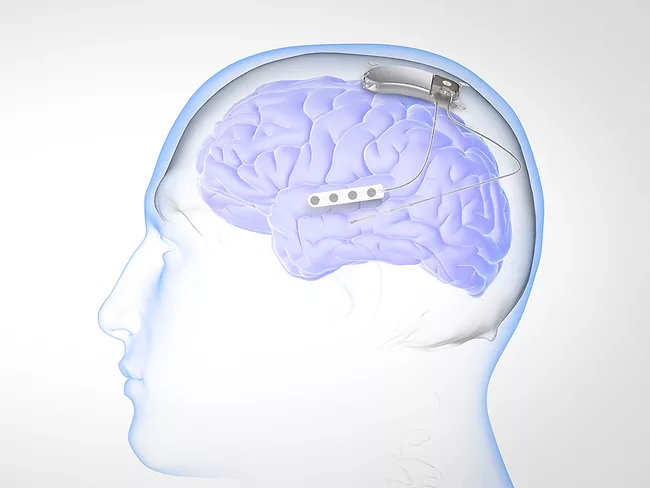
Neuropace Inc. nabbed $9 million in the form of a five-year NIH grant as part of the Brain Research through Advancing Innovative Neurotechnologies (BRAIN) Initiative. The grant will support the study of the Mountain View, Calif.-based company’s Responsive Neurostimulation (RNS) system in patients with Lennox-Gastuat syndrome (LGS), a debilitating form of epilepsy.
A multimillion dollar windfall for Icosavax Inc. will help allow the company to launch a COVID-19 vaccination program using its virus-like particle candidate (VLP), IVX-411, that displays the SAR-CoV-2 receptor-binding domain.
PARIS – Carthera SAS, of Paris, has obtained a $2.4 million grant and $12.5 million equity investment from the European Innovation Council (EIC) for the development of its ultrasound-based medical device for treating glioblastoma.
Without the COVID-19 pandemic, projected values of biopharma nonprofit collaborations and grants would be 72% and 30% below last year’s levels, although it is impossible to know what deals may have come to fruition in a world absent of the disruptive SARS-CoV-2 virus.
Privately held Alzheon Inc. picked up a $47 million grant from the NIH’s National Institute on Aging that will last over five years to support a phase III clinical trial of its oral brain-penetrant small molecule ALZ-801 to treat Alzheimer’s disease.
Privately held Alzheon Inc. picked up a $47 million grant from the NIH’s National Institute on Aging that will last over five years to support a phase III clinical trial of its oral brain-penetrant small molecule ALZ-801 to treat Alzheimer’s disease.
 RSS
RSS