Clinical analytics company Medial Earlysign Ltd. is expanding an existing partnership with Roche Holding AG to commercialize an artificial intelligence (AI) solution for the early detection of lung cancer. The companies originally signed an agreement in September to develop a personalized health solution for early detection of gastric cancer. The goal of the new collaboration is to develop Earlysign’s Lungflag software, which uses machine learning to identify patients at risk of developing lung cancer.
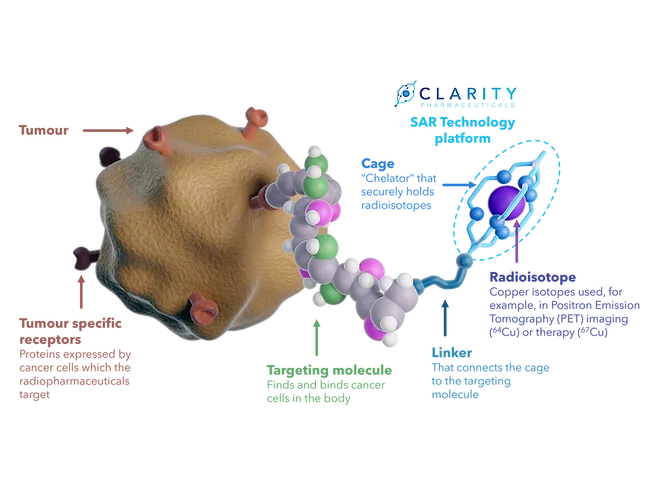
Clarity Pharmaceuticals Ltd. is progressing three of its targeted copper theranostics through the clinic that are based on its sarcophagine technology that securely holds copper isotopes inside a cage-like structure, called a chelator. The SAR technology allows a unique pairing of copper isotopes, copper-64 and copper-67, for both cancer diagnosis and therapy.
The U.S. FDA has given Resapp Health Ltd. the green light for its 510(k) Sleepcheckrx app to detect moderate to severe sleep apnea in adults as a prescription-only software-as-a-medical device. The FDA cleared the app as a class II medical device. Brisbane, Australia-based Resapp submitted the 510(k) premarket notification to the FDA in November 2021 for Sleepcheckrx for at-home sleep apnea screening.
Patent subject matter eligibility under Section 101 of the Patent Act has proven controversial for patents in the U.S. thanks in no small part to Supreme Court jurisprudence in cases such as Alice v. CLS Bank and Mayo v. Prometheus. In the latest development, the court has declined to hear the American Axle case, leaving many observers despairing of any chance of restoring a decent patent system for personalized medicine, companion diagnostics and even the use of artificial intelligence in drug development.
Hot on the heels of a groundbreaking deal brokered by the U.K.’s NICE to finance an antibiotic with a subscription-style payment plan, three European life sciences companies have formed a joint venture (JV) to create next-generation antimicrobials and diagnostics to fight antimicrobial resistance.
Clarity Pharmaceuticals Ltd. is progressing three of its targeted copper theranostics through the clinic that are based on its sarcophagine technology that securely holds copper isotopes inside a cage-like structure, called a chelator. The SAR technology allows a unique pairing of copper isotopes, copper-64 and copper-67, for both cancer diagnosis and therapy.
Oxford University has opened the doors to its new Pandemic Sciences Institute, a £100 million (US$119.5 million) initiative to build on the research and experience of COVID-19, to counter future pandemic threats.
Immunovia AB is progressing a study evaluating its Immray Pancan-d blood test for the early detection of pancreatic cancer in patients with new onset type 2 diabetes. Studies have found that type 2 diabetes is a major risk factor for developing pancreatic cancer, and the screening of molecular biomarkers may help patients access treatment before they develop symptoms. The company’s lab-developed test (LDT) measures nine serum biomarkers that, when combined in an algorithm, can detect pancreatic ductal adenocarcinoma.
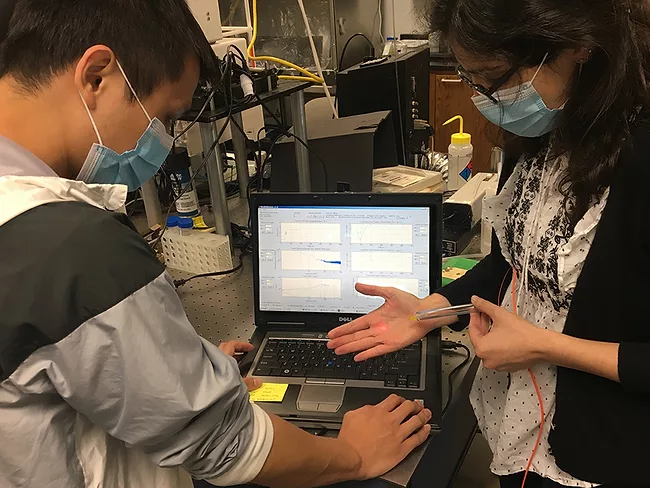
The University of Central Florida (UCF) and Orlando Health are testing new medical technology designed to identify blood clots more quickly in surgery. The monitoring device consists of a small optical fiber that uses red blood cells to track the process of blood coagulation in patients so doctors can watch for life threatening blood clot formation.

 RSS
RSS