TORONTO – Trillium Health Partners has received a C$1 million (US$810,000) grant from TD Bank Group to help accelerate the use of artificial intelligence (AI) at a newly developed health care lab. The AI Deployment and Evaluation (AIDE) lab will determine if machine learning models developed by industry and academia work well outside the data sets upon which they were trained.
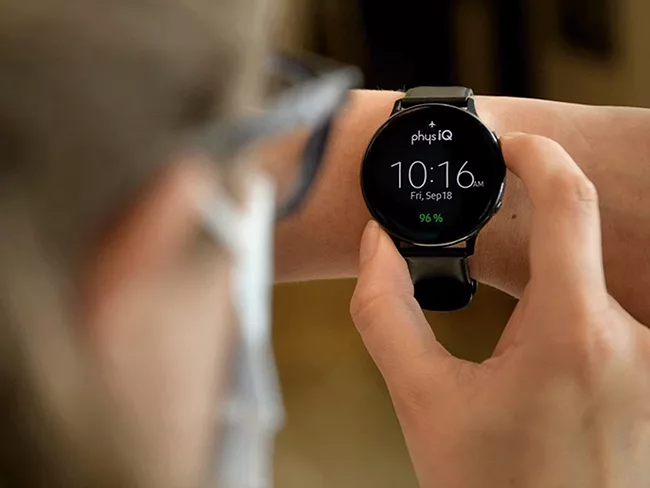
As a counterpoint to the raft of wellness-promoting smartwatches, Purdue University and Physiq Inc. have developed a smartwatch algorithm that flags illness. A year after launching their co-development program, the two organizations reported they have created an algorithm designed for smartwatches that enables detection of early signs of infection. The algorithm is already in use in a number of Physiq’s customers’ applications, Physiq Chief Scientific Officer Stephan Wegerich told BioWorld.
The world of artificial intelligence (AI) regulation is still in its infancy, but a number of agencies are nonetheless keen on harmonization for at least some of this policymaking task. The FDA announced recently that it has joined with Health Canada and the U.K. Medicines and Healthcare Products Regulatory Agency to develop a series of 10 guiding principles for good machine learning practices (GMLP), thus answering one of the key questions facing developers of these algorithms.
PERTH, Australia – Singular Health Group Ltd. was awarded AU$50,000 (US$37,000) in funding from Australia’s Commonwealth Scientific and Industrial Research Organization’s (CSIRO) Kick-Start program to undertake a research project to develop artificial intelligence (AI)-based tools to automatically design patient-specific cranial implants. The AI will be integrated into Singular Health’s surgical planning software for editing before the cranial implants are 3D printed.
The FDA’s device center has posted its annual fiscal year guidance agenda, and there are several carry-over items from fiscal 2021. The most conspicuous element of the FY 2022 agenda may be that a draft guidance for change control for artificial intelligence (AI) algorithms rates an entry on the B list rather than the A list, suggesting that the draft is not likely to emerge any time in the next 12 months.
Precision cancer care company Simbiosys Inc. has raised $15 million to accelerate development of its Tumor Scope software platform for management of solid tumors. The application enables oncologists to virtualize cancer tumors and simulate a patient’s response to specific drug therapies by combining artificial intelligence with biophysical simulations. The technology models the impact of drug delivery, drug sensitivity, metabolism and spatial heterogeneity and provides data that can be used to inform individual treatment plans.
TORONTO – Pathway Medical Inc. has raised C$1.6 million (US$1.3 million) in an oversubscribed funding round to expand its evidence-based clinical decision support platform and deliver an enterprise version of its point-of-care technology. The current mobile app uses natural language processing and machine learning to give doctors evidence-based answers to questions on patient diagnosis and treatment.
The question of bias in artificial intelligence (AI) algorithms is generally thought to be overcome by ensuring that the data set used to train the algorithm is representative of the population at large. However, Naomi Aaronson, executive director of clinical evaluation at the Blue Cross Blue Shield Association, said its not that simple because demographic data can combine in unpredictable ways and thus “the only real understanding of whether it works is in the clinical validation” of the algorithm in various settings.
PARIS – Teams from the Pitié-Salpêtrière hospital, the Institute for Research in Development, Sorbonne University and the National Institute of Health and Medical Research are proposing a new technique that uses artificial intelligence (AI) to identify the risk of developing a type of cardiac arrhythmia called Torsades de pointes (TdP) associated with taking certain drugs.
Fabric Genomics Inc.’s Gem artificial intelligence algorithm plus whole genome and whole exome data detected more than 90% of disease-causing variants in infants with rare diseases, a study in Genome Medicine demonstrated. The full process from blood sample to shortlist of causative variants and likely diseases takes just a matter of hours and the time to interpret whole genomes is condensed to about 15 minutes.
 RSS
RSS