With a new drug available to slow the progression of type 1 diabetes, Sanofi SA is partnering with two med-tech companies to increase screening for early-stage type 1 diabetes and identify eligible patients.
A month after raising $55 million to advance its AI-enhanced ultrasound diagnostics for cardiovascular disease, Ultromics Ltd. presented strong results for its U.S. FDA-cleared AI analysis of echocardiograms at the American Society of Echocardiography's 2025 Scientific Sessions in Nashville, Tenn. Ultromics' Echogo Amyloidosis was able to detect cardiac amyloidosis earlier and more accurately than traditional methods, missing fewer cases without increasing unnecessary testing.
In a real-world study, Eko Health Inc.’s AI-enabled digital stethoscope dramatically increased detection rates for atrial fibrillation, heart failure and valvular heart disease in primary care settings. Researchers from Imperial College London presented results from the study at the European Society of Cardiology in Madrid.
Researchers from the University of California, Davis (UC-Davis) continue to assemble intellectual property in support of their development of methods and techniques which improve the accuracy of wearable sensor technologies.
Signos Inc. landed U.S. FDA clearance for its over-the-counter glucose monitoring system, which combines Dexcom Inc.'s non-prescription Stelo continuous glucose monitor with an AI-powered platform focused on weight management and metabolism. The sensor transmits glucose readings to a smartphone app that interprets the data, provides guidance for healthy habits and educates the user.
A research team from Pusan National University has developed a novel deep learning model coined Moglo-Net, designed to enable three-dimensional reconstruction of images from hand-held ultrasound procedures.
Ultromics Ltd. raised $55 million in a series C financing round to expand its commercial footprint across the U.S. and invest in the development of new AI modules for earlier, more accurate detection of cardiovascular disease, Ross Upton, CEO and founder of Ultromics told BioWorld.
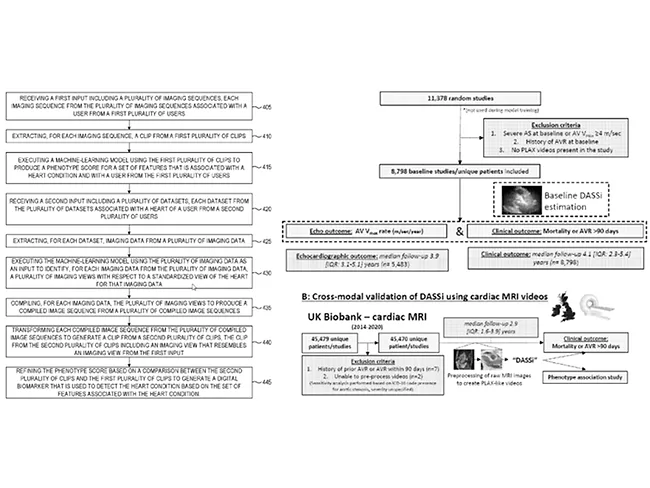
Researchers from the Yale University filed for protection of a multi-modal approach to predict the progression risk of a heart condition using artificial intelligence algorithms applied to cardiovascular videos.
The Trump administration released an action plan for AI, which includes an exports program for full-stack AI in areas such as health care. The announcement drew the support of the Advanced Medical Technology Association, which described the initiative as an accelerant for the use of AI in health care and a boon to patient outcomes.
Carlsmed Inc. launched its IPO at a price of $14 to $16 per share for 6.7 million shares, which would raise just over $100.5 million at the midpoint. The spinal surgery technology company could well pull in more money, if recent history provides guidance. Most med-tech IPOs this year have settled at the upper end of their price range, with Caris Life Sciences Inc. notably raising its price twice before going public at $21, a dollar more than the top of its initial range.
 RSS
RSS