GE Healthcare Ltd. is expanding its cancer technology capabilities through new alliances with artificial intelligence (AI) companies and researchers. The company said it is teaming up with U.K.-based Optellum Ltd. to advance lung cancer diagnostics, as well as collaborating with the University of Cambridge to develop an AI application that integrates cancer patient data from multiple sources into a single interface.
Lunit Inc. has raised $61 million in a fundraising round, getting it closer to its planned list on South Korea’s Kosdaq. “We will use these funds as working capital to research and develop artificial intelligence (AI) products, as well as developing our global market,” a Lunit spokesperson told BioWorld. Seoul, South Korea-based Lunit secured new investors for this round, including U.S. life science investors Healthquest Capital, Casdin Capital LLC, and The American Cancer Society’s Brightedge fund. Asia Pacific-based global health care investors included Tybourne Capital Management Ltd. and NSG Ventures Pte. Ltd.
Ieso Digital Health Ltd. raised £39 million (US$52.5 million) in financing to develop new tools for its digital cognitive behavioral therapy (CBT) service. Investment firm Morningside led the series B round with Sony Innovation Fund and existing shareholders IP Group, Molten Ventures and Ananda Impact Ventures also participating. Ieso’s digital platform connects users to mental health practitioners for text-based therapy.
Sword Health Technologies Inc. slipped another $189 million into its coffers with an oversubscribed $163 million series D fundraising round that spilled into an additional $26 million secondary transaction. The enthusiasm for the round points to the keen interest in digital delivery of musculoskeletal (MSK) physical therapy, which has driven Sword and competitor Hinge Health Inc. both into rarified unicorn territory with valuations of $2 billion and $6.2 billion, respectively.
The FDA gave Pear Therapeutics Inc. a second breakthrough device designation with the company’s Reset-A prescription digital therapeutic (PDT) for alcohol use disorder getting the regulatory agency’s speed pass. The news comes a week out from the vote of stockholders of blank-check company Thimble Point Acquisition Corp. Inc. on a combination with Pear that will take the digital therapeutic company public.
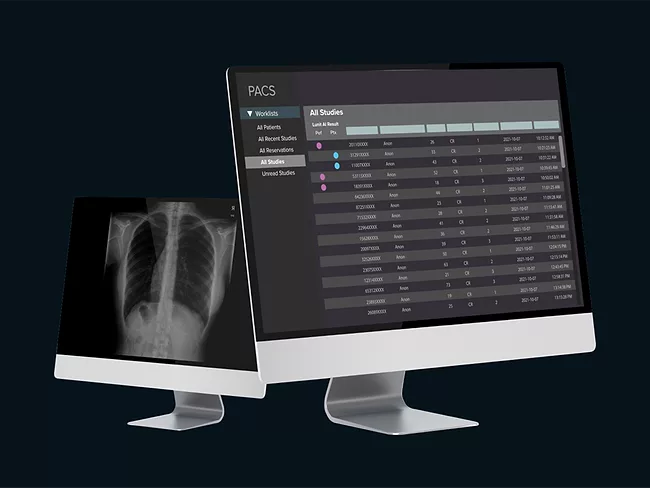
Lunit Inc. has won FDA approvals for the company’s breast cancer detection product Lunit Insight MMG and the triage and notification software Lunit Insight CXR Triage, only days apart. Lunit Insight MMG is an artificial intelligence (AI) product for breast cancer detection from mammography images. Lunit’s second approval is for Lunit Insight CXR Triage, its AI-powered chest X-ray triaging product.
Vuno Inc. has received its third breakthrough device designation from South Korea’s Ministry of Food and Drug Safety (MFDS), for its artificial intelligence (AI)-based electrocardiogram (ECG) analysis software Vuno Med DeepECG. Vuno is the first company to have three such designations to its name. “We developed Vuno Med DeepECG via long-term ECG data analysis research. With this breakthrough designation, we target expanding our market share in the medical AI industry via our bio-signal businesses. Among these is ECG data, which can help diagnose various heart diseases and has high potential,” Yeha Lee, chairman at Vuno, told BioWorld.
The Health Breach Notification Rule set forth by the U.S. Federal Trade Commission in 2009 was not initially directed toward health apps used strictly for non-medical uses, but the FTC has indicated it will enforce the rule for developers of these non-medical apps as well. The risk is substantial for these developers as the civil penalties for breaches can reach $44,000 per violation per day, which in the case of a mass breach could present a profound financial risk.
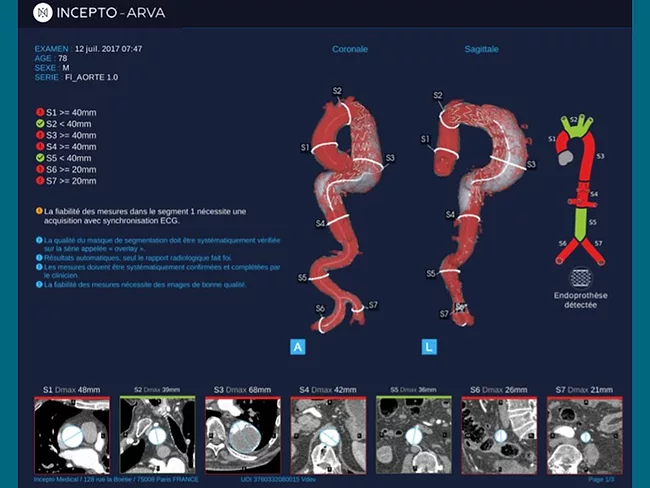
PARIS – Incepto Medical SAS, in partnership with Marie-Lannelongue Hospital, is developing an automated system to measure maximum aorta diameter. Called ARVA (Augmented Radiology for Vascular Aneurysm), it’s hosted in the cloud and is CE marked as a class I device. “Our tool uses the first algorithm to provide automatic measurement of external aortic diameter along the entire aorta, from ascending aorta to the iliac arteries,” Antoine Jomier, co-founder and CEO of Incepto, told BioWorld. This new tool for radiologists and surgeons will be used to diagnosis and monitor aneurysms.
Artificial intelligence (AI) is quite the buzzword for med tech and regulators alike, but that doesn’t mean rules for AI are just over the horizon. Pat Baird, director of global software standards at Koninklijke Philips NV, said during a recent webinar that problems such as long-standing definitional issues virtually guarantee that regulatory agencies will struggle to enact regulations, a predicament that leaves software developers with the kind of uncertainty that investors in the life science industries abhor.
 RSS
RSS