ANAHEIM, Calif. – Is artificial intelligence (AI) ready for prime time in health care? What’s hype and what’s real? That’s the question that was posed to an expert panel at MD&M West.
ANAHEIM, Calif. – The digital health wave is impacting seemingly every aspect of health care, from digital therapeutics where software is the therapy to powerful analytics that bring actionable insights to aid in a clinical situation.
Palo Alto, Calif.-based Varian Medical Systems Inc. has won the U.S. FDA’s nod for its Ethos therapy, an artificial intelligence (AI)-driven holistic solution that is aiming to transform cancer care. This solution is designed to deliver an entire adaptive treatment in a typical 15-minute slot and is intended to put the patient at the center of care, noted Chris Toth, president of Varian Oncology Systems.
Brisbane, Calif.-based Caption Health Inc. received good news from the U.S. FDA, which has given a thumbs up to Caption Guidance. This software aims to assist medical professionals in the acquisition of cardiac ultrasound images and uses artificial intelligence (AI) to provide real-time guidance.
The market for multinational medical device companies in China has largely been driven by use only in major public hospitals for patients who pay mostly or entirely out-of-pocket. But that’s continuing to change in ways that could offer a window onto medical device trends in the region over the coming decades.
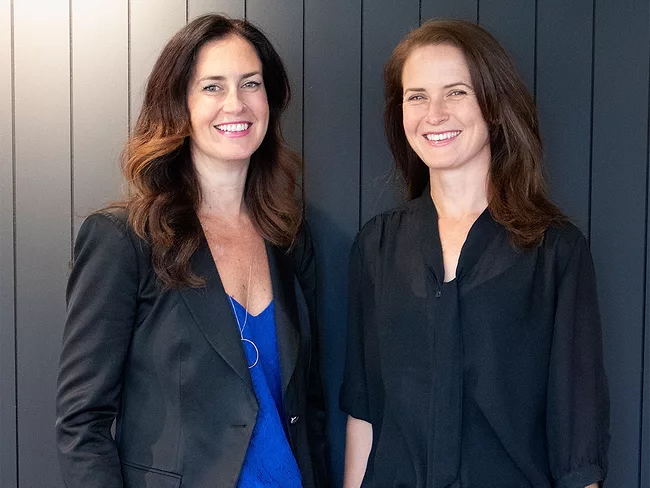
PERTH, Australia – With new funding in hand from Yamaha Motor Ventures & Laboratory Silicon Valley Inc., Loop+ founders and sisters Kath Hamilton and Clare Conroy and are on their way to commercializing a pressure and movement tracking device they developed for wheelchair-bound patients.
TORONTO – Calgary, Alberta-based Orpyx Medical Technologies Inc. has launched a sensory insole with remote patient monitoring to prevent potentially fatal diabetic foot ulcers (DFU) and neuropathy-related ulcers. According to Orpyx CEO Breanne Everett, development of the Orpyx SI sensory insole system follows years of study on how DFUs occur and how best to share information with patients and doctors so they can react quickly to first signs of the condition.
Early detection of neurodegenerative disease even before symptoms emerge is the ideal when it comes to trying to treat or prevent progression. But that has remained difficult, as brain tissue that isn’t available until after death is typically the most definitive. Now, researchers have used an artificial intelligence (AI) algorithm to identify genetic expression data over time and correlate them in blood and postmortem brain tissue samples from subjects with either Alzheimer’s or Huntington’s disease.
IDbyDNA Inc., a San Francisco-based metagenomics technology company, scooped up $20 million in series B financing in a round led by Artis Ventures. Genesys Capital and others participated in the round. The company plans to use the money to accelerate uptake of its Explify software platform.
IDbyDNA Inc., a San Francisco-based metagenomics technology company, scooped up $20 million in series B financing in a round led by Artis Ventures. Genesys Capital and others participated in the round. The company plans to use the money to accelerate uptake of its Explify software platform.
 RSS
RSS