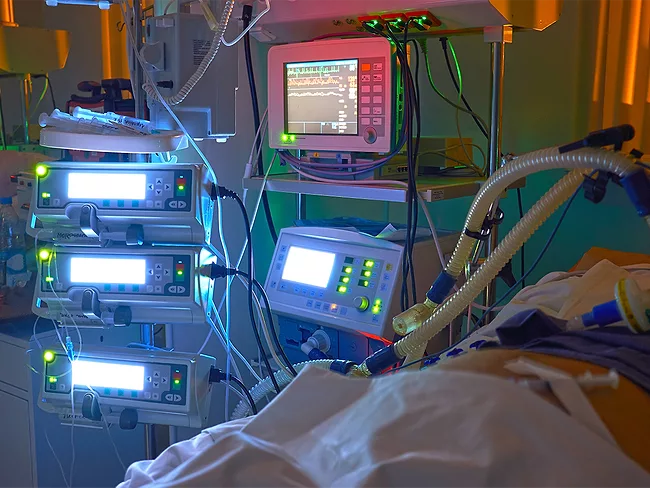
Swiss researchers set out to identify and analyze vital sign data that could offer a window into predicting circulatory failure, which could enable more effective prevention of catastrophic events in the ICU.
Pharma has not gotten terribly serious yet about integrating digital health tools into clinical trials, let alone into their product offerings, despite the potential benefits they could offer when it comes to patient adherence, compliance and experience. Still, oncology giant Bristol-Myers Squibb Co. has made a small step in that direction by partnering with Paris-based digital therapeutics company Voluntis SA.
LONDON – Ibex Medical Analytics is preparing for commercial rollout in Europe after receiving CE-IVD marking for its artificial intelligence (AI) decision support system for automated interpretation of prostate cancer biopsies. Galen Prostate, trained on more than 60,000 samples from multiple institutions, is intended to give a second opinion on digitized slides, following initial assessment by a pathologist.
AI-based, digital pathology startup Proscia Inc. has partnered with the University of California at San Francisco (UCSF) to advance the practice of pathology via artificial intelligence (AI). The pair will start with prostate cancer and then plan to move on to validate approaches in several additional pathology subspecialties.
In an effort to gain new insights about the novel coronavirus sweeping the globe, Boston-based Biofourmis Inc. is leveraging its artificial intelligence (AI)-driven remote monitoring platform to monitor Hong Kong patients diagnosed or suspected of having COVID-19. The remote monitoring and disease surveillance program, which kicked off just a few days ago, is being administered by the University of Hong Kong and includes Biofourmis’ Hong Kong-based joint venture, Harmony Medical Inc.
An artificial intelligence (AI) platform developed by Naperville, Ill.-based Physiq Inc. gave researchers a mean of 10.4 days warning of an impending heart failure exacerbation that would require hospitalization or an emergency department visit, according to a study published in Circulation – Heart Failure.
PERTH, Australia – Australian medication adherence technology firm Adherium Ltd. is relaunching itself after a management reshuffle and a successful capital raise of AU$5.4 million (US$3.5 million) to deploy a new commercial strategy.
San Diego-based Cortechs Labs Inc. has developed an automated PET image analysis tool that identifies changes in specific brain structures associated with Alzheimer’s disease, vascular dementia, epilepsy, multiple sclerosis and other neurological disorders.
Artificial intelligence still has a lot to prove when it comes to its relevance in improving health care. But one bright spot was a deal last July between Dublin-based Medtronic plc and San Francisco-based startup Viz.ai Inc. to use the latter’s AI system that’s designed to spot a large vessel occlusion automatically in CT angiogram images.
The second day of the FDA workshop on artificial intelligence (AI) in health care featured several interesting proposals, including that AI will be used in health care without the aid of a health care professional. John Martin, chief medical officer at Butterfly Network Inc., of Guildford, Conn., said the time is ripe for AI-assisted ultrasound in the home, which he claimed could reduce rehospitalizations in heart failure, one of the holy grails in U.S. government efforts to restrain health care spending growth.
 RSS
RSS