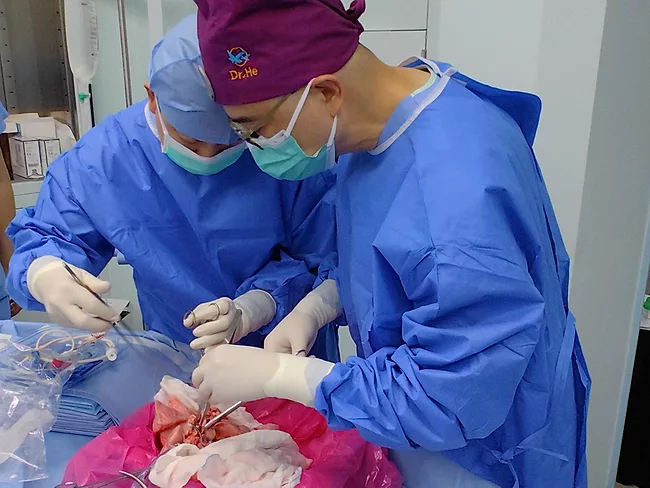
The frontiers of xenotransplantation have been further extended with a pig-to-human lung transplant, the first time an organ that is directly exposed to the external environment – with the associated risk of respiratory pathogens – has been transplanted. The genetically modified pig lung remained viable and functional for nine days, after it was transplanted into a 39-year-old man who was declared brain dead following a hemorrhagic stroke.
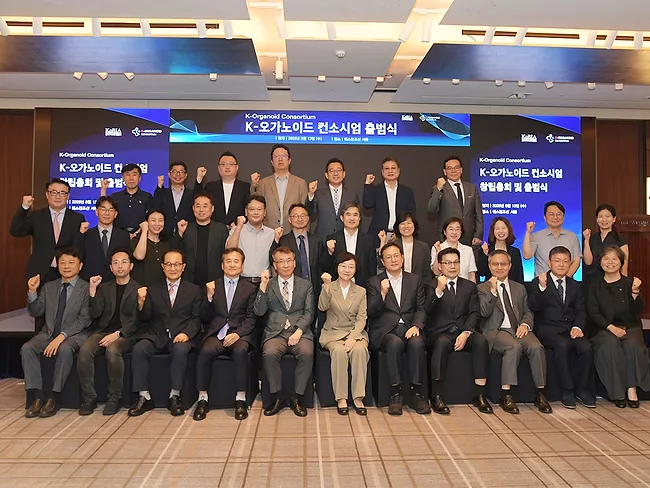
South Korea’s Ministry of Food and Drug Safety (MFDS) launched a new industry-academia-research consortium to support the nation’s organoid industry, expected to grow in light of the U.S. FDA’s shift away from animal testing in the development of novel drugs.
Remegen Co. Ltd. is out-licensing its VEGF/FGF dual-target fusion protein drug, RC28-E, to Santen Pharmaceutical (China) Co. Ltd. in a carve-out deal worth more than ¥1.3 billion (US$180 million).
Avixgen Co. Ltd., a subsidiary of Dx&Vx Co. Ltd., inked a $360 million license agreement with an unidentified U.S.-based biotechnology company, granting the latter rights to its advanced cell penetrating (ACP) peptide drug delivery platform.
Singapore-based Immortal Dragons has launched with $40 million under management, mostly from its founder Boyang Wang, with a focus on investing in early stage companies developing treatments to extend life.
CSL Ltd.’s stock tumbled 16.88% on the news that it plans to cut 3,000 jobs and to hive off its Seqirus vaccine unit in a cost-cutting measure to save more than $500 million per year over the next three years.
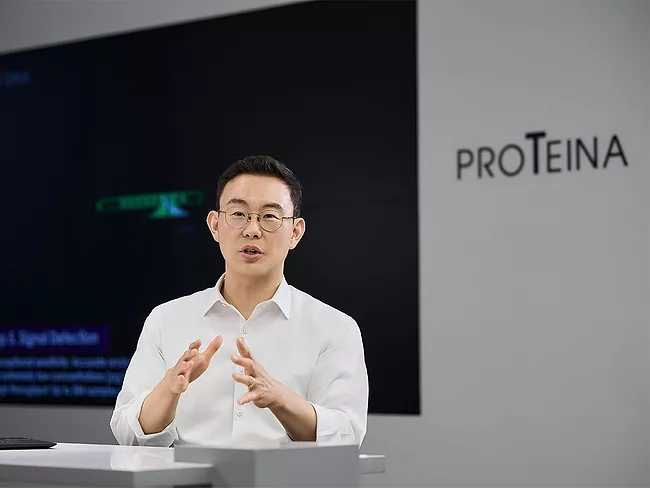
“Our mission is to apply our protein-protein interaction (PPI) big data-generation platform to create novel antibody therapeutics,” Proteina Co. Ltd. CEO Yoon Tae-young recently told BioWorld. “We have been working to build a proprietary technology platform for more than 15 years,” Yoon said, “and we take pride in the fact that we made our own technology platform, instead of running a company based on licensed-in technology.”
Remegen Co. Ltd.’s telitacicept (RC-18) met the primary endpoint in a phase III trial for treating primary Sjögren's syndrome (pSS), and the company plans to submit a BLA to China’s National Medical Products Administration (NMPA) on the data.
Aussie gene therapy company Mirugen Pty Ltd. has emerged from stealth mode from the Center for Eye Research Australia in Melbourne, toting a AU$4.5 million (US$2.9 million) seed round that will see it optimize its lead candidate to treat retinitis pigmentosa.
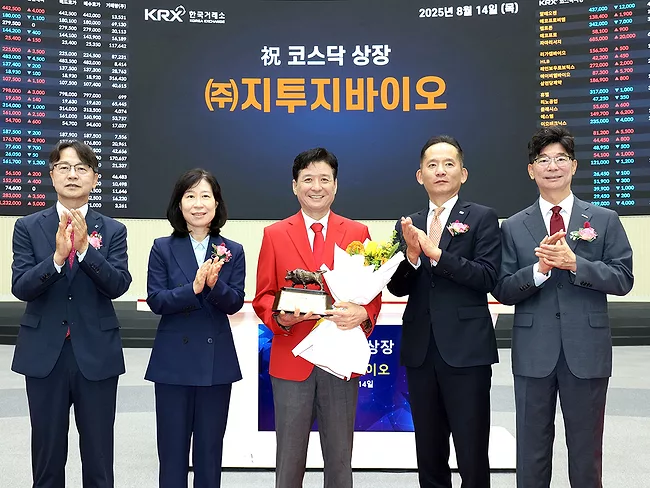
G2Gbio Inc. debuted on the Korea Exchange with a ₩52.2 billion (US$37.7 million) IPO Aug. 14. Nearly half of the funds raised will be used to expand Cheongju-si, South Korea-based G2Gbio’s manufacturing plants and help mass produce sustained-release injectable drug products such as GB-5001, its lead candidate in development as a once-monthly formulation of donepezil (Aricept; Eisai Co. Ltd.) for Alzheimer’s disease.
 RSS
RSS



-and-Raymond-Wong-(R).webp?height=488&t=1755204408&width=650 "Mirugen co-founders Keith Martin (L) and Raymond Wong (R)")