CSPC Pharmaceutical Group Ltd. announced June 13 that it struck a potential $5.33 billion deal with Astrazeneca plc to develop novel preclinical small-molecule candidates using CSPC’s AI-driven drug development platform.
Cullinan Therapeutics Inc. swept up ex-China rights to a multiple myeloma (MM)-targeting BCMAxCD3 bispecific T-cell engager (TCE) velinotamig from Chongqing Genrix Biopharmaceutical Co. Ltd. via a potential $712 million deal June 4. The plan is to repurpose the cancer drug to autoimmune disease.
3Sbio Inc. reported interim phase II study results of its PD-1/VEGF bispecific antibody, SSGJ-707 – a “fabulous” asset, according to Pfizer Inc. CEO Albert Bourla, that landed in Pfizer’s cancer arsenal via a potential $6 billion deal in May, of which $1.2 billion was paid up front.
Four biotech companies from South Korea announced new or planned financings mid-June, including GC Genome Corp. Rznomics Inc., G2Gbio Inc. and Mezzion Pharma Co. Ltd. Six major mid-June deals included R&D pacts between Y-Biologics Inc. and Crosspoint Therapeutics, Daewoong Pharmaceutical Co. Ltd. and Salipro Biotech AB, Next & Bio Inc. and GC Cell Corp., Galux Inc. and Hanall Biopharma Co. Ltd., Celltrion Inc. and Onconic Therapeutics Inc., and SK Plasma Co. Ltd. and Aimedbio Inc.
Shares of Nextcure Inc. (NASDAQ:NXTC) dropped 26.27% on news of a potential $745 million partnership with Simcere Zaiming for Simcere’s cadherin-6 antibody-drug conjugate (ADC) candidate. Shares ended at 50 cents apiece June 16.
Microneedle technology could help simplify vaccine delivery to better support global immunization efforts, and Australia is leading the way in this innovative technology.
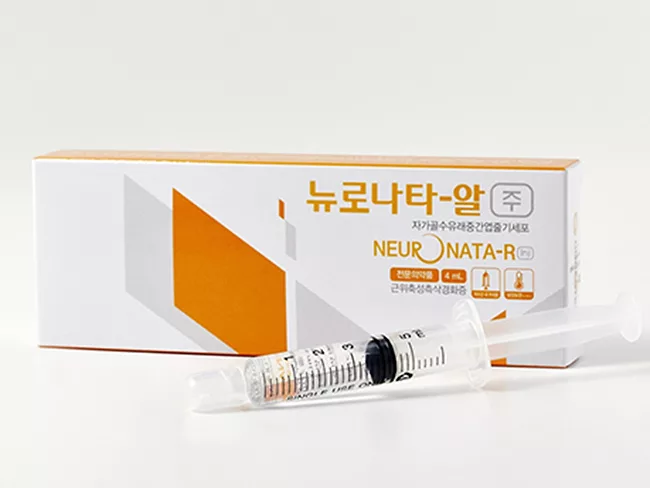
Corestemchemon Inc. is planning to file a BLA for Neuronata-R (lenzumestrocel) by the end of 2025 to gain accelerated approval from the U.S. FDA, company officials confirmed to BioWorld during a June 2 interview. Neuronata-R is an autologous bone marrow-derived mesenchymal stem cell therapy that first gained approval in South Korea in 2014 to delay the progression of amyotrophic lateral sclerosis (ALS), a progressive neurodegenerative disorder also known as Lou Gehrig’s disease.
Dizal (Jiangsu) Pharmaceutical Co. Ltd.’s LYN/BTK dual inhibitor, DZD-8586, saw tumor shrinkage in 94.1% of patients with relapsed or refractory chronic lymphocytic leukemia/small lymphocytic lymphoma following Bruton's tyrosine kinase inhibitors, the company reported during an oral presentation at the American Society of Clinical Oncology (ASCO) 2025 conference.
South Korea’s pharmaceutical exports rose nearly 18% year-on-year to reach $2.56 billion in the first quarter (Q1) this year, according to the Korea Health Industry Development Institute. Medical device exports, however, dropped about 5% in Q1 2025 to $1.39 billion, attributed to a drop in trade of implant products to both China and the U.S.
Aribio Co. Ltd. signed a $600 million license deal with Acino International AG, an Arcera Life Sciences subsidiary, granting the latter commercial rights to its oral Alzheimer’s disease therapy, AR-1001, in select countries including the Middle East.
 RSS
RSS