Australia’s Telix Pharmaceuticals Ltd. is advancing a potential challenger to Novartis plc’s dominant prostate cancer radioligand therapy, Pluvicto (lutetium [177Lu] vipivotide tetraxetan), after reporting that the safety lead-in portion of its global phase III Prostact trial met its primary objectives.
Twelve years on from the World Health Organization formally raising the alarm, antimicrobial resistance continues to grow, and despite numerous public and private incentives and initiatives, the pipeline of antibiotics in development is thinner than ever.
Ipsen SA withdrew Tazverik (tazemetostat) from the U.S. market after evidence emerged of secondary hematological malignancies in an ongoing phase Ib/III study in follicular lymphoma.
Eli Lilly and Co. will invest $500 million to support South Korea’s biopharmaceutical industry over the next five years, following high-level talks March 9 between Prime Minister Kim Min-seok and Lilly Executive Vice President Patrik Jonsson.
Taiwan plans to invest NT$24 billion (US$752 million) over four years to bolster national biosecurity, expand domestic pharmaceutical production and safeguard against global supply chain volatility.
Japan has approved the world’s first therapies derived from induced pluripotent stem cells (iPSCs), marking a major milestone for regenerative medicine and, potentially, a turning point in treating Parkinson’s disease.
The K-health MIRAE Initiative, also known as Korean ARPA-H, announced plans to allocate about ₩162 billion (US$110 million) in nine new projects over the next five years, with a focus on strengthening national health security.
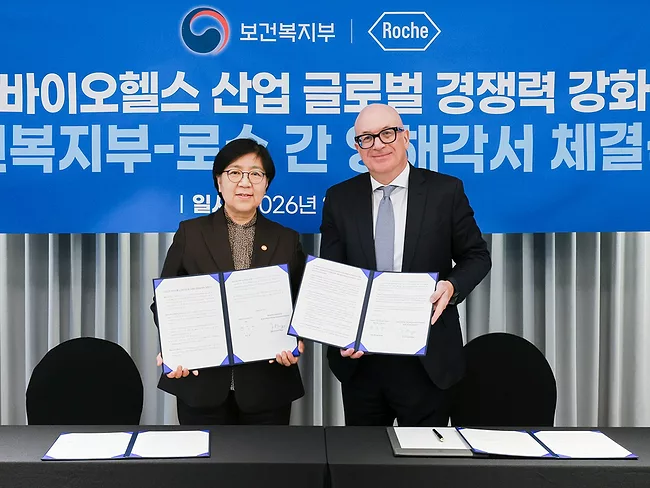
Roche Holding AG pledged to invest ₩710 billion (US$484.6 million) in South Korea over the next five years, positioning the country as a major global hub for clinical trials. The near $500 million agreement inked with the Korean government will bring Roche’s clinical trials for common or incurable diseases and innovative biopharmaceutical products to the country.
Shortly after Amgen Inc. walked away from its partnership with Kyowa Kirin Co. Ltd., the Tokyo-based company said it is discontinuing all ongoing clinical trials for rocatinlimab due to safety concerns.
China’s National Medical Products Administration has approved Asieris Pharmaceuticals Co. Ltd.’s cold light photodynamic drug-device combination product, Cevira (APL-1702, hexaminolevulinate hydrochloride), which is used as a nonsurgical therapy for treating patients with cervical intraepithelial neoplasia grade 2.
 RSS
RSS