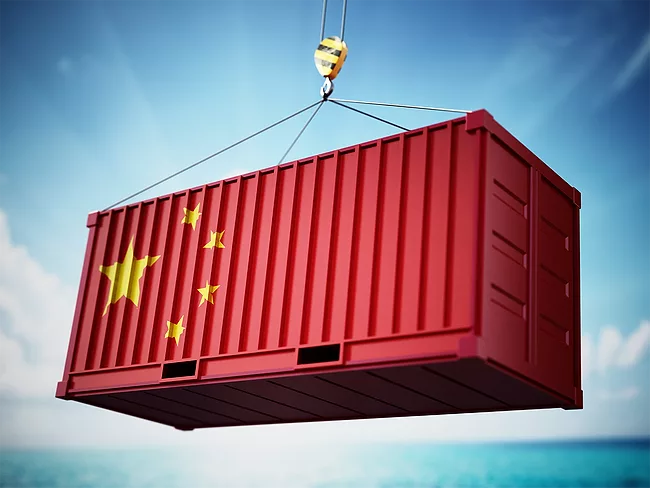
Using informed consent to do what Congress couldn’t, the U.S. FDA is flexing its regulatory authority to halt clinical trials that involve sending cells from American patients to China or other adversarial nations for genetic engineering and subsequent infusion back into the patient.
Echoing President Donald Trump’s justification for reciprocal tariffs, the U.S. Trade Representative’s annual Special 301 Report is a bit more aggressive in tone this year as it calls out trading partners that don't adequately enforce intellectual property rights or that otherwise discriminate against products from foreign companies.
Echoing President Donald Trump’s justification for reciprocal tariffs, the U.S. Trade Representative’s annual Special 301 Report is a bit more aggressive in tone this year as it calls out trading partners that don't adequately enforce intellectual property rights or that otherwise discriminate against products from foreign companies.
The on-again, off-again U.S. tariffs are off again, at least for now, for more than 75 countries that have reached out to the Trump administration to negotiate instead of retaliating. The 90-day pause will provide some breathing room for the med-tech industry. Pharmaceuticals and active pharmaceutical ingredients were among the few products exempted from the reciprocal tariffs, but that exemption for pharmaceuticals was expected to be short-lived. Meanwhile, pharma CEOs warned European Commission President Ursula von der Leyen April 8 that, unless the EU quickly changes its policy, pharmaceutical research, development and manufacturing is increasingly likely to be directed to the U.S.
Following news of U.S. President Donald Trump’s 10% across-the-board tariffs on Australian exports to the U.S., Australia’s Securities Exchange shed nearly AU$55 billion in losses Thursday morning. Even so, pharmaceuticals have escaped the tariffs for now. In China, Trump’s tariffs are not a big concern for China’s health care because drugs and active pharmaceutical ingredients are exempted from the tariffs. Even if tariffs are imposed in the future, Chinese pharmaceutical companies have already significantly de-risked themselves in recent months by increasing out-licensing models with U.S. partners.
Shanghai Microport Medbot (Group) Co. Ltd. won China National Medical Products Administration approval of its self-developed Toumai single-arm and single-port laparoscopic surgical robot.
The Biosecure Act may have died with the 118th U.S. Congress, but efforts to stop U.S. government funding of R&D in China are alive and well. Rep. Claudia Tenney, R-N.Y., introduced the Stop Funding our Adversaries Act in the House Feb. 7 to prohibit direct and indirect federal funding of research in China or entities owned by China.
For the pharmaceutical industry caught in the crosshairs of a potential trade war, the consequences of U.S. tariffs on China or Europe remain largely speculative, although both would be detrimental, according to a Korea Biotechnology Industry Organization (KoreaBIO) issue briefing Feb. 7.
“This current administration is like nothing that we've seen before,” said a managing partner of a global venture capital firm who spoke to BioWorld on the condition of anonymity. “President Trump’s first term was bad,” he said, “but nobody knows what’s coming.” “This is truly nationalism at its worst, because he won on the campaign [largely] to protect American jobs, claiming that Americans have been unfairly treated.” And it's not just China, he said, but India and other countries will also likely be affected.
 RSS
RSS