China’s National Medical Products Administration has cleared China Grand Pharmaceutical and Healthcare Holdings Ltd. to advance radiopharmaceutical agent ITM-11 (177Lu-edotreotide) to phase III trials in gastroenteropancreatic-neuroendocrine tumors
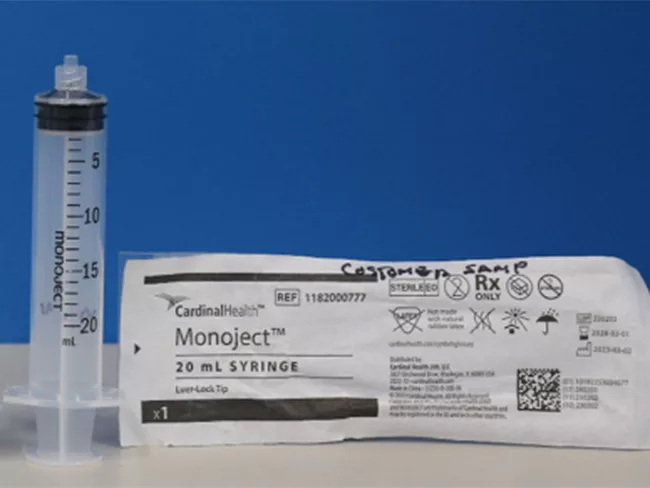
The U.S. FDA has followed up on reports of problematic syringes made by several companies in mainland China, recommending that U.S. suppliers, consumers and health care organizations stop using these products unless no alternatives are available. The agency said it has issued warning letters to three of these companies, at least one of which appears to have been the supplier of Monoject syringes that have been the subjects of recent FDA recalls.
Wuxi Apptec quit its membership in the Biotechnology Innovation Organization (BIO) after U.S. Congressman Rep. Mike Gallagher (R-Wis.) sent a March 5 letter to Attorney General Merrick Garland, asking the Department of Justice to investigate BIO because its lobbying efforts on behalf of Wuxi suggested it was operating as an unregistered agent of a foreign company while advancing the interests of the People’s Republic of China and the Chinese Communist Party.
Shanghai Fosun Pharmaceutical Co. Ltd has formed a partnership with seven other investors to form an investment fund partnership that plans to invest ¥5 billion (US$695M) in local biotech and med-tech companies in Shenzhen, China. The target fund will concentrate on local biotechs, including cell and gene therapy companies, as well as other industries, with 70% to be invested in the biomedical industry.
Superhuman soldiers. Designer babies. Genetically tailored weapons. Mind-control. A foreign database containing the DNA of every person on the planet. The list reads like the plot of a science fiction horror story, but there’s no fiction involved. These are real threats from China raised by members of the U.S. House Select Committee on the CCP (Chinese Communist Party) at a March 7 hearing on the growing stakes of the bioeconomy and American national security.
As geopolitical tensions mount, bipartisan legislation introduced in both the U.S. Senate and the House is calling to prohibit government contracts with certain Chinese biotechs such as BGI (formerly known as Beijing Genomic Institute) and Wuxi Apptec, because they are increasingly seen as national security threats.
Sichuan Jinjiang Electronic Medical Device Technology Co. Ltd. received approval from China’s National Medical Products Administration (NMPA) approval for the commercial use of its PFA technology in the treatment of atrial fibrillation, making it the first pulsed field ablation device to gain approval in the country.
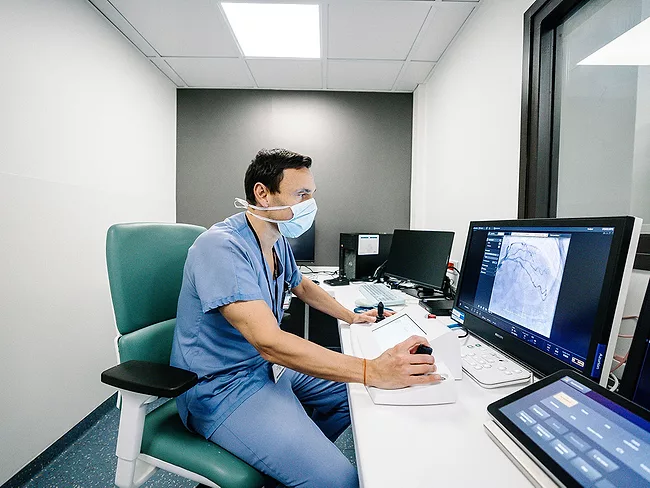
Robocath SAS said it performed the world’s first-in-human remote robotic coronary angioplasty between two cities in China, Beijing and Urumqi, located 1,700 miles apart. The procedure was carried out using the company’s R-One robotic platform, via a 5G connection, and paves the way for long-distance endovascular procedures.
Broncus Holding Corp. subsidiary Broncus Hangzhou is acquiring Chinese medical device company Hangzhou Jingliang in the form of an equity transfer agreement for ¥5.4 million (US$758,000). The move will strengthen Broncus’ R&D capabilities in the flexible robotic space and will allow the company to offer pulmonology diagnostics and therapeutic solutions covering the complete product life cycle.
Asep Medical Holdings Inc. is expanding operations into China with a joint venture (JV) with Chinese medical diagnostics firm Sansure Biotech Inc., ramping up the race to commercialize sepsis diagnostics in Asia.
 RSS
RSS