Alterity Therapeutics Ltd. helped develop a new neuroimaging biomarker called the multiple system atrophy index (MSA-AI), which looks to be a more reliable biomarker for tracking disease progression of MSA.
While U.S. President Donald Trump’s country-by-country reciprocal and newly negotiated tariffs go into effect today, a separate, global biopharma sector tariff of, possibly, 200% continues to loom over the sector. For many stakeholders, a biopharma sector tariff of even 25%, as first proposed by Trump, would be a disaster in the making, especially when combined with the pressures of Medicare price negotiations and the president’s escalation of most-favored-nation pricing.
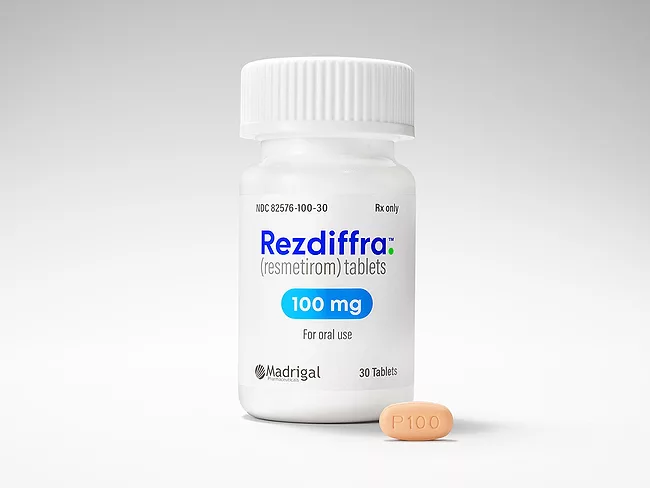
Madrigal Pharmaceuticals Inc.’s long-awaited business development pact became reality by way of an exclusive global license agreement that could be worth more than $2 billion with CSPC Pharmaceutical Group Ltd., of Shijiazhuang, China, for SYH-2086. The candidate is a preclinical oral, small-molecule glucagon-like peptide-1 (GLP-1) receptor agonist and orforglipron derivative.
In a 10-1 vote, the U.S. FDA’s Psychopharmacologic Drugs Advisory Committee said Otsuka Pharmaceutical Co. Ltd.’s studies of its combination post-traumatic stress disorder (PTSD) treatment did not show enough efficacy. Had the adcom felt otherwise, the path may have been smoother for a new treatment in an indication that hasn’t seen regulatory advancement in decades. The committee’s conclusion, however, is not binding on the FDA, which will make its own decision whether to approve.
A glucagon-like peptide-1 and glucose-dependent insulinotropic polypeptide receptor dual agonist developed by Jiangsu Hengrui Pharmaceuticals Co. Ltd. and licensed by Kailera Therapeutics Inc. has shown a mean weight loss of 19.2% at the 6-mg dose with no plateau over 48 weeks in a phase III trial conducted in China.
Under a new licensing deal announced July 8, JCR Pharmaceuticals Co. Ltd. granted Alexion Pharmaceuticals Inc. rights to its adeno-associated virus (AAV) capsids for use in up to five of Alexion’s genomic medicines programs.
Four days ahead of its July 7 PDUFA date, the U.S. FDA granted accelerated approval to Dizal (Jiangsu) Pharmaceutical Co. Ltd.’s sunvozertinib (DZD-9008), branded as Zegfrovy, for treating adults with locally advanced or metastatic non-small-cell lung cancer with epidermal growth factor receptor exon 20 insertion mutations following platinum-based chemotherapy.
In yet another fail for the Duchenne muscular dystrophy (DMD) field, Taiho Pharmaceutical Co. Ltd.’s pizuglanstat (TAS-205) did not meet the primary endpoint in a phase III trial. The phase III Reach-DMD trial, a randomized, placebo-controlled, double-blind and open-label, extension study of pizuglanstat in patients with DMD showed no significant difference in the mean change from baseline to 52 weeks in the primary endpoint of time to rise from the floor in the ambulatory cohort of the study.
Just a month after laying off 147 employees and announcing plans to mull “strategic alternatives,” Vor Biopharma Inc. reported raising $175 million in private placement in public equity financing and inking a new $4.23 billion license deal for Yantai Rongchang Biotechnologies (Remegen) Co. Ltd.’s telitacicept, a dual-target fusion protein drug approved in China for three autoimmune indications. The news was disclosed after U.S. market hours June 25. Vor’s shares (NASDAQ:VOR) gained 34 cents, or 60.5%, to close June 26 at 89 cents. The company’s shares had risen for eight consecutive trading days since June 17.
China’s National Medical Products Administration (NMPA) has accepted for review Carsgen Therapeutics Holdings Ltd.’s NDA for satricabtagene autoleucel (satri-cel, CT-041), an autologous CAR T candidate targeting Claudin18.2 for treating Claudin18.2-positive advanced gastric/gastroesophageal junction adenocarcinoma (G/GEJA) in patients who have failed at least two prior lines of therapy. Just one day earlier, Carsgen announced that it had submitted the satri-cel NDA to the NMPA.
 RSS
RSS