The FDA has issued a safety notification regarding the tubes used in enteral feeding sets, which can lead to inadvertent strangulation of infants and toddlers. The agency said it has received two reports of deaths of toddlers due to strangulation in 2021, but at this time is only recommending that caregivers exercise special caution in ensuring that tubes not be left where strangulation is a possibility.
Developers of apps for digital health have struggled to obtain Medicare coverage in the U.S. for their products, an impasse that seems unlikely to resolve anytime soon. Jason Bennett of CMS said on a Feb. 9 webinar that while the durable medical equipment (DME) benefit category seems like a natural fit for digital health products, there are some statutory and definitional roadblocks, including that digital health products might not be durable enough to qualify.
Second Sight Medical Products Inc. has struck a deal to acquire Nano Precision Medical Inc. (NPM) in an all-stock transaction. NPM will merge with a wholly owned subsidiary of Second Sight, and the combined company will focus on the development of drug and device medical implants. The deal comes less than a year after Second Sight’s proposed acquisition of French company Pixium Vision LLC fell through in controversial fashion. The company will issue approximately 134 million shares of its common stock to acquire full ownership of NPM and shareholders will acquire approximately 23% equity of the combined company
Biosimilars are bearing the brunt of the impact that COVID-19 has had on the U.S. FDA’s inspection program, which has ground almost to a halt during the pandemic. That’s the message Juliana Reed, president of the Biosimilars Forum, delivered to a House subcommittee last week.
U.S. Health and Human Services Secretary Xavier Becerra is getting more pressure to take the unprecedented step of marching in on the patent rights protecting Astellas Pharma Inc.’s prostate cancer drug, Xtandi (enzalutamide), because of its U.S. price. Referencing the provision under the Bayh-Dole Act that allows federal agencies to march in on licensed patents stemming from federally funded research when the products are not available to the public on “reasonable terms,” a dozen Democratic congressional members wrote to Becerra Feb. 8 urging him to move forward on the Xtandi patents.
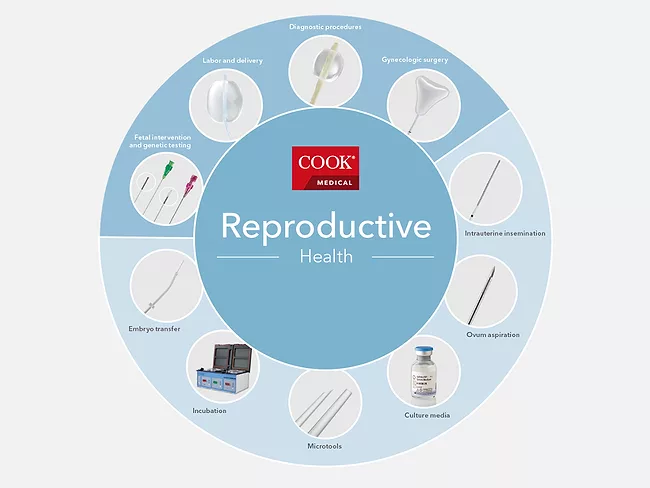
The Cooper Companies Inc. plans to acquire the entirety of Cook Medical Inc.’s reproductive health business in this fiscal quarter for $675 million at closing plus $200 million paid in four $50 million annual installments. The acquisition will expand Cooper’s presence in the Asia-Pacific region. The Cook deal will also accelerate Cooper’s labor and delivery medical device efforts by adding 115 people sales, marketing, education and support staff globally.
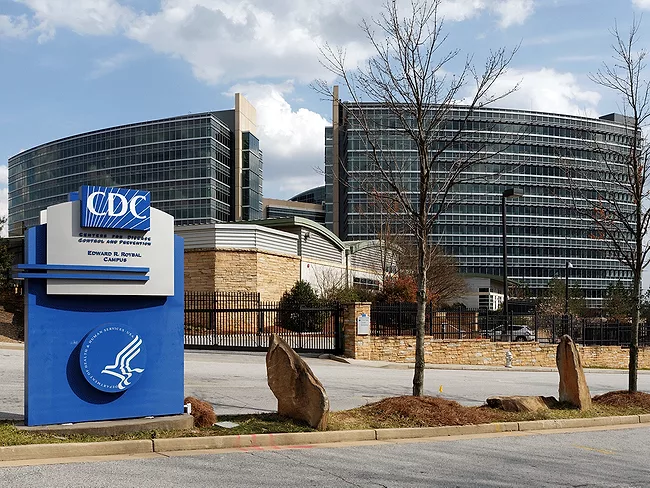
While a number of U.S. cities and towns have been conducting wastewater testing for the SARS-CoV-2 virus for some time, the CDC has finally established a dashboard for reporting the results of this surveillance. While the resulting data may be useful in the current pandemic for allocation of resources, the establishment of a network of wastewater surveillance instruments can also be instrumental in future public health efforts, such as tracking foodborne infections and detecting the emergence of new antibiotic-resistant pathogens.
Witnesses at a Feb. 8 hearing in the U.S. Congress emphasized that the proposed Advanced Research Projects Agency – Health (ARPA-H) must be an independent agency to avoid a crippling case of bureaucratic torpor. However, several members of Congress and one of the witnesses made the case that ARPA-H would increase duplicative taxpayer spending without providing a commensurate increase in productive research in the life sciences, signaling that establishment of this new DARPA-like agency is anything but guaranteed.
Know Labs Inc. has received approval from an independent institutional review board for an internal clinical study of its noninvasive glucose monitoring technology. The aim is to further validate the Bio-RFID (radio frequency identification) platform’s ability to accurately measure and detect changes in blood glucose levels. The study will be conducted at the Seattle-based company’s new research and development laboratory and include 200 subjects.
Johnson & Johnson business Cerenovus Inc. is launching a balloon guide catheter for the U.S. and Canada stroke market. The Irvine, Calif.-based company’s Emboguard device is designed to remove blood clots by controlling blood flow during mechanical thrombectomy procedures. It is the latest addition to the Cerenovus stroke portfolio, which includes the Embotrap III revascularization device, the Prowler EX microcatheter, the Cerenovus large bore catheter and Cerebase guide sheath.

 RSS
RSS