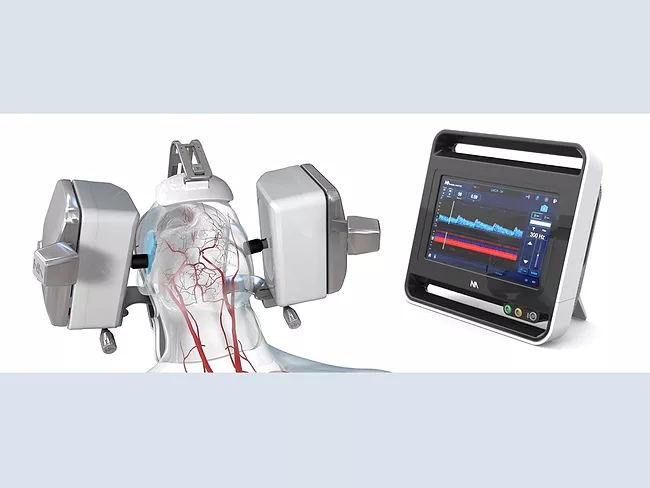
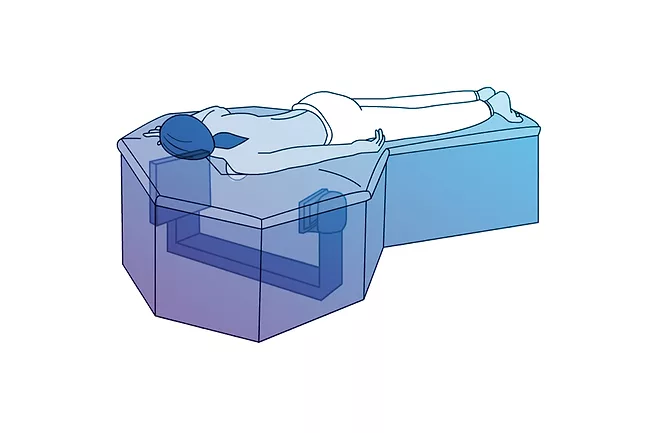
Doctors are reporting a proliferation of dangerous blood clots in the lungs and other major organs of COVID-19 patients, raising the risk of stroke and other life-threatening complications. While anticoagulant medications can reduce that risk, patients need careful monitoring to ensure their blood is neither too thick nor too thin. To that end, Los Angeles-based startup Neural Analytics Inc. is deploying its robotically assisted transcranial doppler (TCD) system for real-time identification of blood clots and disruptions in blood flow to the brain.
Like many companies, Rewalk Robotics Ltd. saw its financials hit by the COVID-19 pandemic. It revealed May 28 that its total revenue for its first quarter fell to $0.8 million, down from $1.6 million during the same period last year. The company, which focuses on solutions that give gait training and mobility for individuals with lower limb disabilities, acknowledged the effects of the pandemic, noting that several Rewalk Personal 6.0 devices were not delivered as a result.
TORONTO – Vancouver, British Columbia-based Izotropic Corp. has inked a deal with Victoria, British Columbia-based based Starfish Medical Inc. to commercialize a CT scanner Izotropic CEO Robert Thast said will be a major disruptor of the breast imaging industry. Izotropic has spent approximately $20 million over the past 15 years to develop the system and is counting on Starfish to help translate this into a market-ready 3D breast CT imager by the end of 2020.
The U.S. Department of Health and Human Services (HHS) has posted a national COVID-19 testing strategy in response to legislation passed in April, and the plan suggests that 300,000 tests per day should suffice to corral the pandemic. That calculation drew immediate fire from House and Senate Democrats, who characterized the plan as an attempt “to paint a rosy picture about testing,” but they also pushed the Senate to pass House legislation that would provide another $75 billion in funding for testing and contact tracing.
Unpredictable and unaffordable copays for insulin could be a thing of the past for millions of people enrolled in certain Medicare Part D prescription drug plans.
The U.S. FDA reported that 28 serology tests for antibodies for the SARS-CoV-2 virus either have been withdrawn from the market by the sponsor or delisted by the agency for failure to comply with its notification process for emergency use authorization (EUA). The agency said the list of unavailable tests will be updated over time. For his part, Commissioner Stephen Hahn said the move was undertaken “to ensure that Americans have access to trustworthy tests.”
Mammoth Biosciences Inc., of South San Francisco, and London-based Glaxosmithkline plc (GSK) have joined forces to develop a point-of-care test to detect active COVID-19 infections using Mammoth’s CRISPR-based DETECTR platform. The two companies hope to submit an application to the U.S. FDA for emergency use of the test before the end of the year.
The pandemic-driven FDA guidance for device shortages addressed a topic that has been discussed for devices for some time despite lack of congressional action, but shortages may be ordinarily interpreted as a consequence of reduced or terminated production that crimps supplies. That interpretation has been expanded for the duration of the COVID-19 pandemic, however, to include circumstances in which demand exceeds supply even when the manufacturer sustains normal production levels, in which case the manufacturer is liable for reporting the shortage to the FDA.
Like many other med-tech companies, Medtronic plc, of Dublin, saw COVID-19 affect its financial results for its fourth quarter and fiscal year 2020, as procedures were deferred in the wake of the pandemic. Quarterly worldwide revenue came in at $5.998 billion, representing a decrease of 26% as reported and 25% on an organic basis.
Mammoth Biosciences Inc., of South San Francisco, and London-based Glaxosmithkline plc (GSK) have joined forces to develop a point-of-care test to detect active COVID-19 infections using Mammoth’s CRISPR-based DETECTR platform. The two companies hope to submit an application to the U.S. FDA for emergency use of the test before the end of the year.
 RSS
RSS