Aquestive Therapeutics Inc.’s oral epinephrine prodrug to treat life-threatening allergic reactions, Anaphylm, produced a faster time to maximum concentration than currently available autoinjectors in healthy adults, early pivotal phase III data show, meeting both pharmacokinetic (PK) primary and secondary endpoints.
The U.S. FDA has approved Beigene Co. Ltd.’s Tevimbra (tislelizumab-jsgr) as a monotherapy for treating adults with unresectable or metastatic esophageal squamous cell carcinoma following prior chemotherapy that did not include a PD-1 inhibitor. A humanized IgG4 anti-PD-1 monoclonal antibody, tislelizumab is designed to minimize binding to Fc-gamma receptors on macrophages, helping to aid the body’s immune cells to detect and fight tumors.
The U.S. FDA’s Oncology Drugs Advisory Committee, in two separate sessions, took up the matters of Carvykti (ciltacabtagene autoleucel) from Johnson & Johnson and the Bristol Myers Squibb Co. product Abecma (idecabtagene vicleucel) – specifically, whether the benefits of each CAR T therapy outweigh the risks in relapsed or refractory multiple myeloma (MM).
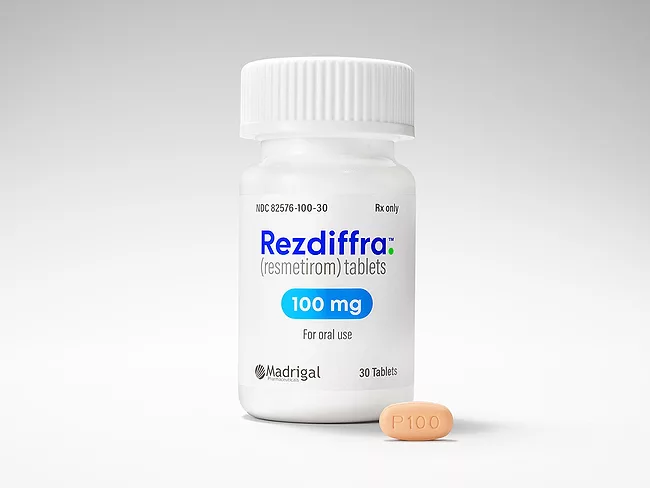
As widely expected, Madrigal Pharmaceuticals Inc.’s resmetirom picked up the first U.S. FDA approval for treating nonalcoholic steatohepatitis (NASH), an advanced form of nonalcoholic fatty liver disease that has been steadily increasing in global prevalence. Branded Rezdiffra, the liver-directed THR-beta agonist gained accelerated approval for use in conjunction with diet and exercise to treat adults with noncirrhotic NASH with moderate to advanced liver fibrosis, specifically stages F2 and F3.
The U.S. Environmental Protection Agency (EPA) has issued its long-awaited final rule governing emissions of ethylene oxide (EtO), a rule announced by the agency with the concurrence of Xavier Becerra, the Secretary of Health and Human Services. However, the final rule provoked an immediate response from Sen. Bill Cassidy (R-La.), who said the final rule will “put American lives in danger.”
There are coincidences and then there are big coincidences, the latter of which might describe a new U.S. FDA draft guidance and a major cybersecurity breach. The agency has issued a draft update to its premarket cybersecurity guidance even as the Department of Health and Human Services announced an investigation into the hack of the IT system at Change Healthcare, a pair of developments that seem likely to set the world of connected medical devices on its collective ear.
After hearing two conflicting presentations of the safety and efficacy of Geron Corp.’s imetelstat, the U.S. FDA’s Oncology Drugs Advisory Committee (ODAC) voted 12-2 March 14 that the drug’s benefit outweighed its risks as a treatment for transfusion-dependent anemia in adults with low- to intermediate-1 risk myelodysplastic syndromes in patients who have failed or no longer respond to erythropoiesis stimulating agents (ESAs), or who are not eligible for ESA treatment.
Wuxi Apptec quit its membership in the Biotechnology Innovation Organization (BIO) after U.S. Congressman Rep. Mike Gallagher (R-Wis.) sent a March 5 letter to Attorney General Merrick Garland, asking the Department of Justice to investigate BIO because its lobbying efforts on behalf of Wuxi suggested it was operating as an unregistered agent of a foreign company while advancing the interests of the People’s Republic of China and the Chinese Communist Party.
In what represents their first patenting, a researcher from the University of California is seeking protection for non-invasive methods of brain monitoring that use electroencephalography (EEG) to detect new or worsening brain injury in pediatric patients.
Medicare coverage of medical software in the U.S. is generally not the subject of flattering remarks from industry, but the novelty of the subcategory of artificial intelligence (AI) would seem to suggest that the Medicare problem for AI is even more severe. That suspicion was borne out by consultant Bruce Quinn who said at a public meeting here in Washington that some areas of software coverage and reimbursement, including AI software, “are just a train wreck,” a problem he said is especially acute in fee-for-service care.

 RSS
RSS