The Consolidated Appropriations Act of 2023 covered a lot of budget terrain for the U.S. federal government, but Section 3305 was unusual for this type of bill in that it called on the FDA to require cybersecurity features as a part of the Quality System Regulation (QSR).
How flexible should the U.S. FDA evidentiary standards be for a therapy addressing a significant unmet need in a disease such as amyotrophic lateral sclerosis (ALS)? That’s the question the agency’s Cellular, Tissue and Gene Therapies Advisory Committee will ponder Sept. 27 as it looks at the data for Brainstorm Cell Therapuetics Inc.’s Nurown (debamestrocel), a mesenchymal stromal cell therapy targeting ALS. Nurown is going into the adcom with a bit of a checkered history that includes a refuse-to-file letter and a single phase III trial that failed to demonstrate efficacy for the primary endpoint and all key secondary efficacy endpoints, according to the FDA briefing document.
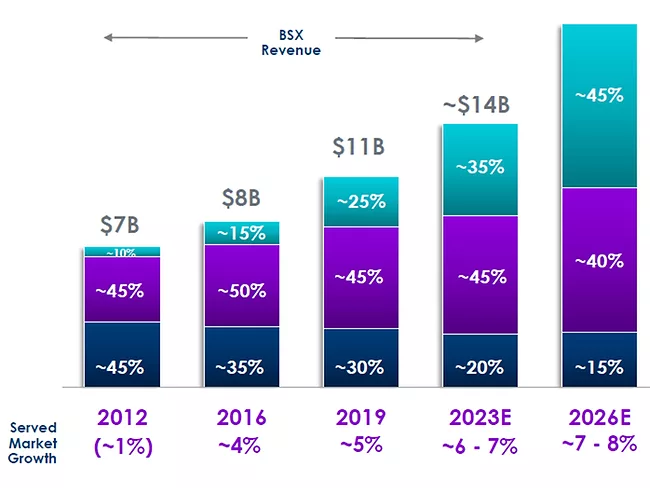
At its Investor Day on September 20, Boston Scientific Corp. unveiled an ambitious long-range plan to become “the highest performing med-tech large-cap company” in terms of financial performance, sales growth, EPS, execution and talent retention.” That’s a notable step up from its 2021 goal of being just one of the top performers.
The U.S. Supreme Court has heard two cases this year regarding the False Claims Act (FCA), including the Shutte v. Supervalu case, which the court has remanded to the Court of Appeals for the Seventh Circuit. However, even though the case has not come to a close, Jay Stephens of Kirkland & Ellis LLP, believes that the Supreme Court’s handling of Supervalu creates an environment in which the process of discovery will become much more burdensome for all involved.
The U.S. FDA’s Sept. 6 hearing of the Patient Engagement Advisory Committee (PEAC) tackled the question of health equity, a discussion that touched on several issues such as accessibility. One of the committee’s recommendations was that the FDA assist the Centers for Medicare & Medicaid Services (CMS) with the latter’s task of developing codes for payment, not the kind of task to which the FDA is typically assigned.
Safety concerns overrode benefit when the U.S. FDA’s Endocrinologic and Metabolic Drugs Advisory Committee (EMDAC) voted unanimously, 19-0, Sept. 21 that the potential risks of Intarcia Therapeutics’ ITCA-650 outweighed the compliance and A1C-lowering benefits the twice-yearly implantable exenatide-device combination product could provide for adults with type 2 diabetes.
Aiming to provide additional utility and information to its continuous glucose monitors (CGMs), Dexcom Inc. is tying in the nutrition information provided by Rxfood Corp.’s app for customers in Canada. Clinics, hospitals, pharmacies, health plans, employers and others can make the app available to the beneficiaries and patients who use the Dexcom G6 or G7 systems, once the program is rolled out.
The U.S. FDA is going straight to final guidance with its “Considerations for the conduct of clinical trials of medical products during major disruptions due to disasters and public health emergencies [PHEs].”
The U.S. Centers for Medicare & Medicaid Services is once again in the crosshairs thanks to issues related to pharmacy benefits managers and coverage of novel medical devices, with Congress mulling over two dozen pieces of Medicare-related legislation.

 RSS
RSS