Amsterdam-based Royal Philips NV reported that it has come to terms with customers and end users of its respiratory equipment to the tune of $479 million, which will reimburse for the cost of these systems. The problem for the company is that the settlement does not affect any personal injury cases, and thus represents only a partial closure of a controversy that has dogged the company for several years.
While the U.S. FDA’s preclinical and clinical trial framework is generally well-suited to adapt to the use of artificial intelligence (AI) in developing new drugs, its regulatory framework for medical devices that incorporate evolving AI leaves a lot to be desired, according to Sen. Bill Cassidy (R-La.), the ranking member of the Senate Health, Education, Labor and Pension Committee.
Two U.S. federal government departments recently issued a series of guidelines for their handling of mergers and acquisitions in a draft that has provoked both support and opposition from observers. Barry Nigro of the George Washington University School of Law said he is concerned that the presumption that a transaction is necessarily anticompetitive will prompt litigation over that presumption and thus bog down the process of reviewing these transactions.
Laborie Medical Technologies Inc. continued a string of recent deals with an agreement to acquire Urotronic Inc. for $255 million cash up front with an additional $345 million in payments contingent on meeting specified commercial and reimbursement milestones. Laborie already held a minority interest in the manufacturer of the Optilume drug-coated balloon technology for treatment of urethral strictures and benign prostatic hyperplasia (BPH).
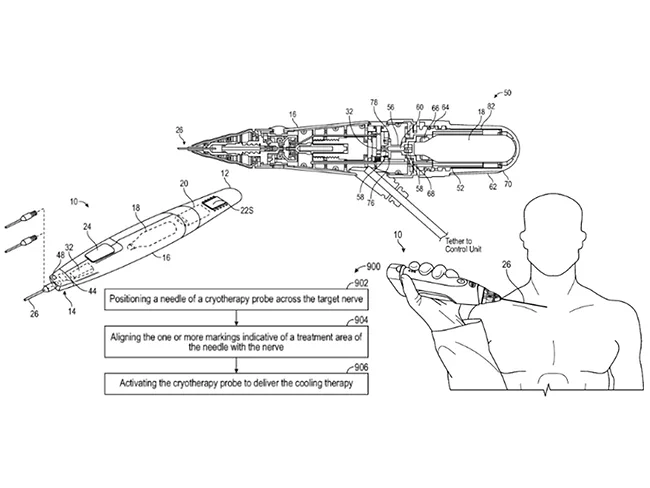
Pacira Cryotech Inc. reported the filing of a patent for a hand-held cryogenic treatment system with a probe configured to apply a cryogenic therapy to one or more nerves, such as the nerves of the stellate ganglion and autonomic tissue peripheral to the stellate ganglion.
Forget location. It’s timing, timing, timing when it comes to escaping the first round of U.S. Medicare price negotiations due to pending biosimilar competition. Under the Inflation Reduction Act (IRA), only single-source drugs that have been approved for a specific length of time are subject to the forced negotiations, which focus on drugs with the biggest Medicare spend, not necessarily the highest price tag. Since the IRA gives biologics a 12-year safe harbor from negotiations, which aligns with the biologic exclusivity provided by the Biologic Price Competition and Innovation Act, it creates a scenario in which the innovator could be facing negotiations just as its first biosimilar competition prepares to launch. That creates a lot of what-ifs.
Now that the U.S. FDA has nearly 15 years of experience with developing and implementing a biosimilar pathway, it’s time for that regulatory path to catch up with the science, according to experts that have been involved in biosimilar development even before Congress passed the Biologics Price Competition and Innovation Act that created the framework for the U.S. biosimilar market.
The U.S. FDA’s concerns about the 510(k) program over the past decade-plus are practically the stuff of regulatory urban legend, but the agency has just unveiled a trio of draft guidances to address some of those concerns. Perhaps the most significant of these is a draft guidance for selection of a predicate device for a 510(k) filing, a document that may come across to industry as little more than an attempt to limit the devices that a manufacturer can recite in a 510(k) filing.
Abbott Laboratories took the next step in its years-long collaboration with Bigfoot Biomedical Inc. with the announcement after the market close on September 6 that it signed a definitive agreement to acquire the connected insulin cap maker. The financial terms of the transaction, which is expected to close this month, were not disclosed.

 RSS
RSS