Preparing for next month’s launch of the first U.S. FDA-approved therapy for activated phosphoinositide 3-kinase delta syndrome (APDS), a rare disease only identified 10 years ago, Pharming Group NV disclosed pricing for the newly branded Joenja (leniolisib) of $750 per tablet, or $547,500 per year.
A lot of eyes and ears were tuned to the U.S. Supreme Court’s March 27 argument in Amgen Inc. v. Sanofi SA with its focus on how much enablement is necessary in broad genus patent claims.
The U.S. FDA’s December 2022 draft guidance for human factors (HF) information in medical device premarket filings is a complete do-over of a previous draft guidance from 2016, but the reaction from industry has been anything but cheerful. Several observers, including the Medical Device Manufacturers Association (MDMA), hammered the new draft guidance for its introduction of the concept of a critical task due to the expansive effect that would have on the need for human factors studies for medical devices.
Concerns voiced during January’s U.S. FDA advisory committee meeting failed to deter Cidara Therapeutics Inc. from winning approval by the agency March 22 for once-weekly Rezzayo (rezafungin for injection) to treat a pair of indications – candidemia as well as invasive candidiasis (IC) – in adults with limited or no alternatives.
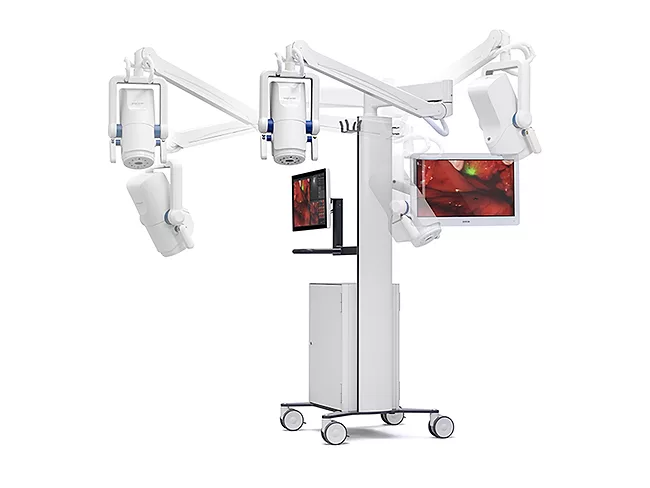
Surgvision GmbH received U.S. FDA 510(k) clearance for the Explorer Air II which will be deployed with pafolacianine, during intraoperative fluorescence imaging. The Explorer Air II will support surgeons in their battle to fight cancer, especially in cases of incomplete resection, as paired with pafolacianine, an imaging agent, it will help them improve tumor visualization and outcomes.
One way to strike fear into patients and cardiologists alike is to merely mention the abdominal aortic aneurysm (AAA), an event that claims more than 10,000 lives per year in the U.S. alone. That death count might fall substantially going forward thanks to the U.S. FDA’s award of a 510(k) for the AAA algorithm by Viz.ai Inc., a new algorithm which may help clinicians address imminent rupture quickly enough to save the lives of thousands of American patients each year.
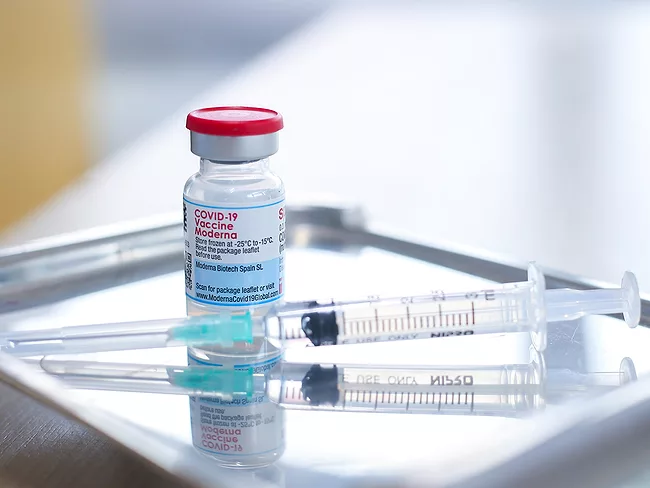
While Moderna Inc. CEO Stéphane Bancel was the one on the hot seat at a March 22 hearing before the U.S. Senate Health, Education, Labor and Pensions (HELP) Committee, biopharma profitability in general, and capitalism itself, came under fire as committee Chair Bernie Sanders (I-Vt.) railed about corporate greed in the sector.
Citing significant implications for patients with advanced Parkinson’s disease, as well as the broader public interest that’s at stake, the U.S. FTC filed an amicus brief in Sage Chemical Inc.’s district court challenge of Supernus Pharmaceuticals Inc.’s strategies to block generic competition of its injectable Parkinson’s drug, Apokyn (apomorphine).
As Medtronic plc. is fond of pointing out, the garage inventor has been the stuff of legend in U.S. business lore, providing a wide range of economically impactful inventions over the two-plus centuries since the U.S. patent system came into being.
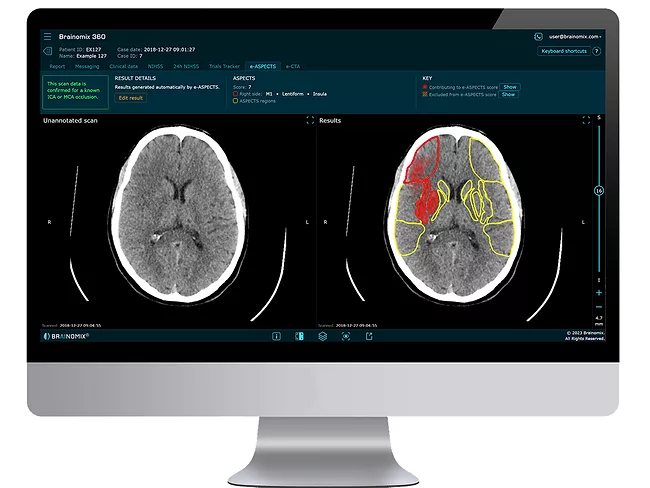
Brainomix Ltd. received U.S. FDA clearance for its Brainomix 360 E-aspects tool, a fully automated AI-imaging solution for stroke assessment. Powered by explainable AI, the Brainomix 360 E-aspects tool, which is already CE-marked, assesses non-contrast CT scans to automatically generate a score and measures the volume of ischemic signs. It also features an overlaid heatmap to visually assist clinicians when treating stroke patients.
 RSS
RSS