The U.S. FDA inked a Dec. 20, 2022, warning letter to Righteye LLC that handed the company a list of quality system issues in dire need of redress, but the agency was more concerned about off-label promotion of the Righteye vision system as a method for evaluating the patient’s ocular tremors as a sign of Parkinson’s disease.
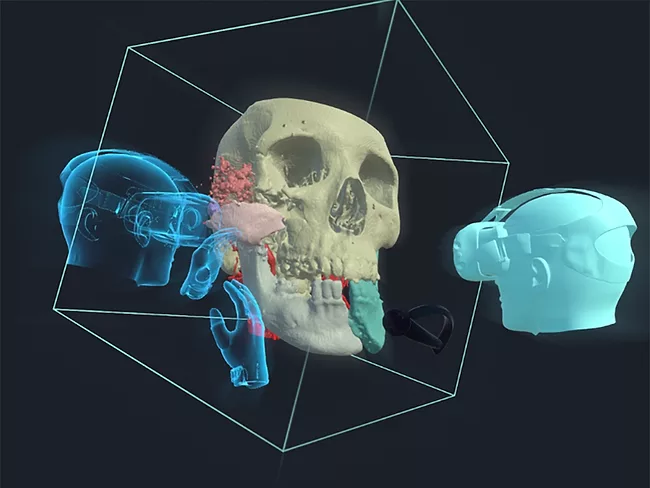
Ottawa-based start-up Realize Medical Inc. reported U.S. FDA clearance of virtual reality (VR) surgical planning software to help physicians create and share complex patient anatomy from CTs and MRIs in an immersive 3D environment. Company CEO Justin Sutherland told BioWorld clearance of the Elucis platform “is a crucial milestone” that will benefit hospitals and his company well into the future.
A lot of biosimilar sponsors and wannabes will be watching as the Humira biosimilar competition unfolds in the U.S. While the competition started Jan. 31 with the launch of Amgen Inc.’s Amjevita, the true test of the strength of the competition will come in five months when other adalimumab biosimilars, including Boehringer Ingelheim GmbH’s interchangeable, hit the market.
Computational modeling and simulation (CM&S) isn’t the new flavor of the month in the medical device industry, but it hasn’t exactly achieved the status of a buzzword, either. However, the Medical Device Innovation Consortium (MDIC) has published a report which makes clear that these software tools are continuing to open new frontiers in device development, a trend that seems certain to continue to expand in the decades ahead as to-market costs continue to grow.
The Biden administration has determined that the public health emergency (PHE) for the COVID-19 pandemic will not be renewed and thus will come to an end in the second week of May. While the end of the PHE will affect some Medicare telehealth provisions that have not been memorialized in legislation, the U.S. FDA’s ability to issue emergency use authorizations (EUAs) will not be immediately affected as that authority was invoked by a separate mechanism.
Neither the courts nor the Department of Health and Human Services (HHS) get to fill in the gaps in the law that created the 340B prescription drug discount program, the U.S. Court of Appeals for the Third Circuit said, as it struck down HHS’ interpretation that requires drug companies to provide the drug discounts to an unlimited number of contract pharmacies.
The U.S. FDA has posted or updated several recalls in the second half of January 2023, such as the class I recall of Mahurkar hemodialysis catheters distributed by Medtronic plc., reported Jan. 30. This recall is associated with two injuries but no fatalities to date, but the potential for mixing of venous and arterial blood has forced Medtronic to request that its customers quarantine any unused catheter kits, which could be a substantial amount of product given the nearly 23,000 units are affected by the recall.
The advantage of the U.S. FDA’s effort to regulate artificial intelligence (AI) in medical devices is that it is specific to medical devices and other medical products, but this vertical approach to AI regulation might soon become exceptionally complicated thanks to a new AI risk management framework posted by the U.S. National Institute for Standards and Technology (NIST). The NIST guideline is agnostic to the sector of the economy and thus may carry with it the expectation that developers of software as a medical device will hew to both the NIST framework and FDA regulations, a layering of requirements that could vastly complicate the task of developing and deploying these algorithms.
A Jan. 27 settlement the U.S. SEC reached with a former vice president at a biotech company serves as a reminder that insider trading rules applies to suppliers as well as the companies involved in an M&A.
Taking aim at big pharma’s current penchant for acquisition over in-house innovation, Sen. Elizabeth Warren (D-Mass.) is asking the Federal Trade Commission (FTC) to consider the impact a biopharma merger, whether it’s proposed or a done deal, may have on future innovation.

 RSS
RSS