Magstim Inc. received U.S. FDA clearance for use of its Horizon 3.0 and E-z Cool Coil to treat adult patients diagnosed with both obsessive compulsive disorder (OCD) and major depressive disorder (MDD). The company’s non-invasive transcranial magnetic stimulation (TMS) therapy offers an option for patients who do not find adequate relief from the often life-disrupting symptoms of OCD with exposure therapy or medication.
Just as the U.S. mpox public health emergency declaration is about to end, the FDA is releasing a draft guidance on developing drugs and biologics to treat infections caused by the virus.
The U.S. Department of Health and Human Services received low marks on its latest Government Accountability Office (GAO) report card for its oversight of high-risk research involving potential pandemic pathogens, but legislative fixes might be necessary to ensure that all the gaps are closed.
The U.S. FDA has given the green light to Abbott Laboratories Inc. for its Navitor next-generation transcatheter aortic valve implantation (TAVI) system for the treatment of patients with aortic valve stenosis who are at increased risk of open-heart surgery. Abbott won European approval of Navitor in May 2021.
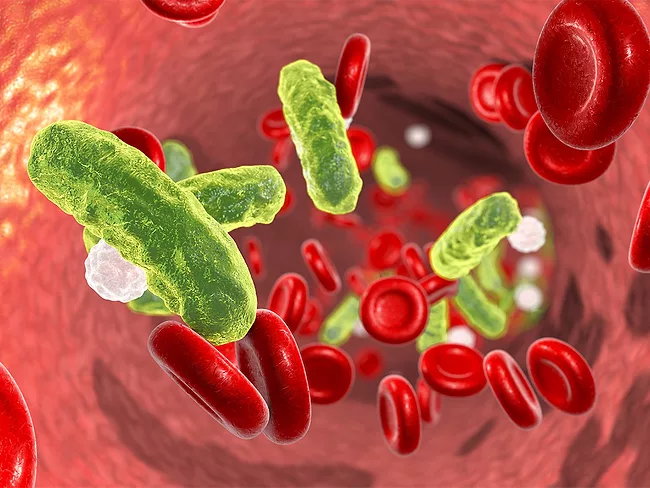
Cytovale Inc. received U.S. FDA 510(k) clearance for its Intellisep sepsis test, which can aid in the diagnosis of the often fatal condition within 10 minutes. Cytovale is one of several companies and collaborations that aim to sharply reduce the time to diagnosis and the mortality rate for sepsis by providing quicker, more informative test results and standardizing protocols.
If the U.S. FTC has its way in banning all noncompete employment agreements, a lot of biopharma and med-tech companies are going to have to rethink how they protect sensitive information and business strategies.
Proposed mergers with Chinese companies will likely be subject to increased scrutiny from the Committee on Foreign Investment in the United States (CFIUS) as evidenced by the temporary hold placed on the merger between F-star Therapeutics Ltd. and Sino Biopharmaceutical Ltd.’s Invox Pharma Ltd. that was announced in June 2022.
An already-intrigued Wall Street appreciated Relay Therapeutics Inc.’s Jan. 10 update during the J.P. Morgan Healthcare Conference (JPM), where the company detailed progress across its development efforts, including those with RLY-4008, an oral small-molecule inhibitor of fibroblast growth factor receptor 2 (FGFR2), in the works for patients with FGFR2-altered cholangiocarcinoma (CCA) and other cancers. Shares of the Cambridge, Mass.-based firm (NASDAQ:RLAY) ran up by about 38%, or $6, in the five days ahead of Jan. 13. The stock closed Jan. 17 at $20.45, down 32 cents.
Act Genomics (Hong Kong) Ltd. won U.S. FDA approval for its genomic profiling test for solid tumors, Actonco. This marks the first time an Asia-based company has received FDA clearance for a comprehensive genomic profiling test.
At a time when Chat GPT is making waves in the world of artificial intelligence (AI), new legislation is making the rounds in Washington that would allow an AI algorithm to write prescriptions for pharmaceuticals. Rep. David Schweikert (R-Ariz.) introduced H.R. 206 to the House Energy and Commerce (E&C) Committee Jan. 9, although at present the bill enjoys the backing of no other members of the House, suggesting that this legislation has a steep climb in front of it.
 RSS
RSS