Inspectors from the U.S. Public Company Accounting Oversight Board (PCAOB) have reportedly arrived in Hong Kong to inspect audit records for the Chinese companies listed by the U.S. SEC as being noncompliant with U.S. accounting standards.
It took resolving issues from two complete response letters for Fennec Pharmaceuticals Inc. to finally land U.S. FDA approval of Pedmark. The injectable formulation of sodium thiosulfate is for reducing the risk of platinum-induced ototoxicity associated with cisplatin in pediatric patients 1 month and older with localized, non-metastatic solid tumors. Approval of the NDA arrived Sept. 20, three days before its Sept. 23 PDUFA date.
The U.S. response to the emergence of the COVID-19 pandemic may by now be the stuff of public health policy lore, with both the FDA and the CDC contributing to the chaos in the first months of the pandemic. The Office of Inspector General has issued an analysis of the situation, and while OIG revisited some of the known miscues, the report also made the case that a national strategy for pandemic response will be needed if federal government efforts in the future are to be less a hazard to the lives of American citizens than those seen in the first half of 2020.
The fate of three cancer drugs, and possibly the future financial health of their sponsors, could be on the line Sept. 22 and 23 as the U.S. FDA’s Oncologic Drugs Advisory Committee (ODAC) takes a hard look at the safety-efficacy data for Spectrum Pharmaceuticals Inc.’s Pozenveo, Oncopeptides AB’s Pepaxto and Secura Bio Inc.’s Copiktra. First up in the triple-header is Pozenveo (poziotinib), which is seeking accelerated approval as a second-line treatment for patients with locally advanced or metastatic non-small-cell lung cancer harboring HER2 exon 20 insertion mutations confirmed by an FDA-approved test.
The U.S. NIH is not generally regarded as a wellspring of concepts and policies in the world of artificial intelligence (AI), but that perception may change soon thanks to the agency’s Bridge2AI program. The agency announced recently that it will drop $130 million into this program over four years in an effort to develop standards for data used in AI research, a key development for device makers seeking to sell products that use these complex algorithms.
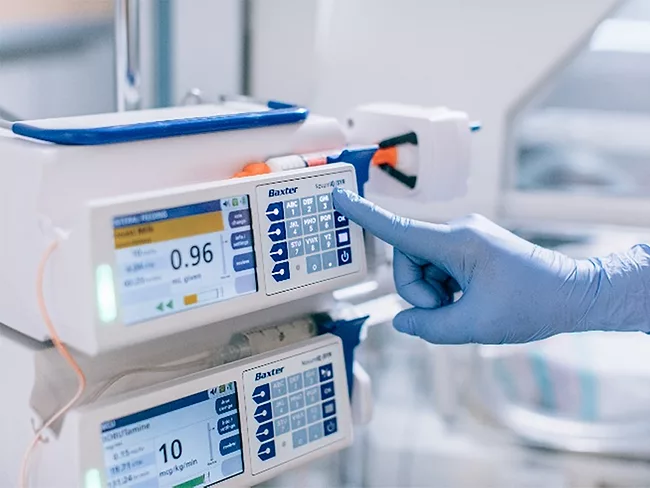
Baxter International Inc. has scored FDA clearance for an infusion pump used to deliver small amounts of fluid at low rates, often in pediatric, neonatal and anesthesia care settings. The Novum Iq syringe infusion pump also features Dose Iq Safety Software, a web-based, customizable drug library that incorporates titration technology to reduce dosage errors during patient treatment.
Claiming it would be impossible to carve out a so-called skinny label that would comply with generic drug “same labeling” rules, Novartis AG is petitioning the U.S. FDA, for the second time, not to approve generic versions of its blockbuster heart drug, Entresto (sacubitril + valsartan), that attempt to carve around a cardiovascular indication that has exclusivity until Feb. 16, 2024.
Bluebird Bio Inc.’s elivaldogene autotemcel (eli-cel) gained U.S. approval late Sept. 16 for use in early active cerebral adrenoleukodystrophy (CALD), making it the firm’s second gene therapy to clear the FDA in as many months. Branded Skysona, eli-cel is expected to be available commercially by the end of 2022 and its launch will require only “incremental” company resources on top of those required for the ongoing launch of beta-thalassemia gene therapy Zynteglo (betibeglogene autotemcel), Bluebird said.
The U.S. NIH is not generally regarded as a wellspring of concepts and policies in the world of artificial intelligence (AI), but that perception may change soon thanks to the agency’s Bridge2AI program. The agency announced recently that it will drop $130 million into this program over four years in an effort to develop standards for data used in AI research, a key development for device makers seeking to sell products that use these complex algorithms.
The Biden administration’s views of mergers and acquisitions have veered sharply from those of the previous administration, but Jonathan Kanter, assistant U.S. attorney general, said recently that there is more to come. Kanter said the Department of Justice (DOJ) and the Federal Trade Commission (FTC) will shortly publish draft guidelines that would place the burden on the parties to these M&A transactions to prove the transaction is not anticompetitive, upending the historical presumption that the plaintiff is liable for demonstrating the anticompetitive nature of the proposed transaction.
 RSS
RSS