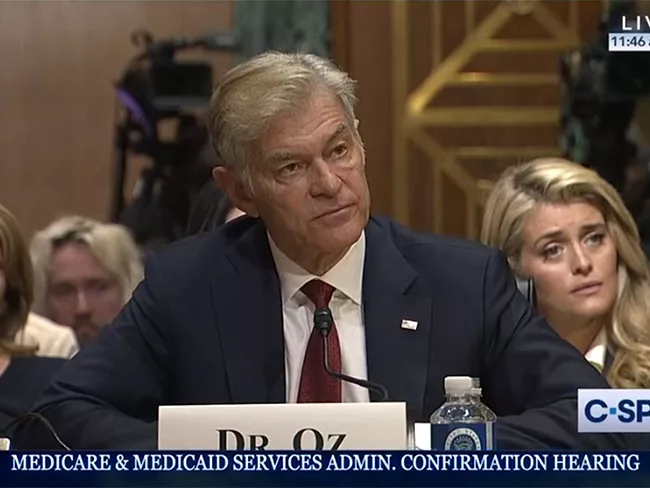
Cardiothoracic surgeon and television personality Mehmet Oz, President Donald Trump’s nominee for administrator of the Centers for Medicare & Medicaid Services (CMS), faced the U.S. Senate’s finance committee on March 14, suggesting the implementation of artificial intelligence (AI) technologies and the reduction of drug prices would be among his top priorities, if confirmed.
Latest findings on Healios K.K.’s stem cell therapy to treat acute respiratory distress syndrome (ARDS), coined Multistem (invimestrocel; HLCM-051), found the regenerative medicine effective in reducing the number of patient days on ventilator treatment, as well as mortality benefits.
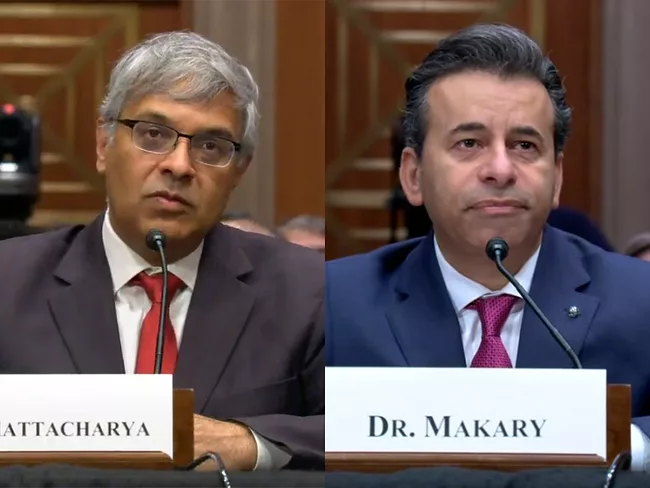
As expected, the U.S. Senate Health, Education, Labor and Pensions Committee voted March 13 to send the nominations of Jay Bhattacharya as NIH director and Martin Makary as FDA commissioner to the Senate floor for confirmation. Bhattacharya received a narrow 12-11 party-line vote, but Makary picked up some Democratic support to secure a 14-9 vote.
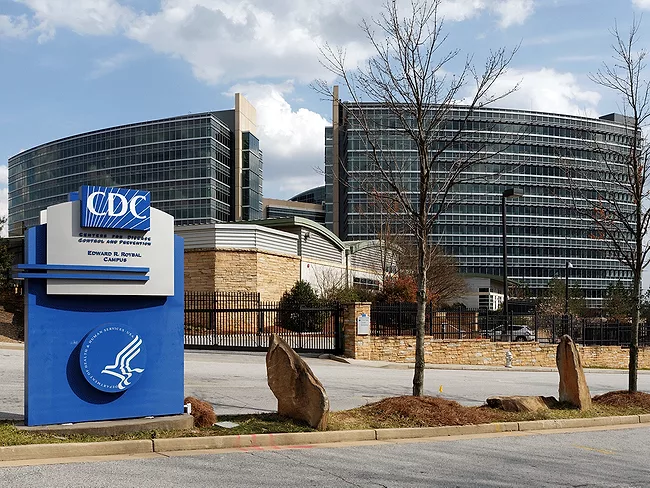
Shortly before the Senate Health, Education, Labor and Pensions Committee was to hold the first ever confirmation hearing for a U.S. CDC director March 13, it issued a statement saying the hearing was canceled due to the White House withdrawing its nomination of Dave Weldon, a physician and former congressman from Florida.
Looking to shave $65 million from its annual expenditures while streamlining the first stage of its two-level grant review process, the U.S. NIH is proposing to centralize the peer review of all applications for grants, cooperative agreements and R&D contracts within its Center for Scientific Review.
Aim Vaccine Co. Ltd. may become the first company to gain regulatory clearance of a prophylactic iterative serum-free human rabies vaccine. Beijing-based Aim said it is preparing a regulatory submission of its independently developed rabies vaccine based on positive phase III results that showed good safety, immunogenicity and immune persistence.
Celltrion Inc. is on a biosimilar roll with the U.S. FDA this month, having gained clearance of Stoboclo and Osenvelt as products referencing Amgen Inc.’s biologic, denosumab (Prolia, Xgeva), along with Omlyclo becoming the first and only interchangeable biosimilar to omalizumab (Xolair, Genentech Inc. and Novartis AG).
In another real-life episode of “sponsor beware,” the owners of a clinical research facility pleaded guilty March 10 in U.S. district court to fraud charges resulting from their conduct of two clinical trials for potential asthma drugs.
Getting the Ensuring Pathways to Innovative Cures (EPIC) Act through the U.S. Congress to do away with the “pill penalty” in the Medicare drug price negotiations could require an epic effort, given the current politically fueled atmosphere on the Hill. With the Inflation Reduction Act (IRA), which created the negotiations, considered a signature achievement of the Biden administration, the negotiations have become, for many lawmakers, almost a sacred cow that can’t be touched. If anything, some of them want to expand the negotiations to more drugs and to the commercial market.
George Demos, former vice president of drug safety and pharmacovigilance at Acadia Pharmaceuticals Inc., is the latest biopharma executive to plead guilty to insider trading charges.
 RSS
RSS