PARIS – The French National Authority for Health (HAS) is expanding the available range of novel autologous technologies reimbursed in the context of breast reconstruction following ablative surgery. In doing so, the HAS is paving the way towards reimbursement for novel autologous techniques in general.
The push for legislation that would lower prescription drug prices in the U.S. has mounted in recent months, but support for Medicare pricing negotiations has faltered in the past few weeks. Sen. Bob Menendez (D-N.J.) is the latest Senate Democrat to signal his aversion to giving the government the authority to negotiate prices with drugmakers, breathing new life into hopes that the pharmaceutical industry will yet again escape a mechanism that critics say would suppress innovation at the expense of patients in desperate need of state-of-the-art therapies.
The FDA issued an Oct. 18 reminder to the diagnostics industry that the agency still requires test developers to register with an institutional review board (IRB) for all studies of human subjects. This still pertains to studies that make use of leftover, de-identified specimens in FDA-regulated studies, an alert to industry which suggests that enforcement actions may be in the near offing.
The FDA published a draft rule on Oct. 19 for over-the-counter hearing aids, four years after the Food and Drug Administration Reauthorization Act (FDARA) had directed the agency to do so by 2020. One of the potentially more problematic aspects of the draft is that the rule would be preemptive of state law on several points, including consumer protections, a consideration that could serve as a flashpoint in future litigation.
Regulatory snapshots, including global submissions and approvals, clinical trial approvals and other regulatory decisions and designations: SPR Therapeutics, Venus Concept.
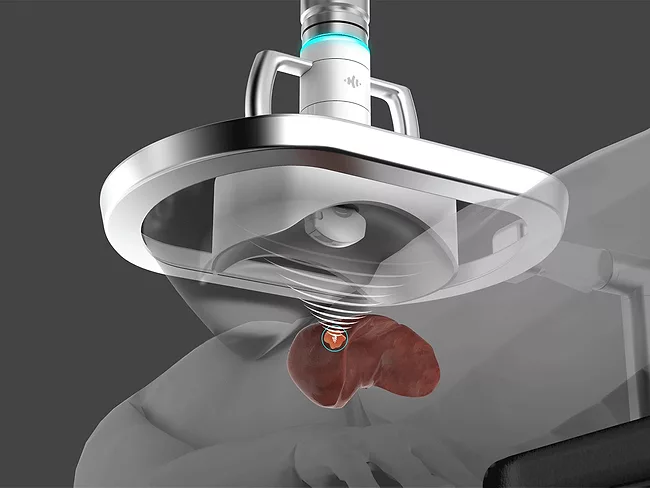
The FDA granted breakthrough device designation to Histosonics Inc. for the first system to harnesses microbubbles created by pulsed ultrasound waves to wreak very targeted cellular destruction, with real-time visualization and control. The therapy, called histotripsy, destroys tissue in the liver without heat, radiation or surgery. The technology was developed at the University of Michigan.
The question of bias in artificial intelligence (AI) algorithms is generally thought to be overcome by ensuring that the data set used to train the algorithm is representative of the population at large. However, Naomi Aaronson, executive director of clinical evaluation at the Blue Cross Blue Shield Association, said its not that simple because demographic data can combine in unpredictable ways and thus “the only real understanding of whether it works is in the clinical validation” of the algorithm in various settings.
Regulatory snapshots, including global submissions and approvals, clinical trial approvals and other regulatory decisions and designations: Histosonics, Thermo Fisher Scientific.
PERTH, Australia – Australia’s TGA issued new guidance to help device manufacturers better understand new classifications for active medical devices, including software-based medical devices, and clinical decision support software.
 RSS
RSS