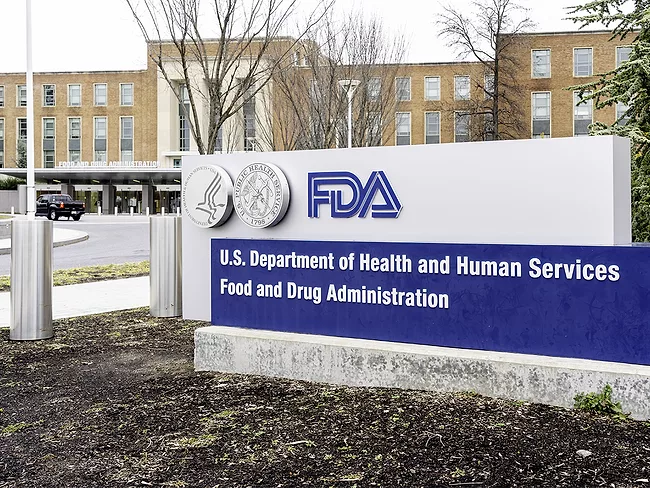
FDA preemption of state liability law has proven controversial on a number of occasions, a fact of life resurrected by a case arising out of the Supreme Court of the State of Mississippi. The court declared that the FDA must invoke the rulemaking process for its regulation of medical product labels.
The FDA’s push toward safety has included an examination of the materials used in medical devices, but a recent report sheds little useful light on whether these materials are provoking a response in patients.
The term of follow-up in clinical studies is the subject of massive speculation at FDA advisory hearings, but a recent FDA workshop suggests the agency may adjust its expectations, depending on the device. Darrell Brodke, of the University of Utah, said on a recent spinal device workshop that the two-year endpoint in some spinal device studies struck him as somewhat arbitrary, adding that a longer duration of follow-up is necessary to capture some device failures, but that two years is perhaps overly long where some other outcomes measures are concerned.
Regulatory agencies are starting to catch up on their guidance agendas, including the European Union’s Medical Device Coordination Group (MDCG), which has posted a guidance for risk classification. Rather than provide a list of risk classes for specific device types, the guidance provides a framework by which the manufacturer does its own evaluation of the inherent risk of the device, opening the door to disagreements between the manufacturer and its notified body.
TORONTO – Radialis Medical Inc. has submitted FDA premarket notification for a positron emission tomography system (PET) that targets specific organs for low dose imaging and may be flexible enough to assess many different diseases. The Radialis PET camera is under clinical investigation at Toronto’s University Health Network and Princess Margaret Cancer Center for its ability to assess anomalies in breast cancer.
Two innovators in the concussion assessment space have advanced their products with new funding and new clearances. Brainscope Co. Inc. secured $35 million in capital through an intellectual property-based funding arrangement with Aon plc to expand access to and develop new applications for its EEG-based product. Syncthink Inc. received a second FDA clearance for its Eye-Sync platform for mild traumatic brain injury diagnosis.
Even though the U.S. already has a National Plan to Address Alzheimer’s Disease, a bipartisan group of U.S. senators is adding its voice to that of nearly 200 national organizations and experts in calling for more. In a recent letter to Health and Human Services (HHS) Secretary Xavier Becerra, the 15 senators requested that he make reducing the prevalence of dementias a departmental priority.
Regulatory snapshots, including global submissions and approvals, clinical trial approvals and other regulatory decisions and designations: Perkinelmer, Venclose.

 RSS
RSS