Cryofocus Medtech (Shanghai) Co. Ltd. received U.S. FDA breakthrough device designation on July 24 for its cryoablation system for asthma. The Chinese med-tech’s stock (HKEX:6922) rose near 20% over two consecutive days on the Hong Kong Stock Exchange with the news, increasing from HK$5.00 ($.64) July 23 to HK$5.98 nearing the close of trading on July 25.
Roche Holding AG received CE mark for its Elecsys pTau181 test to help rule out Alzheimer’s disease. The minimally invasive blood test, developed in collaboration with Eli Lilly and Co., measures phosphorylated Tau 181 protein, a biomarker indicative of amyloid pathology, a hallmark of Alzheimer’s.
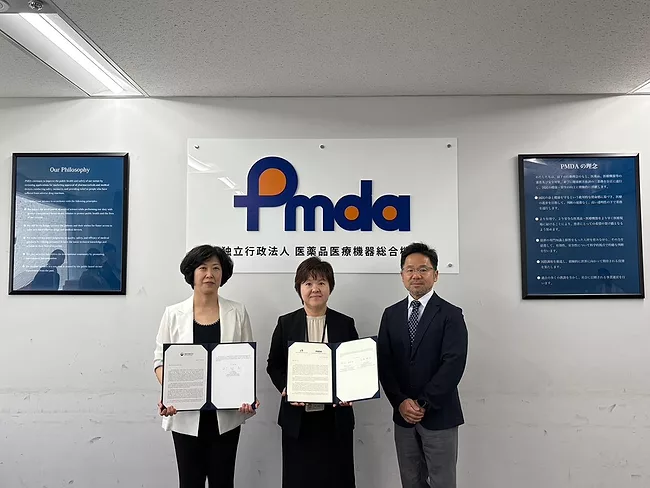
South Korea’s Ministry of Food and Drug Safety signed a confidentiality agreement with Japan’s Ministry of Health, Labour and Welfare and Pharmaceuticals and Medical Devices Agency to boost bilateral regulatory cooperation in the field of medical devices.
There are times when a casual observer can’t tell whether the medical device industry’s messaging is getting through to policymakers, but a July 17 announcement by the Trump administration clearly signals the effectiveness of at least one med tech messaging strategy.
Five years after the COVID-19 pandemic virtually locked down the U.S. government and society in general, the Patent Trial and Appeal Board (PTAB) is shedding the last vestiges of those days.
The U.K. Medicines and Healthcare Products Regulatory Agency unveiled another round of measures designed to promote access to the latest medical technology, which includes a move to jettison domestic device markings in favor of unique device identifiers.
The U.S. FDA expanded the approval for use of Boston Scientific Corp.’s Watchman Flx and Watchman Flx Pro left atrial appendage closure (LAAC) devices to include post-ablation patients, bringing good news to the company as it preps for its second quarter earnings report on July 23.
Australia’s Therapeutic Goods Administration proposed to adopt a 2021 EU guideline on quality documentation for drugs used with medical devices including co-packaged products, a demonstration of the impact of EU regulations on Australia’s own regulatory approach.
Palmetto GBA of Columbia, S.C., issued a draft local coverage determination that provides coverage for biomarker testing to stratify a patient’s risk associated with ductal carcinoma in situ.
The U.S. False Claims Act (FCA) is not the only statute governing the submission of false claims to federal agencies thanks to the more than 30 states with their own versions of the FCA. However, the federal government is providing states with more incentives to amplify their FCA-related activities, a development that raises the stakes for companies in the life sciences.
 RSS
RSS