The prospect of U.S. tariffs on pharmaceuticals became more than just speculation this week, with President Donald Trump saying those tariffs likely would begin at 25% and climb over the year. His comments came in response to a question at a Feb. 18 news conference that followed the signing of two unrelated executive orders. Asked about the planned rate for tariffs on semiconductors and pharmaceuticals, Trump responded that it would be 25% and higher and it would “go very substantially higher over [the] course of a year.”
The Biosecure Act may have died with the 118th U.S. Congress, but efforts to stop U.S. government funding of R&D in China are alive and well. Rep. Claudia Tenney, R-N.Y., introduced the Stop Funding our Adversaries Act in the House Feb. 7 to prohibit direct and indirect federal funding of research in China or entities owned by China.
The European Commission on Feb. 5 cleared Shanghai Henlius Biotech Inc.’s serplulimab (HLX-02) under the brand name of Hetronifly as a first-line combination therapy with carboplatin and etoposide to treat extensive-stage small-cell lung cancer.
“This current administration is like nothing that we've seen before,” said a managing partner of a global venture capital firm who spoke to BioWorld on the condition of anonymity. “President Trump’s first term was bad,” he said, “but nobody knows what’s coming.” “This is truly nationalism at its worst, because he won on the campaign [largely] to protect American jobs, claiming that Americans have been unfairly treated.” And it's not just China, he said, but India and other countries will also likely be affected.
Japan’s drug pricing scheme has gotten more complicated, and pharma companies should brace themselves for annual price cuts. Industry has been pushing back against the annual price reductions to no avail, Ray Fujii, managing director of LEK’s San Francisco office told BioWorld. Although 2025 is a mid-year revision in Japan, and not a formal price revision year, the system for considering drug prices has gotten more confusing with a new formula for determining price cuts.
Australia’s Therapeutic Goods Administration (TGA) has approved CSL Ltd.’s Andembry (garadacimab) for preventing recurrent hereditary angioedema attacks, marking the first global approval for the drug that was discovered and developed in Australia by CSL scientists.
South Korea’s Ministry of Food and Drug Safety said it released the world’s first guideline on reviewing and approving generative artificial intelligence-based medical devices Jan. 24, to help establish standards on the technology’s applications in the medical field.
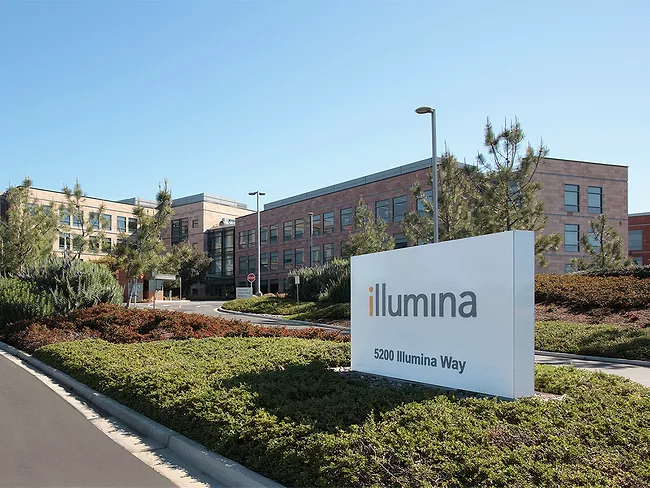
The Chinese government blacklisted several American companies, including gene sequencing-focused biotechnology firm Illumina Inc. and fashion brand PVH Corp., citing threats to China’s “national sovereignty, security and development interests.”
As more Asia biotechs turn to regenerative medicine to address disorders without a cure, Medipost Inc. is continuing global expansion with Cartistem, its allogeneic human umbilical cord blood-derived mesenchymal stem cell product that gained clearance in South Korea in 2012 to treat knee osteoarthritis.
China’s National Medical Products Administration has given the green light to Innovent Biologics, Inc.’s and Jiangsu Aosaikang Pharmaceutical Co. Ltd.’s NDA for third-generation EGFR tyrosine kinase inhibitor limertinib, for treating adults with locally advanced or metastatic EGFR T790M-mutated non-small cell lung cancer.
 RSS
RSS