Eli Lilly and Co. has the dubious distinction of receiving the first untitled letter in 2022 from the FDA’s Office of Prescription Drug Promotion. The letter, sent Jan. 19 and posted this week, takes the Indianapolis-based company to task for an Instagram ad promoting Lilly’s diabetes drug Trulicity (dulaglutide).
The European Council adopted a regulation Jan. 25 giving the EMA a stronger role in crisis preparedness and the management of drugs and medical devices during a crisis.
LONDON – The industry is expressing divergent views of changes to how the U.K. health technology assessment agency, the National Institute for Health and Care Excellence (NICE), will in the future select what products to assess and the methods and processes it will use to carry out its evaluations.
Medtronic plc received FDA premarket approval Friday for use of its Intellis rechargeable and Vanta recharge-free neurostimulators in patients with diabetic peripheral neuropathy (DPN), suddenly tripling the number of spinal cord stimulators approved for the indication. Medtronic’s implantable spinal cord stimulators (SCS) now join Nevro Corp.’s HFX, which has had the distinction since July 2021 of being the only device with FDA approval for DPN, also known as painful diabetic neuropathy (PDN).
LONDON – The industry is expressing divergent views of changes to how the U.K. health technology assessment agency, the National Institute for Health and Care Excellence (NICE), will in the future select what products to assess and the methods and processes it will use to carry out its evaluations.
The FDA announced a class I recall of the Medtronic Hawk One directional atherectomy catheter system due to more than 160 reports of problems with the device’s guidewire. The catheter tip could break or separate when the guidewire prolapses, a problem that is associated with 55 injuries and no deaths, but the recall affects more than 95,000 units.
Cybersecurity challenges can represent an existential threat to patients on medical devices, and a new report by New York-based Cynerio Inc. highlights some of those challenges. One of the findings in the report is that nearly three-fourths of intravenous pumps, which make up 38% of a hospital’s internet of things (IoT) footprint, are vulnerable to an attack, a predicament that continues to put desperately ill patients in jeopardy.
Regulatory snapshots, including global submissions and approvals, clinical trial approvals and other regulatory decisions and designations: Magnesium Development.
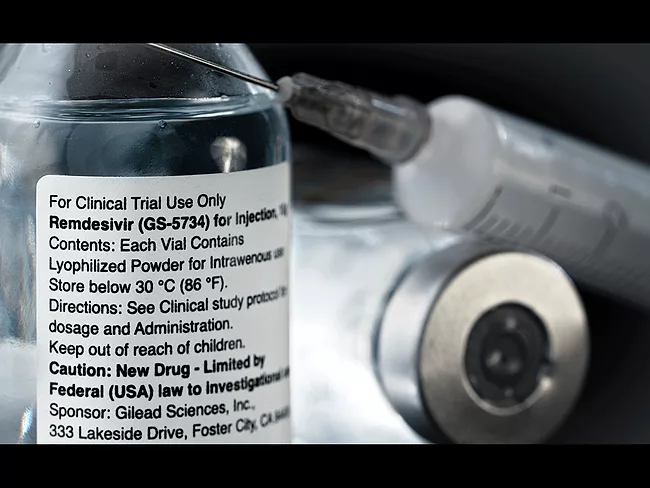
Once again, the U.S. FDA giveth and it taketh away. Just a few days after expanding its approval for Gilead Sciences Inc.’s Veklury (remdesivir) to provide access to more people infected with COVID-19, the FDA essentially shut down the use of two monoclonal antibody (mAb) treatments Jan. 24 that had been authorized to treat mild-to-moderate COVID-19 infections – Regeneron Inc.’s Regen-Cov (Ronapreve in Europe), an antibody cocktail of casirivimab and imdevimab, and Eli Lilly and Co.’s bamlanivimab and etesevimab that are administered together.
 RSS
RSS