A Chinese patent covering methods and compositions for the use of CRISPR-Cas9 in eukaryotes has been granted to Dublin-based Ers Genomics Ltd., making what Michael Arciero, vice president of intellectual property and commercial development at the company, called “a strong but not surprising statement by China,” which has made the biotechnology industry one of its top national priorities.
The first approval for treating advanced malignant perivascular epithelioid cell tumor (PEComa) in adults has been awarded by the FDA to Aadi Bioscience Inc.’s Fyarro. The number of patients is low, from 100 to 300 patients annually in the U.S., but the geography the company hopes to sell to is wide as it takes in Europe and China.
The FDA gave Pear Therapeutics Inc. a second breakthrough device designation with the company’s Reset-A prescription digital therapeutic (PDT) for alcohol use disorder getting the regulatory agency’s speed pass. The news comes a week out from the vote of stockholders of blank-check company Thimble Point Acquisition Corp. Inc. on a combination with Pear that will take the digital therapeutic company public.
The FDA has issued new risk classification orders for two series of products, including in vitro diagnostics for hepatitis C, two of which the agency down-regulated from class III to class II. However, blood lancets for multiple uses on more than one patient has been elevated from class I to class III, a change that has no impact on any products currently available on the U.S. market.
TORONTO – Despite high tech costs and tight public sector budgeting, COVID-19 has driven Canadian procurement offices to echo a sentiment uttered by average Canadians, “Damn the costs. Give us something that really works.”
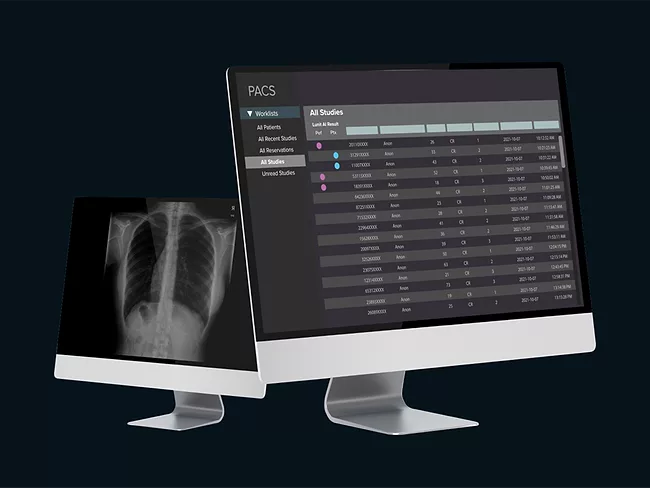
Lunit Inc. has won FDA approvals for the company’s breast cancer detection product Lunit Insight MMG and the triage and notification software Lunit Insight CXR Triage, only days apart. Lunit Insight MMG is an artificial intelligence (AI) product for breast cancer detection from mammography images. Lunit’s second approval is for Lunit Insight CXR Triage, its AI-powered chest X-ray triaging product.
Regulatory snapshots, including global submissions and approvals, clinical trial approvals and other regulatory decisions and designations: Pear, Strados Labs, Theradaptive.
Even as antimicrobial resistance is expected to continue to grow, the development of much-needed novel antibiotics and antifungals remains trapped in a catch-22 in which funding is available for early stage research but not necessarily for the translational work necessary to bring the drugs to market.
 RSS
RSS