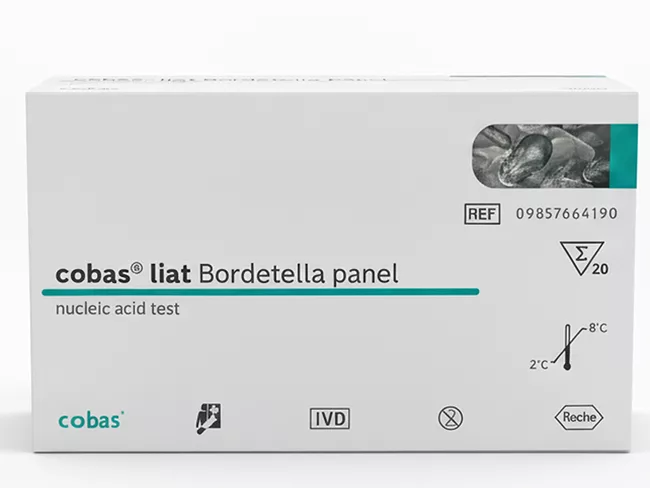
Roche AG received regulatory clearance from the U.S. and European authorities for a new diagnostic test that detects Bordetella infections, including whooping cough, as cases surge globally. The point-of-care test, which delivers PCR-accurate results in just 15 minutes, will help health care providers to quickly identify infections and act to prevent severe complications, onward transmission and deaths.
The FDA’s Center for Devices and Radiological Health (CDRH) will have its hands full with the roll-out of the overhauled quality management regulation, but this will have ripple effects on industry as well. Keisha Thomas, associate director for compliance and quality at CDRH, told an audience in Washington DC that risk management will be a big focus in FDA oversight and inspections in 2026, a point of emphasis that could lead to more routine compliance and enforcement action.
On Dec. 2, 2025, the FDA released draft guidance that could reduce the use of nonhuman primates (NHPs) in preclinical testing of monoclonal antibodies. According to the guidance, which the FDA released for the purpose of soliciting comments, “In general, studies longer than 3 months in nonrodent species (e.g., NHPs, dogs, and mini-pigs) are not warranted to evaluate toxicities … when data from 3-month studies are supplemented with a weight-of-evidence (WoE) risk assessment.”
Vycellix Inc. has successfully completed preclinical development for its universal cell engineering platform (VY-UC) and will now seek clinical trial clearance in Sweden to begin a phase I study of VNK-101, an allogeneic natural killer (NK) cell therapy engineered with VY-UC for relapsed or refractory multiple myeloma.
“Do not take us backwards,” many doctors and other stakeholders implored the CDC’s Advisory Committee for Immunization Practices ahead of its meeting that starts Dec. 4 with a day-long discussion and votes on whether the current recommended birth dose of the hepatitis B virus vaccine should be delayed.
Lynk Pharmaceuticals Co. Ltd. has received IND clearance from the FDA for LNK-01006, an allosteric TYK2 inhibitor with potential to treat neurodegenerative diseases.
Vectory Therapeutics BV has obtained IND clearance from the FDA for a phase I/II trial (PIONEER-ALS) of VTX-002, a first-in-class vectorized antibody targeting TDP-43 pathology in amyotrophic lateral sclerosis (ALS). VTX-002 delivers an engineered antibody designed to selectively target toxic species of TDP-43.
Latus Bio Inc. has reported IND clearance by the FDA for LTS-101, a gene therapy candidate to treat the CNS manifestations of late-infantile neuronal ceroid lipofuscinosis type 2 (CLN2) disease. The FDA has also granted orphan drug, rare pediatric disease and fast track designations to LTS-101.
So much for stability at the U.S. FDA. Three weeks after accepting the position as director of the FDA’s CDER, Richard Pazdur has informed the agency of his intention to retire at the end of the year.
The next stop on the comeback tour for the U.S. FDA’s Rare Pediatric Disease Priority Review Voucher program is the Senate, after the House unanimously passed the Mikaela Naylon Give Kids a Chance Act, H.R. 1262, Dec. 1.
 RSS
RSS