To help better utilize real-world data in drug development, the EMA published its final guideline Oct. 26 on the use of registry-based studies to support regulatory decision-making.
LONDON – The EMA recommended approval of Apellis Pharmaceuticals Inc.’s C3 complement inhibitor, Aspaveli (pegcetacoplan), to treat paroxysmal nocturnal hemoglobinuria, but has diverged from the FDA, excluding treatment-naïve patients adding its use should be restricted to those who have failed to respond to C5 inhibitor drugs.
Should Johnson & Johnson’s (J&J) COVID-19 vaccine be a two-dose series? While not directly asked, that question almost lurks between the lines of the FDA’s briefing document for the Oct. 15 meeting of its Vaccines and Related Biological Products Advisory Committee. The document referred to J&J’s proposed second dose as a “booster,” but the FDA isn’t asking the committee the questions it posed for the Moderna Inc. and Pfizer Inc.-Biontech SE boosters. Instead, it is inviting VRBPAC to advise on whether the second J&J dose should be administered two months or six months following the first shot.
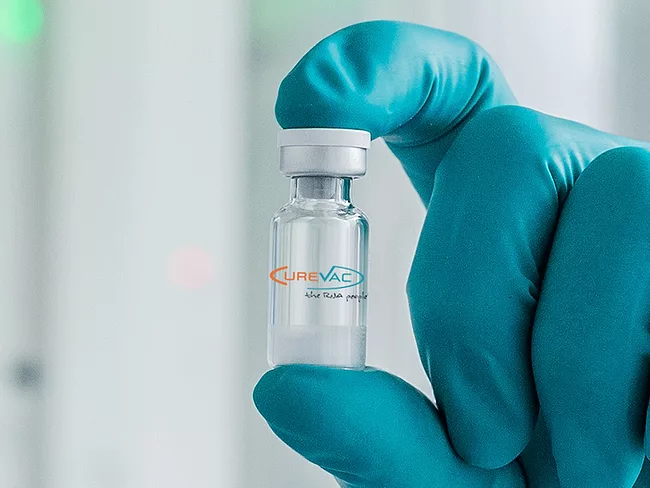
Curevac AG, once a forerunner in COVID-19 vaccine development but later surpassed, said it would terminate its first effort in the field, CVnCoV, withdrawing it from a rolling review at the EMA to focus instead on development of second-generation mRNA vaccine candidates with Glaxosmithkline plc.
Cambridge, U.K.-based Astrazeneca plc has new data from its long-acting COVID-19 antibody combination, AZD-7442, which aims to provide longer protection, potentially for up to a year. Latest data show the intramuscularly injected drug achieved a statistically significant reduction in severe COVID-19 or death compared to placebo in non-hospitalized patients with mild to moderate symptomatic disease.
LONDON – The EMA set out the reasons for why it is diverging from the FDA on booster doses of Pfizer Inc.’s/Biontech SE’s COVID-19 vaccine, despite having reviewed the same data.
LONDON – The EMA has changed its stance on booster doses of the Pfizer Inc./Biontech SE COVID-19 vaccine and said they “may now be considered” at least six months after the second dose for people ages 18 and over.
European regulators have rejected Pfizer Inc.’s tanezumab, casting further doubts on whether the FDA will okay the troubled drug that is intended as a non-opioid alternative for osteoarthritis pain.
 RSS
RSS