The FDA has granted Plus Therapeutics Inc. fast track designation for its lead candidate, Rhenium Nanoliposomes (RNL), for treating recurrent glioblastoma, propelling it into the sixth cohort of a phase I dose-finding trial.
Mallinckrodt plc’s decade-long frustration with getting approval for its vasopressin analogue selective for V1 receptors, terlipressin, for use in hepatorenal syndrome type 1 continues as the FDA issued the company a third complete response letter (CRL) for the drug.
The FDA’s approval of Genentech Inc.’s Gavreto (pralsetinib) for treating adults with metastatic rearranged during transfection (RET) fusion-positive non-small-cell lung cancer (NSCLC) follows the FDA’s May approval of Eli Lilly and Co.’s Retevmo for patients whose tumors have a RET alteration. Gavreto will be commercialized in the U.S. by Genentech, part of the Roche Group, along with Blueprint Medicines Corp., which developed the once-daily oral therapy. Outside the U.S., Roche will handle commercialization.
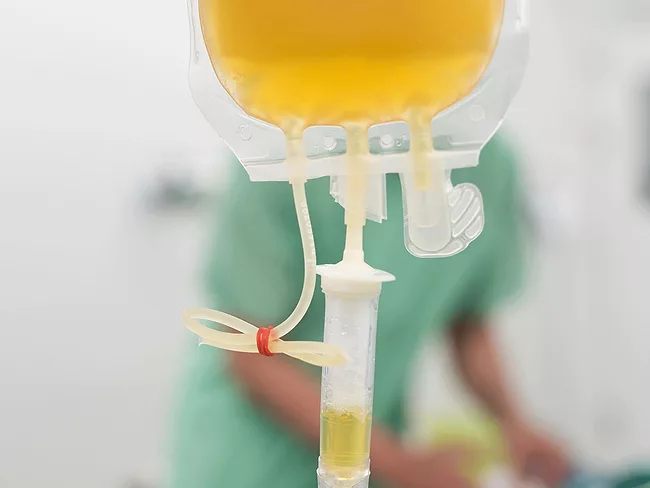
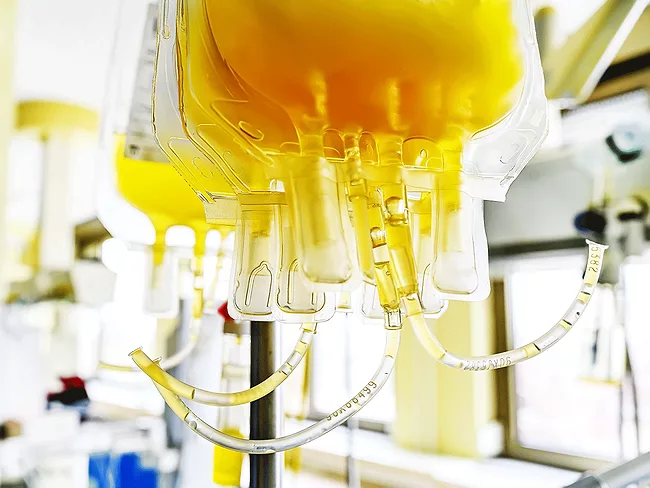
While the emergency use authorization (EUA) the FDA granted Aug. 23 for convalescent plasma remains a political talking point, the agency moved ahead Sept. 2, issuing an updated, immediately effective guidance on the use of convalescent plasma to treat COVID-19 patients in ongoing clinical trials, on an expanded access basis or under the EUA.
The first weekly therapy for adult growth hormone deficiency (GHD) has arrived in the U.S. with FDA approval for Novo Nordisk A/S' Sogroya (somapacitan). It’s the first of Novo's regulatory filings for the medicine, also submitted in the EU and Japan, to win approval. Sogroya replaces endogenous growth hormone in adults who don't produce enough of it. Novo said it is working to finalize plans to make the therapy available and has not yet disclosed pricing.
Two days ahead of its Sept. 3 PDUFA date, Bristol Myers Squibb Co. received the FDA’s approval for Onureg, an oral form of azacitidine, for continuing treatment of adults with acute myeloid leukemia (AML). The indication is specifically for patients achieving first complete remission (CR) or CR with incomplete blood count recovery following intensive induction chemotherapy and who are not able to complete intensive curative therapy. BMS said Onureg is the first and only FDA-approved continued AML treatment for patients in complete remission.
In a bid to build public confidence and demonstrate its transparency in determinations about potential COVID-19 vaccines, the FDA will convene its Vaccine Advisory Committee for a virtual meeting Oct. 22 to discuss the general development of the vaccines for the U.S. market.
With the FDA approval of Cassiopea SpA’s Winlevi (clascoterone cream 1%) to treat acne in patients 12 years and older, the European company hailed it as the first acne drug in 40 years with a new mechanism of action.
The truth that every action has a reaction is being proven again in the public square of the U.S. as the shrill, endless clamor of politicians hoping to score against their opponents via health care issues or accomplishments threatens to undermine confidence in the FDA, the products it approves and even the guidance offered by the Centers for Disease Control and Protection (CDC). In the past, politicians from both parties blamed “greedy” biopharma companies and self-appointed social influencers for patients refusing to fill prescriptions, get tested or be immunized. Now they have themselves to blame.
As of Aug. 13, more than 90,000 patients hospitalized in the U.S. with COVID-19 already had been given access to convalescent plasma through a national expanded use protocol (EAP) sponsored by the Mayo Clinic. The FDA’s decision Sunday to grant emergency use authorization (EUA) for the potential therapy will further expand access to convalescent plasma for hospitalized patients throughout the country at a time when fully approved COVID-19 treatments are nonexistent and even EUAs are few and far between.

 RSS
RSS