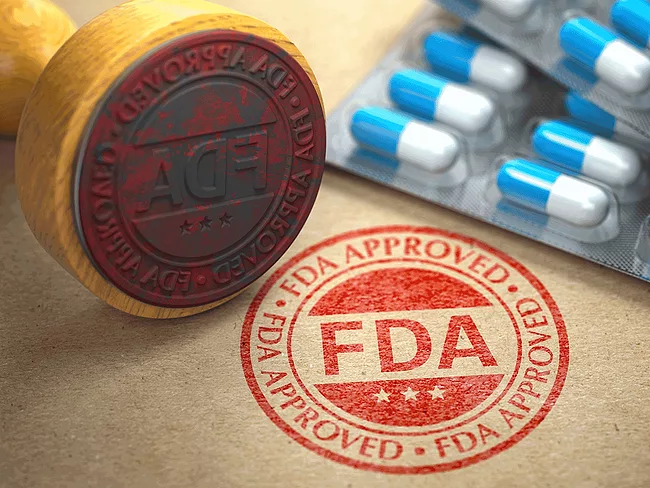
It may be a year later than originally planned, but Regeneron Pharmaceuticals Inc. is set to commercialize Lynozyfic (linvoseltamab) in the U.S. following FDA approval for use in adults with relapsed and refractory multiple myeloma. A bispecific antibody targeting B-cell maturation antigen (BCMA) and CD3, Lynozyfic was cleared under the accelerated approval pathway, with continued approval contingent upon a confirmatory trial.
Without using the words “universal” or “nationwide,” a U.S. district judge granted a preliminary injunction July 1 to stop the Department of Health and Human Services’ (HHS) reorganization plan, along with any workforce reduction that’s part of the plan.
Solid phase III efficacy results for Moderna Inc.’s seasonal influenza vaccine, mRNA-1010, may lead the company to resubmit a BLA for a flu/COVID-19 combo shot it has been developing. The top-line data showed Moderna’s flu vaccine produced a superior relative efficacy that was 26.6% higher than a comparator standard-dose seasonal influenza vaccine in people ages 50 and older.
Industry’s reaction to the U.S. FDA’s draft guidance for remote regulatory assessments included a request for more clarity on when the agency would issue a post-assessment report, but the final guidance makes clear the FDA sees no compelling reason to issue such a report in every instance.
Edgewise Therapeutics Inc. CEO Kevin Koch speculated that “perhaps a different environment at the FDA” from four months ago led to reviewers’ caution on sevasemten, his firm’s fast skeletal myelin inhibitor for Becker muscular dystrophy and Duchenne muscular dystrophies.
The U.S. FDA said June 25 it has required updates to the prescribing labels of COVID-19 mRNA vaccines Comirnaty and Spikevax to include new safety information on the risks of myocarditis and pericarditis.
Post pandemic, Moderna Inc. is broadening the applications of mRNA technology to cancer, rare diseases, latent viruses and respiratory viruses, “taking advantage” of the revenue generated by Spikevax (elasomeran), its mRNA-based vaccine for COVID-19.
The U.S. FDA approved 14 drugs in May, a decline from 20 in April and 22 in March. That brings the year-to-date total for 2025 to 84 approvals, the second highest on record for this period, just behind the 89 approvals recorded in the first five months of 2024.
Using informed consent to do what Congress couldn’t, the U.S. FDA is flexing its regulatory authority to halt clinical trials that involve sending cells from American patients to China or other adversarial nations for genetic engineering and subsequent infusion back into the patient.
The realignment within the U.S. FDA continued with reports of the removal of two high level executives. When asked by BioWorld if the Center for Biologics Evaluation and Research’s (CBER) Office of Therapeutic Products director and deputy director had been forced out and if so, why, an HHS spokesperson responded on background with a single sentence: “Center directors deserve to be supported by managers that are aligned with aggressive goals to expeditiously advance therapeutics for rare diseases using the gold standard of science.”
 RSS
RSS