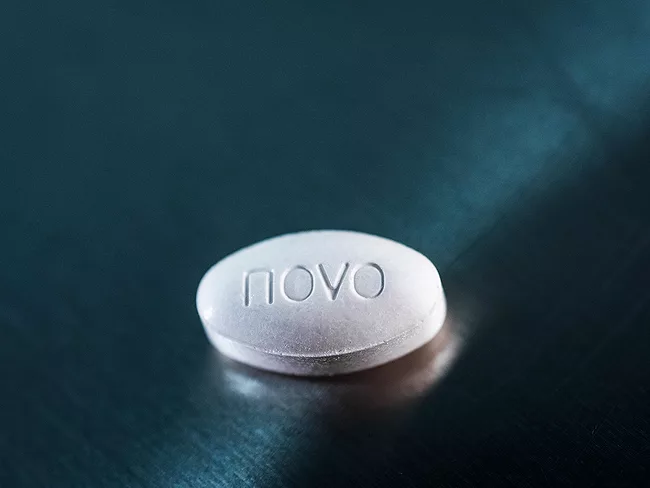
The U.S. FDA has accepted the NDA for an oral formulation of Novo Nordisk A/S’s Wegovy (semaglutide) in treating obesity. If approved, the daily pill will be the first oral GLP-1 for treating chronic weight management. So far, however, it has been injectables leading the way to approval.
Following a complete response letter last year, Satsuma Pharmaceuticals Inc. received U.S. FDA approval of dihydroergotamine nasal powder to treat acute migraine with or without aura. Branded Atzumi, it is the first product that uses Satsuma’s SMART (Simple MucoAdhesive Release Technology) platform that combines an advanced powder and device technology aimed at making delivery more simple.
The U.S. FDA approval of Johnson & Johnson’s Imaavy (nipocalimab-aahu) for myasthenia gravis brings the monoclonal antibody into a treatment space that teems with competition, both approved and in-development candidates. The human Fc receptor inhibitor was approved to treat generalized myasthenia gravis in patients who are 12 years and older. Patients must be anti-acetylcholine receptor [AChR] or anti-muscle-specific kinase [MuSK] antibody positive. Anti-AChR and anti-MuSK antibody-positive individuals make up more than 90% of all antibody-positive gMG patients.
Orum Therapeutics Inc. on April 26 pulled the plug on a U.S.-based phase I study of ORM-5029, its lead oncology degrader antibody conjugate (DAC) asset, a decision that came months after the company first reported a patient death in November 2024.
Stealth Biotherapeutics Inc., and, more importantly, patients with Barth syndrome, faced another disappointing delay April 29 when the U.S. FDA kicked its approval decision down the road for Stealth’s elamipretide.
Jiangsu Hengrui Pharmaceuticals Co. Ltd. is the latest mainland China pharmaceutical company to seek a capital raise on the Hong Kong stock exchange, winning clearance April 28 from the China Securities Regulatory Commission to float new H-shares.
The U.S. FDA issued a complete response letter (CRL) to Telix Pharmaceuticals Ltd. for its NDA for glioma imaging agent, TLX-101-CDx (floretyrosine F18 or 18F-FET, Pixclara), citing the need for additional confirmatory clinical evidence.
The intriguing VEGFxPD-1 bispecific antibody space gained oomph with phase III results disclosed April 23 by Akeso Pharmaceuticals Inc. related to Harmoni-6, testing ivonescimab in combination with platinum-based chemotherapy compared with Tevimbra (tislelizumab, Beigene Ltd.), a PD-1 inhibitor also paired with platinum-based chemo in patients with locally advanced or metastatic squamous non-small-cell lung cancer irrespective of PD-L1 expression. Those data were followed by a green light from the U.S. FDA April 24 for marketing the PD-1 monoclonal antibody penpulimab in combination with cisplatin or carboplatin and gemcitabine for the first-line treatment of adult recurrent or metastatic non-keratinizing nasopharyngeal carcinoma.
In all practicality, U.S. FDA Commissioner Marty Makary’s recently announced policy directive removing industry representatives from the agency’s advisory committees may have little effect on the makeup of the drugs and devices committees, which typically include them as nonvoting members.
A U.S. FDA CDER official is among the first to say the quiet part out loud in proposing a Sept. 12 deadline for the agency to respond to Vanda Pharmaceuticals Inc.’s request for summary judgment or a hearing on CDER’s refusal to approve tradipitant to treat gastroparesis.
 RSS
RSS