Eli Lilly and Co.’s Ebglyss (lebrikizumab) becomes the latest U.S. entrant in the increasingly competitive atopic dermatitis space, following FDA approval of the IL-13-targeting antibody, which will now go up against other biologics such as established blockbuster Dupixent (dupilumab, Regeneron Pharmaceuticals Inc.), as well as more recently approved Adbry (tralokinumab, Leo Pharma Inc.).
Intercept Pharmaceuticals Inc. lost its uphill battle to convince the U.S. FDA’s Gastrointestinal Drugs Advisory Committee that the risks of its second-line primary biliary cholangitis drug outweigh the benefits. The committee overwhelmingly said the data in the follow-up studies of treating the rare disease with Ocaliva (obeticholic acid), which has accelerated approval from the FDA, was insufficient.
Chinese pharmaceutical and biotech companies are leading development of glucagon-like peptide-1 receptor agonists as Novo Nordisk A/S and Eli Lilly and Co. edge closer to launching blockbuster therapies in China. At the heart of the GLP-1 boom is a nationwide obesity problem driven by a confluence of factors, including the rise of a modern, sedentary lifestyle, according to Clarivate. Despite the rising prevalence of obesity and type 2 diabetes, the gap in obesity therapeutics is “substantial and leaves a solid market opportunity for weight loss drugs,” Karan Verma, principal analyst of healthcare research & data analytics at Clarivate, said.
Two leading glucagon-like peptide-1 (GLP-1) receptor agonists for obesity and type 2 diabetes – Novo Nordisk A/S’s semaglutide (Wegovy/Ozempic) and Eli Lilly and Co.’s tirzepatide (Mounjaro/Zepbound) – are advancing in China after taking the U.S. market by storm. China represents the world’s largest population of diabetes and obesity patients. Its GLP-1 market, valued at about $1.7 billion in 2023 according to Clarivate, is expected to grow as the number of obesity patients is projected to exceed 500 million by 2033.
Friday the 13th could be a make-or-break day in the U.S. for Intercept Pharmaceuticals Inc.’s Ocaliva (obeticholic acid). That’s the day the company will make its case before the FDA’s Gastrointestinal Drugs Advisory Committee for turning an 8-year-old accelerated approval into traditional approval.
With antimicrobial resistance growing to many first-line antibiotics, a key concern in the U.S. FDA’s approving an oral penem like Iterum Therapeutics International Ltd.’s tablet combining sulopenem etzadroxil and probenecid is that it could become a first-line, go-to drug in treating uncomplicated urinary tract infections and, possibly, more serious infections off-label.
The U.S. FDA on Sept. 6 granted fast track designation to MM-II – a novel, non-opioid injectable candidate for knee osteoarthritis (OA) co-developed by Sun Pharmaceutical Industries Ltd. and Moebius Medical Ltd. Mumbai, India-based Sun and Tel Aviv, Israel-based Moebius agreed, under undisclosed terms, to co-develop the novel liposomal non-opioid pain therapy in an exclusive global licensing deal in 2016.
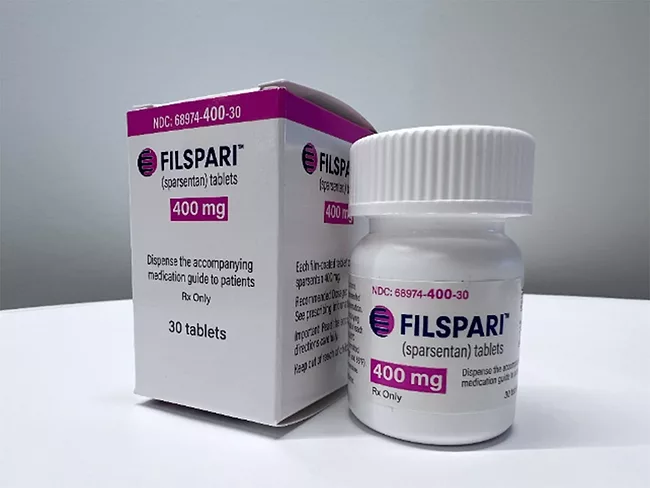
With full approval from the U.S. FDA in hand for Travere Therapeutics Inc.’s Filspari (sparsentan) to slow kidney function decline in adults with primary IgA nephropathy (IgAN) who are at risk of disease progression, eyes turned to future prospects as well as how a revised risk evaluation and mitigation strategies (REMS) program might shake out. During a conference call hosted by Travere, Leerink analyst Joseph Schwartz wanted to know what changes might be made, and if the regulator’s decision might “actually be an entire removal” of the REMS.
After receiving a complete response letter from the U.S. FDA more than three years ago and conducting another phase III trial, Iterum Therapeutics plc is preparing to make its case before an advisory committee Sept. 9 for sulopenem etzadroxil/probenecid as an oral treatment option for women with uncomplicated urinary tract infections caused by specific microorganisms.
With Novo Nordisk A/S hobbled by a complete response letter, Eli Lilly and Co. has forged ahead in developing a once-weekly type 2 diabetes treatment. Top-line data from Lilly’s phase III Qwint-1 and Qwint-3 studies of efsitora alfa showed noninferior average levels of blood glucose, A1C, compared to those using another daily basal insulin treatment.
 RSS
RSS