It’s well past time for the U.S. FDA to end its silence on what device patents can be listed in the Orange Book as part of a drug-device combination product, Sen. Bill Cassidy (R-La.) said in an Oct. 1 letter that took FDA Commissioner Robert Califf to task for letting the FTC do the FDA’s job.
GE Healthcare Technologies Inc. received U.S. FDA approval for its novel radiotracer, Flyrcado (flurpiridaz F-18), for use in the diagnosis of myocardial ischemia or infarction in patients with known or suspected coronary artery disease.
Capricor Therapeutics Inc. just wrapped up a visit with the U.S. FDA and is prepping to file a BLA in October for its Duchenne muscular dystrophy treatment. Linda Marbán, the company’s CEO, is the guest on the newest BioWorld Insider podcast and she talks about deramiocel (CAP-1002), the company’s allogeneic cardiac-derived cell therapy, for treating the rare disease and how the FDA has made strong efforts in helping lay the groundwork for deramiocel.
The U.S. FDA has lifted the full clinical hold it imposed in June on Biomea Fusion Inc.’ s phase I/II studies of BMF-219 in types 1 and 2 diabetes. A safety review of the phase IIb expansion study was encouraging and none of the elevated lab values confirmed serious liver injury or impairment, said Biomea’s CEO, Thomas Butler.
The U.S. FDA’s approval of yet another indication for Dupixent (dupilumab), partnered between Regeneron Pharmaceuticals Inc. and Sanofi SA, could mean another $6.4 billion-plus in sales by the end of the decade. Regulators cleared the drug as an add-on maintenance treatment for chronic obstructive pulmonary disease (COPD) with an eosinophilic phenotype who are prone to flare-ups. Dupixent, the first-ever biologic for COPD, entered the market in March 2017.
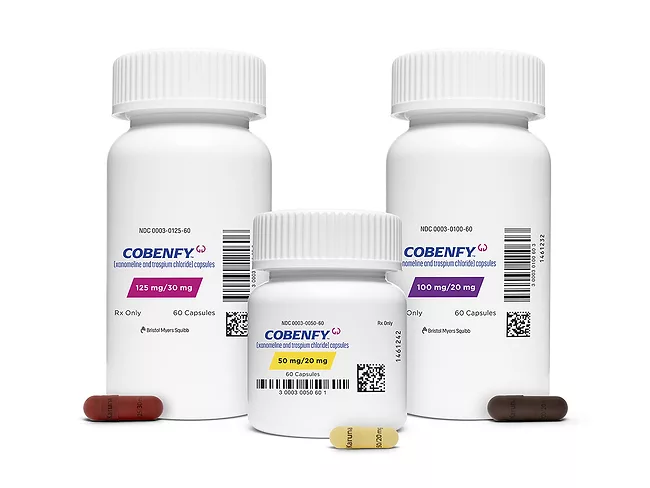
The FDA has approved Cobenfy, a dual M1/M4 muscarinic agonist that offers a fundamentally different approach to treating schizophrenia. The fixed dose combination of xanomeline-trospium is the first to act via a novel mechanism for the serious psychiatric disorder in over 50 years, finally expanding the treatment options beyond dopamine-targeted therapies. Bristol Myers Squibb Co., which acquired Cobenfy developer Karuna Therapeutics Inc. for $14 billion in a deal that closed in March 2024, said the drug will be available in the U.S. from late October.
Both chambers of the U.S. Congress put aside their election year politicking Sept. 25 long enough to pass a continuing resolution that will keep the government running at its current funding level through Dec. 20. The spending bill is now awaiting President Joe Biden’s signature.
The FDA’s Oncologic Drugs Advisory Committee (ODAC) met for what chairperson Christopher Lieu called, at the end, “an incredibly long day” to decide whether approval of immune checkpoint inhibitors should be restricted in accordance with expression levels of PD-L1.
Nine years on from securing $3.84 million for a phase I clinical trial to test the formulation, with results showing it overcame side effects that had confounded its forerunner, the schizophrenia treatment Karxt met its PDUFA date Sept. 26 with no decision by midday. If approved, the fixed combination of xanomeline-trospium will be the first in a new drug class, and as a dual M1/M4 muscarinic agonist, the first new therapy to act via a novel mechanism for the serious psychiatric disorder in over 50 years.
With two drugs cleared by the U.S. FDA for Niemann-Pick disease type C (NPC) in less than seven days, Wall Street was pondering the differences between the compounds, given what’s known so far about each. Most recently, the FDA approved Intrabio Inc.’s Aqneursa (levacetylleucine) on its PDUFA date for the treatment of neurological manifestations of NPC in adults and pediatric patients weighing at least 15 kg, making Aqneursa the only approved stand-alone therapy indicated for NPC. On Sept. 20, Zevra Therapeutics Inc. won FDA clearance for Miplyffa (arimoclomol) as the first treatment for NPC.

 RSS
RSS