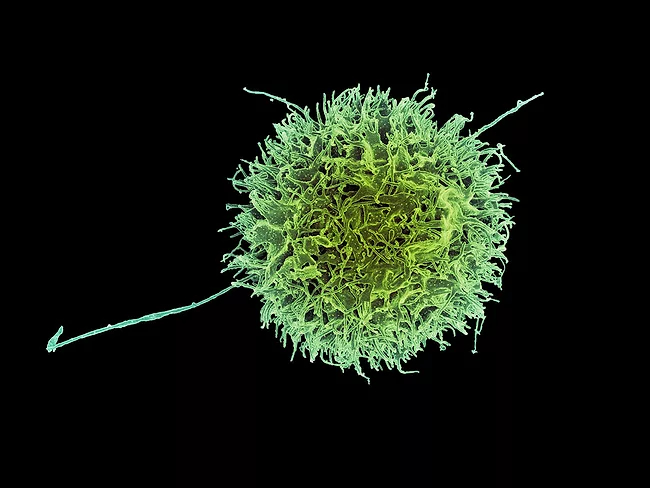
The U.S. FDA has approved its second treatment for an ultra-rare disease in the past three days by greenlighting Veopoz (pozelimab-bbfg) from Regeneron Pharmaceuticals Inc. Approval of the priority BLA for Veopoz, a fully human monoclonal antibody to treat Chaple disease, was announced two days ahead of its Aug. 20 PDUFA date. It is the only FDA-approved therapy for the indication.
Some U.S. FDA inspections go better than other ones, but the agency’s inspection of the Boston plant operated by a subsidiary of Princeton, N.J.-based Integra Lifesiences Holding Corp. was not one of those with a quick resolution. The agency said in a July 17 warning letter that Integra will have to obtain certification for the site in each of the next three years after finding considerable fault with operations, including one citation the agency said is a carryover from a warning letter issued in 2019.
Cathvision ApS received U.S. FDA clearance for two artificial intelligence (AI) models, the PVI Analyzer, and Signal Complexity, which are part of a suite of algorithms designed to help electrophysiologists improve the diagnosis and treatment of complex atrial arrhythmias, including atrial fibrillation. The two algorithms are part of Cathvision’s Cardialytics suite of AI-powered analytics integrated into its Ecgenius system, an electrophysiology recording system that helps with electrogram interpretation.
Novarock Biotherapeutics Ltd., a subsidiary of CSPC Pharmaceutical Group Ltd., has received FDA approval of its IND application for NBL-028, a CLDN6-CD137 bispecific antibody.
It’s been 25 years since the U.S. FDA issued a final guidance on informed consent and nine years since it asked for comments on a draft guidance to supersede that 1998 guide.
There are plenty of companies chasing the first U.S. FDA-approved treatment for the ultra-rare disease fibrodysplasia ossificans progressiva (FOP), but Ipsen SA stayed the course longer and won that approval Aug. 16 with Sohonos (palovarotene). Other companies have struggled to develop a treatment for FOP, which affects about 400 people in the U.S. and about 900 people worldwide. Some potential competitors are still in the clinic, trying to catch up.
Hypertrophic cardiomyopathy (HCM) might not be the talk of the town in the world of cardiology medical devices, but the condition has a devastating effect on a large number of lives, particularly in the case of early disease onset. San Francisco-based Viz.ai Inc. has won a de novo from the U.S. FDA for its algorithm for identification of patients at risk of HCM, the aptly named Viz HCM, a product the company believes will not only save lives but may save the U.S. health care system a large amount of money as well.
Oncusp Therapeutics Inc. has received IND clearance from the FDA to begin clinical trials with CUSP-06, a cadherin-6 (CDH6)-targeting antibody-drug conjugate designed for the treatment of multiple solid tumors. CDH6 is overexpressed in cancers including ovarian, renal, uterine, thyroid, lung, and cholangiocarcinoma. A phase I trial will pave the way for expansion in patients with platinum-refractory/resistant ovarian cancer and other advanced solid tumors.
Artiva Biotherapeutics Inc. has received FDA clearance of its IND application for Allonk (AB-101), to be used in combination with rituximab for treatment of systemic lupus erythematosus (SLE) in patients with active lupus nephritis.
 RSS
RSS