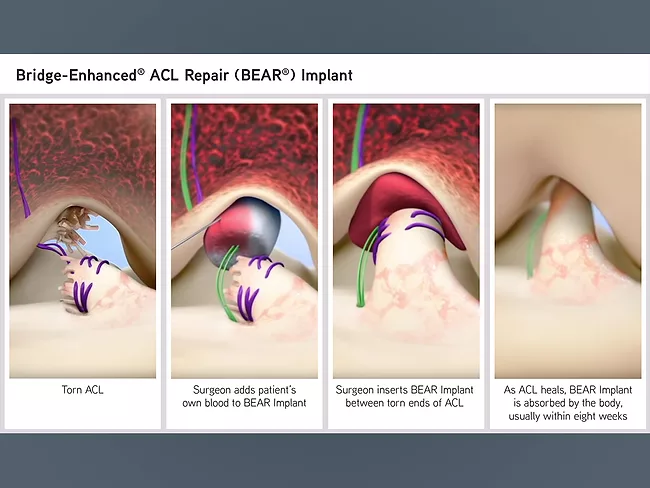
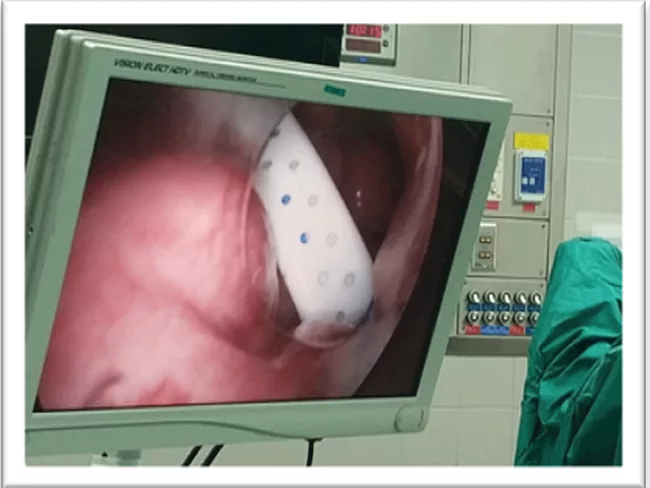
Miach Orthopaedics Inc. got a leg up on competitors with the U.S. FDA's de novo approval of its Bridge-Enhanced ACL Repair (BEAR) implant. The company achieved a long-term goal in orthopedics, developing a graft-free system that enables the anterior cruciate ligament (ACL) to repair itself. The device represents the first new treatment for ACL tears in three decades.
The U.S. FDA has granted emergency use authorization (EUA) for thousands of products for the COVID-19 pandemic, and the agency is legally required to advise companies of their post-pandemic options for new marketing authorization. Conversely, companies that fail to deal with inventory for expired EUAs may find themselves in the crosshairs of the FDA, whistleblowers, and federal and state attorneys, suggesting that manufacturers of devices should have a plan for dealing with unused inventories once the public health emergency comes to an end.
After nearly three months of the U.S. federal government operating on stopgap spending measures, Congress has agreed to a $1.4 trillion spending bill for fiscal 2021. The omnibus package, which includes $97 billion for the Department of Health and Human Services, gives both the FDA and NIH small increases in funding.
The U.S. FDA has granted emergency use authorization (EUA) for thousands of products for the COVID-19 pandemic, and the agency is legally required to advise companies of their post-pandemic options for new marketing authorization. Conversely, companies that fail to deal with inventory for expired EUAs may find themselves in the crosshairs of the FDA, whistleblowers, and federal and state attorneys, suggesting that manufacturers of devices should have a plan for dealing with unused inventories once the public health emergency comes to an end.
A day after the FDA’s Vaccines and Related Biological Products Advisory Committee lent its support to Moderna Inc.’s COVID-19 vaccine, the agency granted it emergency use authorization (EUA). About 20 million doses will be delivered by the end of December and the rest in the first quarter of 2021, according to Moderna.
False Claims Act (FCA) litigation is one of the more potent weapons used to corral life sciences companies that stray out of legal bounds in the U.S. Jaime Jones, a partner in the Chicago office of Sidley Austin LLP, told BioWorld that Sen. Chuck Grassley (R-Iowa), long a legislative watchdog, has several notions about how the statute might be tweaked.
Macrogenics Inc., which started the year with a pipeline prioritization, ends 2020 with its first FDA approval. The agency cleared its HER2-targeting Fc-engineered monoclonal antibody margetuximab in combination with chemotherapy for use in patients with metastatic HER2-positive breast cancer who have received two or more prior anti-HER2 regimens, at least one of which was for metastatic disease.
As expected, the FDA's Vaccines and Related Biological Products Advisory Committee voted near-unanimously on Dec. 17, with one abstention, that available evidence shows the benefits of Moderna Inc.'s COVID-19 vaccine, mRNA-1273, outweigh its risks for people 18 and older. The vote bolsters the likelihood that the regulator will grant the vaccine an emergency use authorization (EUA), which could come as soon as Friday. Not the same as an approval, the authorization would allow for the vaccine's use for the prevention of COVID-19 in the U.S. even as further trials and regulatory evaluation remains underway ahead of a company BLA submission.
The U.S. FDA granted a breakthrough device designation to Exero Medical Ltd.’s implantable smart sensor for early detection of anastomotic leaks after gastrointestinal (GI) surgery. The device continuously monitors the GI tract near the surgical site to alert providers about potentially deadly leaks.
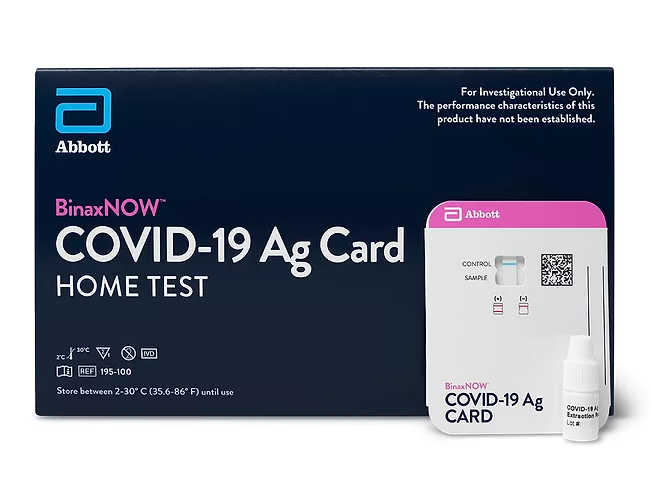
As COVID-19 cases surge across the U.S., there is growing demand for greater access to testing to rein in the pandemic. On Wednesday, the U.S. FDA granted an emergency use authorization (EUA) to Abbott Laboratories for at-home use of the company’s Binaxnow COVID-19 Ag Card Home Test. Abbott has teamed up with Miami-based telehealth provider Emed to distribute and administer the tests, with an expected 30 million in the first quarter of 2021.
 RSS
RSS