Thermo Fisher Scientific Inc. released updated software and new instructions for its Taqpath COVID-19 Combo Kit, a widely used COVID-19 test kit that is also the basis for several other coronavirus diagnostics, following issuance of a letter to clinical laboratory staff and health care providers by the U.S. FDA about the risk of false results with the test. Separately, the Waltham, Mass.-based company has released the first in a series of hematology-oncology assays designed to run on its Ion Torrent Genexus system.
An FDA rejection of Galapagos NV's rheumatoid arthritis (RA) drug filgotinib, announced Aug. 18, was "disappointing and unexpected," CEO Onno van de Stolpe said, adding that "there is so much more" to his company's story and pipeline. Gilead Sciences Inc., the Belgian company's partner and a substantial backer of both the drug and the pipeline, said it would "evaluate the points raised" by the CRL, but continued to believe in the drug.
Biomarin Pharmaceutical Inc.’s complete response letter (CRL) for Roctavian (valoctocogene roxaparvovec; Valrox) gene therapy for severe hemophilia A shocked the company, its investors and analysts mere days before its Aug. 21 PDUFA date. Now an approval and launch for what would have been the first approved hemophilia gene therapy is likely pushed back roughly two years.
Life science companies doing business during a pandemic may believe that patients, judges and juries will look kindly on products that don’t perform as promised, but that may be an empty wish.
Life science companies doing business during a pandemic may believe that patients, judges and juries will look kindly on products that don’t perform as promised, but that may be an empty wish. Angela Seaton, an attorney with the D.C. office of Shook, Hardy & Bacon LLP, advised that companies that want to break into new markets because of pandemic-specific demand should do their homework, including a review of U.S. FDA warning letters.
Following a patient’s death in Poseida Therapeutics Inc.’s phase I trial of P-PSMA-101 in metastatic castrate-resistant prostate cancer (mCRPC), the FDA has put the study on clinical hold.
The COVID-19 pandemic has spurred a considerable amount of testing innovation, including more extensive use of saliva as a medium for detection of pathogens. The U.S. FDA has announced an emergency use authorization (EUA) to Yale School of Public Health for the Salivadirect testing protocol that requires no extraction of the SARS-CoV-2 virus’s RNA, a feature that Assistant Secretary for Health Brett Giroir said is “yet another testing innovation game changer that will reduce demand for scarce testing resources.”
The FDA’s go-ahead for Roche Holding AG’s Enspryng (satralizumab-mwge) in anti-aquaporin-4 antibody-positive neuromyelitis optica spectrum disorder had watchers of the space weighing its market odds against two therapies approved earlier: Soliris (eculizumab) from Boston-based Alexion Pharmaceuticals Inc., and the more recently cleared Uplizna (inebilizumab-cdon) from Viela Bio Inc., of Gaithersburg, Md.
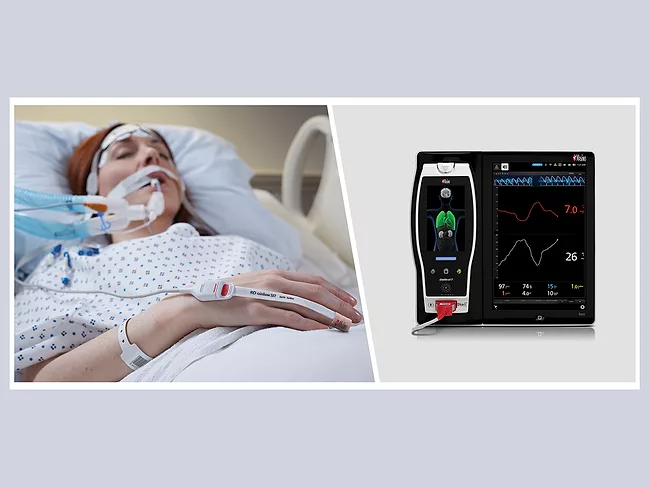
The U.S. FDA has granted 510(k) clearance to Masimo Corp. for its PVi software tool as a continuous, noninvasive, real-time indicator of fluid responsiveness in select populations of mechanically ventilated adults. PVi, which is an acronym for pleth variability index, quantifies the dynamic changes in perfusion index that occur in a patient during the respiratory cycle.
Two decades after the federal government jumpstarted U.S. R&D investment in its understanding and control of nanoscale matter, funding for the efforts across the government reached about $1.4 billion in fiscal 2020, part of a total cumulative investment of about $29 billion. Though FDA-budgeted nanotech research has accounted for just a fraction of that, at a modest $133 million since 2009, substantial advances have still been made, according to a presentation on the state of nanotech progress and innovation issued this summer.
 RSS
RSS